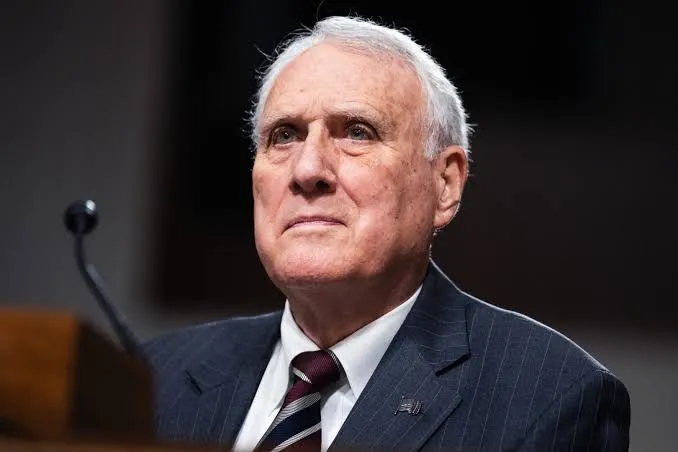
Jon Kyl (1942-2026) American Politician
Full name: Jon Llewellyn Kyl
Born: April 25, 1942, Oakland, Nebraska, U.S.
Died: September 17, 2026 (aged 84), Phoenix, Arizona, U.S.
Cause of death: Complications from a neurological disease
Occupation: Politician, lobbyist, attorney
Years active: 1966–2018
Known for: U.S. Senator from Arizona; Senate Minority Whip
Political party: Republican
Spouse: Caryll Collins (m. 1964)
Children: 2
Education: University of Arizona (BA, LLB)
Who Was Jon Kyl?
Jon Llewellyn Kyl (April 25, 1942 – September 17, 2026) was an American politician and lobbyist who spent nearly two decades representing Arizona in the United States Senate. A Republican, he was widely regarded as one of the most influential conservative voices in Washington, a quiet but effective policy expert who preferred working behind the scenes to grabbing headlines.
Kyl's career spanned more than thirty years of public service. He served in the U.S. House of Representatives from 1987 to 1995, then in the Senate from 1995 to 2013, rising to the position of Senate Minority Whip. In 2018, he briefly returned to the Senate after the death of his longtime colleague John McCain, before resigning at the end of that year. Along the way, he held both of Arizona's Senate seats at different times, a rare distinction in American politics.
He passed away at his home in Phoenix, Arizona, on September 17, 2026, at the age of 84. His death followed a dementia diagnosis that he had publicly announced in December 2025. Tributes poured in from across the political spectrum, honoring a man who was described by The New York Times as earning a "reputation as a quiet but effective policy expert, political operator and party leader."
Jon Kyl Cause of Death
Jon Kyl died at his home in Phoenix, Arizona, on September 17, 2026, at the age of 84. His death was attributed to complications from a neurological disease. The news was confirmed by KTAR.com, The New York Times, and Politico, among other outlets, and prompted an outpouring of tributes from colleagues and former staffers who had worked with him over his long career.
Kyl's health had been a matter of public attention since December 30, 2025, when he announced his dementia diagnosis and his decision to step back from public life. In a statement released at the time, he acknowledged the diagnosis with the same straightforwardness that had defined his political career. Shortly after, the University of Arizona announced that it had been selected as the repository for Kyl's papers, a fitting tribute to a man whose career was so deeply tied to the state.
Following his death, The New York Times published an obituary describing Kyl as a senator "known for his skills behind the scenes." Politico, in its own tribute, called him a "workhorse" who shaped water policy and other key issues during his time in Washington. His passing marked the end of a chapter in Arizona politics one defined by quiet competence, deep conservatism, and a genuine commitment to the institution of the Senate.
Early Life, Education and Career
Jon Kyl was born on April 25, 1942, in Oakland, Nebraska. He was the son of Arlene (née Griffith) and John Henry Kyl, a teacher at Nebraska State Teachers College. His father, the son of Dutch immigrants, later moved the family to Bloomfield, Iowa, where he served as a Congressman. It was a household steeped in public service, and young Jon grew up watching his father navigate the world of politics.
After graduating from high school in 1960, Kyl attended the University of Arizona, where he earned a bachelor's degree in 1964, graduating with honors. He was a member of the Pi Kappa Alpha fraternity. He then earned a law degree in 1966 at the University of Arizona's James E. Rogers College of Law, where he served as editor-in-chief of the Arizona Law Review. Before entering politics, he worked as a lawyer and lobbyist with Jennings, Strouss & Salmon in Phoenix, Arizona, and also as an attorney at Mountain States Legal Foundation in Denver, Colorado.
Kyl was a Presbyterian. He married Caryll Collins in 1964, and together they had two children and four grandchildren. Despite his long career in the public eye, he remained a private family man, rarely discussing his personal life in interviews.
U.S. House of Representatives
Jon Kyl's political career began in 1986, when he was first elected to the U.S. House of Representatives from Arizona's 4th congressional district, defeating Democrat Philip R. Davis by 65% to 35%. He was re-elected in 1988 against Libertarian Gary Sprunk by an overwhelming 87% to 13%, and again in 1990 against Democrat Mark Ivey Jr. by 61% to 39%.
For his first six terms, Kyl represented most of the northeastern portion of Arizona, from heavily Republican northern Phoenix to the New Mexico border. Redistricting after the 1990 census carved away all of his former territory outside the Valley of the Sun, but the new 4th district was as safely Republican as its predecessor. Kyl easily won re-election in 1992 against Democrat Walter R. Mybeck II, 59% to 27%.
During his time in the House, Kyl voted for the Abandoned Shipwrecks Act of 1987, which asserted United States title to certain abandoned shipwrecks located on or embedded in submerged lands under state jurisdiction. The Act transferred title to the respective states, empowering them to manage these cultural and historical resources more efficiently. President Ronald Reagan signed it into law on April 28, 1988.
U.S. Senate (1995–2013)
In 1994, Jon Kyl was elected to the U.S. Senate, defeating Samuel G. Coppersmith, then a member of the House of Representatives, by 54% to 40%. He was re-elected in 2000 without major-party opposition, taking 79% of the vote, and again in 2006, defeating real estate developer and former Arizona Democratic Party chairman Jim Pederson by 53% to 44%. The 2006 race was one of the most expensive in Arizona history, with Kyl raising more than $15 million and Pederson raising just shy of that amount.
Leadership Roles
Kyl was elected by his fellow Senate Republicans to a succession of leadership posts. He chaired the Republican Policy Committee from 2003 to 2007, chaired the Republican Conference in 2007, and became Senate Minority Whip in December 2007, serving until his retirement in 2013. His rise to Minority Whip made him the first Arizonan to hold such an influential Senate leadership post since Democrat Ernest W. McFarland served as Senate Majority Leader from 1951 to 1953. He was also the only Arizona Republican to hold that leadership position.
Tenure and Key Votes
During his Senate tenure, Kyl voted to confirm John Roberts as Chief Justice of the U.S. Supreme Court and Samuel Alito as Associate Justice. He voted against the nominations of Sonia Sotomayor and Elena Kagan. He voted against the Patient Protection and Affordable Care Act (Obamacare) in December 2009, and against the Health Care and Education Reconciliation Act of 2010.
In 2010, Kyl made headlines when he objected to the Senate returning to work between Christmas and New Year's to pass the James Zadroga 9/11 Health and Compensation Act. He argued it would disrespect "one of the two holiest of holidays for Christians." The Zadroga Act ultimately passed on December 22. In 2011, Kyl sparked controversy when he claimed that performing abortions is "well over 90 percent of what Planned Parenthood does." Planned Parenthood responded that only 3 percent of its services are abortion-related, and Politifact noted that Kyl had "vastly overstated" the number. A spokesperson later said the remark "was not intended to be a factual statement."
In 2012, Kyl voted against ratification of the UN Treaty Convention on the Rights of Persons with Disabilities.
U.S. Senate (2018)
On September 4, 2018, Jon Kyl was appointed by Republican Arizona Governor Doug Ducey to the state's Class 3 U.S. Senate seat that had been vacated due to John McCain's death, until a 2020 special election could be held. Kyl was only the sixth person to return to the Senate via appointment since the ratification of the Seventeenth Amendment in 1913. The last preceding case had been Norris Cotton of New Hampshire, who in 1975 was appointed back to the Senate after the disputed election of 1974.
Earlier in 2018, Kyl had served as a "sherpa" for Brett Kavanaugh's nomination to the Supreme Court, helping guide the confirmation process through the Senate. He voted in favor of Kavanaugh's confirmation. He opposed the FIRST STEP Act, which passed 87–12 on December 18, 2018. He resigned from the Senate effective December 31, 2018, and was succeeded by Congresswoman Martha McSally, a fellow Republican.
Political Positions
Jon Kyl was considered a conservative and was ranked by National Journal as the fourth-most conservative United States Senator in their March 2007 rankings. In April 2006, Time magazine selected him as one of "America's 10 Best Senators," citing his successful behind-the-scenes efforts as head of the Senate Republican Policy Committee. He earned a 96.58% lifetime score from the American Conservative Union and was a signer of Americans for Tax Reform's Taxpayer Protection Pledge.
Crime Victims' Rights
Kyl was one of the original sponsors, along with Democratic Senator Dianne Feinstein, of an effort to amend the United States Constitution to protect crime victims' rights in the criminal justice system. When in 2004 it appeared that the constitutional amendment would not receive the requisite two-thirds support to pass the Senate, Kyl and Feinstein authored the Crime Victims' Rights Act, which listed a victims' bill of rights and provided mandamus relief in appellate court for any victim denied those rights.
Arms Control
In November 2010, Kyl opposed the New START arms control treaty's ratification in the lame-duck session. Nevertheless, the treaty passed with a vote of 71–26, clearing the constitutionally mandated two-thirds threshold by the narrowest margin of any nuclear arms control treaty ever ratified by the United States.
Internet Gambling
Kyl and Bob Goodlatte were among the first in the United States to draft legislation on online gambling. In the late 1990s, they introduced bills to the Senate that would curb online gambling activities except for those involving horse and dog races and state lotteries. In September 2006, working with Congressman Jim Leach, Kyl was a major Senate supporter of the Unlawful Internet Gambling Enforcement Act of 2006.
Death
On December 30, 2025, Jon Kyl announced his dementia diagnosis and retirement from public life. The announcement was covered by NBC News and The New York Times, and prompted an outpouring of support from colleagues across the political spectrum. Subsequently, the University of Arizona announced that it had been selected as the repository for Kyl's papers, a decision that ensured his legacy would be preserved for future generations of scholars and students.
Kyl died of complications from a neurological disease at his home in Phoenix, Arizona, on September 17, 2026, at the age of 84. His death was reported by KTAR.com, The New York Times, and Politico, among others. Following his death, The New York Times said that Kyl earned a "reputation as a quiet but effective policy expert, political operator and party leader." Politico, in its tribute, called him a "workhorse" who shaped water policy and other key issues during his time in Washington.
Career Highlights
Jon Kyl's career in public service spanned more than three decades and left a lasting mark on Arizona and the nation. Here are some of the most significant milestones from his remarkable journey.
| Year | Milestone | Details |
|---|---|---|
| 1964 | Graduated from University of Arizona | Earned a bachelor's degree with honors; member of Pi Kappa Alpha fraternity. |
| 1966 | Earned law degree | Graduated from University of Arizona's James E. Rogers College of Law; editor-in-chief of Arizona Law Review. |
| 1986 | Elected to U.S. House | Defeated Democrat Philip R. Davis, 65% to 35%. |
| 1994 | Elected to U.S. Senate | Defeated Samuel G. Coppersmith, 54% to 40%. |
| 2000 | Re-elected to Senate | Won without major-party opposition, taking 79% of the vote. |
| 2003 | Chaired Republican Policy Committee | Served until 2007. |
| 2006 | Named one of America's Ten Best Senators | Recognized by Time magazine. |
| 2006 | Re-elected to Senate | Defeated Jim Pederson, 53% to 44%, in one of Arizona's most expensive races. |
| 2007 | Became Senate Minority Whip | Served until 2013; first Arizonan in the post since 1953. |
| 2013 | Retired from Senate | Joined Covington & Burling as an attorney and lobbyist. |
| 2018 | Returned to Senate | Appointed to John McCain's seat; served until December 31, 2018. |
| 2025 | Announced dementia diagnosis | Stepped back from public life; University of Arizona named repository for his papers. |
| 2026 | Died at 84 | Passed away at his home in Phoenix, Arizona. |
Tributes and Legacy
Following the announcement of Jon Kyl's death, tributes poured in from across the political spectrum. Fellow Republicans remembered him as a principled conservative who never sought the spotlight but always delivered results. Democrats remembered him as a tough but fair negotiator who respected the institution of the Senate and the people he served.
The New York Times, in its obituary, described Kyl as a senator "known for his skills behind the scenes." Politico called him a "workhorse" who shaped water policy and other key issues during his time in Washington. His former colleagues in Arizona recalled his deep commitment to the state, particularly his work on water rights and Native American affairs.
Kyl's legacy is one of quiet competence. He was not a fiery orator or a media darling, but he was one of the most effective legislators of his generation. His work on crime victims' rights, internet gambling regulation, and judicial confirmations left a lasting mark on American law. And his decision to announce his dementia diagnosis publicly with the same candor he had brought to every other challenge in his life was widely praised as an act of grace and courage.
Conclusion: Remembering Jon Kyl
Jon Kyl was a man who devoted his life to public service. From his early days as a lawyer in Phoenix to his long tenure in the United States Senate, he approached every challenge with discipline, intelligence, and a deep respect for the institutions he served. He was not the loudest voice in the room, but he was often the most effective.
His death on September 17, 2026, at the age of 84, marked the end of a remarkable career that spanned more than three decades. He passed away peacefully at his home in Phoenix, surrounded by his family, after a battle with dementia that he faced with characteristic dignity and openness. He is survived by his wife Caryll, his two children, and four grandchildren.
As Arizona and the nation mourn his passing, they also celebrate a life well-lived one that began in a small Nebraska town and ended as one of the most respected and influential senators of his generation. Jon Kyl will be deeply missed, but his legacy will live on through the laws he helped pass, the institutions he helped shape, and the many people whose lives he touched.
Frequently Asked Questions: Jon Kyl
Who was Jon Kyl?
Jon Llewellyn Kyl (April 25, 1942 – September 17, 2026) was an American politician and lobbyist who served as a United States Senator from Arizona from 1995 to 2013. He also briefly returned to the Senate in 2018 following the death of John McCain. A Republican, he served as Senate Minority Whip from 2007 to 2013 and was previously a member of the U.S. House of Representatives from 1987 to 1995.
How did Jon Kyl die?
Jon Kyl died at his home in Phoenix, Arizona, on September 17, 2026, at the age of 84. He had announced his dementia diagnosis and retirement from public life on December 30, 2025. His death was attributed to complications from a neurological disease.
What was Jon Kyl's cause of death?
Jon Kyl died of complications from a neurological disease at his home in Phoenix, Arizona, on September 17, 2026, at the age of 84. He had been diagnosed with dementia, which he publicly announced in December 2025 along with his decision to step back from public life.
What was Jon Kyl famous for?
Jon Kyl was famous for his long career in American politics. He served as a U.S. Representative from Arizona from 1987 to 1995 and as a U.S. Senator from Arizona from 1995 to 2013, rising to become Senate Minority Whip. He was known as a quiet but effective policy expert and was named one of America's Ten Best Senators by Time magazine in 2006.
Where was Jon Kyl born?
Jon Kyl was born on April 25, 1942, in Oakland, Nebraska. He was the son of Arlene (née Griffith) and John Henry Kyl, a teacher at Nebraska State Teachers College who later served as a Congressman from Iowa. Kyl was raised in Nebraska and Iowa before attending the University of Arizona.
What was Jon Kyl's education?
Jon Kyl attended the University of Arizona, where he earned a bachelor's degree in 1964, graduating with honors. He was a member of the Pi Kappa Alpha fraternity. He then earned a law degree in 1966 at the University of Arizona's James E. Rogers College of Law, where he served as editor-in-chief of the Arizona Law Review.
How long was Jon Kyl in the Senate?
Jon Kyl served in the U.S. Senate for a total of about 18 years. His first stint ran from January 3, 1995, to January 3, 2013. He briefly returned to the Senate from September 4, 2018, to December 31, 2018, after being appointed to fill the seat left vacant by John McCain's death.
Why did Jon Kyl return to the Senate in 2018?
In September 2018, Jon Kyl was appointed by Arizona Governor Doug Ducey to serve in the Class 3 Senate seat left vacant by the death of John McCain. Kyl was the first person to return to the Senate via appointment since 1975. He resigned effective December 31, 2018, and was succeeded by Martha McSally.
What was Jon Kyl's role in Brett Kavanaugh's nomination?
Jon Kyl served as a "sherpa" for Brett Kavanaugh's nomination to the Supreme Court in 2018, helping guide the confirmation process through the Senate. He voted in favor of Kavanaugh's confirmation. Earlier, in 2013, Kyl had joined the lobbying firm Covington & Burling after retiring from the Senate, and he rejoined the firm in 2019.
What leadership positions did Jon Kyl hold?
Jon Kyl held several key Senate Republican leadership posts. He chaired the Republican Policy Committee from 2003 to 2007, chaired the Republican Conference in 2007, and served as Senate Minority Whip from 2007 to 2013. He was the first Arizonan to hold such an influential Senate leadership post since Democrat Ernest W. McFarland served as Senate Majority Leader from 1951 to 1953.
What was Jon Kyl's political philosophy?
Jon Kyl was considered a conservative. National Journal ranked him as the fourth-most conservative U.S. Senator in March 2007. He earned a 96.58% lifetime score from the American Conservative Union and was a signer of Americans for Tax Reform's Taxpayer Protection Pledge.
What was Jon Kyl's stance on crime victims' rights?
Jon Kyl was one of the original sponsors, along with Democratic Senator Dianne Feinstein, of an effort to amend the U.S. Constitution to protect crime victims' rights. When the constitutional amendment appeared unlikely to pass in 2004, Kyl and Feinstein authored the Crime Victims' Rights Act, which listed a victims' bill of rights and provided mandamus relief in appellate court for any victim denied those rights.
What was Jon Kyl's involvement with internet gambling legislation?
Jon Kyl was among the first in the United States to draft legislation on online gambling. In the late 1990s, he and Bob Goodlatte introduced bills to curb online gambling activities. In September 2006, working with Congressman Jim Leach, Kyl was a major Senate supporter of the Unlawful Internet Gambling Enforcement Act of 2006.
Did Jon Kyl vote against Obamacare?
Yes, Jon Kyl voted against the Patient Protection and Affordable Care Act (Obamacare) in December 2009. He also voted against the Health Care and Education Reconciliation Act of 2010.
When did Jon Kyl announce his dementia diagnosis?
On December 30, 2025, Jon Kyl announced his dementia diagnosis and his retirement from public life. Following the announcement, the University of Arizona announced that it had been selected as the repository for Kyl's papers. He died of complications from a neurological disease on September 17, 2026, at the age of 84.
What did The New York Times say about Jon Kyl after his death?
Following his death, The New York Times said that Jon Kyl earned a "reputation as a quiet but effective policy expert, political operator and party leader." He was widely remembered as a workhorse legislator who shaped policy behind the scenes rather than seeking the spotlight.
Was Jon Kyl married and did he have children?
Yes, Jon Kyl was married to Caryll Collins, whom he wed in 1964. Together they had two children and four grandchildren. Kyl was a Presbyterian and kept his family life relatively private throughout his decades in public service.
Contents
- Who Was Jon Kyl
- Cause of Death
- Early Life, Education and Career
- U.S. House of Representatives
- U.S. Senate (1995–2013)
- U.S. Senate (2018)
- Political Positions
- Death
- Career Highlights
- Tributes and Legacy
- Conclusion
- FAQs (17+ Questions)
Data Update
Based on KTAR.com, The New York Times, Politico, NBC News, and Wikipedia. Information about his death may change as more details become available.