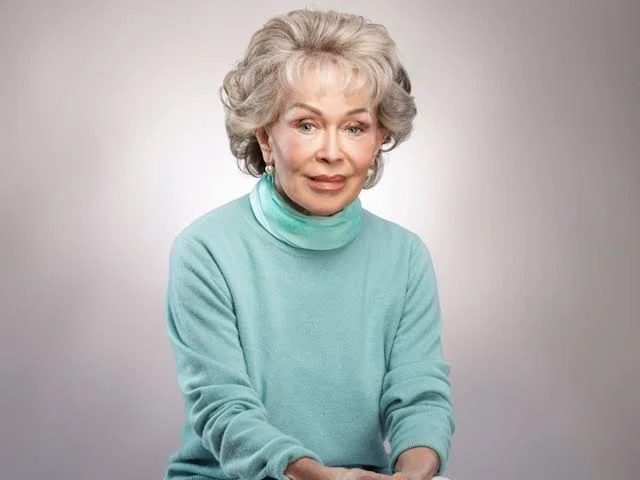
Blanche d'Alpuget (1944-2026) Australian Writer
Full name: Josephine Blanche d'Alpuget
Born: 3 January 1944, Sydney, New South Wales, Australia
Died: 8 September 2026 (aged 82), Sydney, New South Wales, Australia
Cause of death: Complications of influenza
Occupation: Biographer, novelist, activist
Years active: 1973–2026
Known for: Robert J. Hawke: A Biography; the Lion quintet; wife of Bob Hawke
Spouses: Tony Pratt (m. 1965; div. 1986), Bob Hawke (m. 1995; died 2019)
Children: 1
Education: SCEGGS Darlinghurst, University of Sydney
Who Was Blanche d'Alpuget?
Josephine Blanche d'Alpuget (3 January 1944 – 8 September 2026) was an Australian writer, biographer, and activist whose life and work left a lasting mark on the country's literary and cultural landscape. She was a woman of many talents and roles: a celebrated novelist, a respected biographer, a passionate advocate for women's rights and refugees, and, for nearly a quarter of a century, the partner and later wife of Bob Hawke, one of Australia's most beloved Prime Ministers.
Born in Sydney as the only child of a journalist and champion boxer, d'Alpuget grew up surrounded by words and stories. She travelled widely in her youth, living in Indonesia and Malaysia, and those experiences shaped both her worldview and her writing. Over a career that spanned more than five decades, she produced a diverse body of work that included biography, fiction, essays, and historical novels, earning numerous awards and the admiration of readers and critics alike.
She passed away in Sydney on 8 September 2026, at the age of 82, from complications of influenza. Her death was confirmed by ABC News and The Sydney Morning Herald, and tributes poured in from across Australia's literary and political circles. She was remembered not only for her writing but for her warmth, her intelligence, and her unwavering commitment to the causes she believed in.
Blanche d'Alpuget Cause of Death
Blanche d'Alpuget died in Sydney, New South Wales, Australia, on 8 September 2026, at the age of 82. Her death was caused by complications of influenza. The news was confirmed by ABC News and The Sydney Morning Herald, both of which published tributes to her life and career.
According to reports, d'Alpuget had been in declining health in the weeks before her death, though she remained engaged with the literary community and continued to be a presence in Australian cultural life. Her passing came just over seven years after the death of her husband, Bob Hawke, who died in 2019. The couple had been married for 24 years and were one of the most well-known partnerships in Australian public life.
Following her death, tributes poured in from writers, politicians, and friends. The Sydney Morning Herald described her as a "formidable talent" whose work spanned genres and generations. ABC News noted that she was "a writer of great range and depth" whose contributions to Australian literature would be remembered for years to come. Her family asked for privacy during this difficult time.
Early Life and Education
Blanche d'Alpuget was born on 3 January 1944 in Sydney, New South Wales. She was the only child of Josephine Curgenven and Louis Albert Poincaré d'Alpuget (1915–2006), a journalist, author, blue water yachtsman, and champion boxer. Her father was a sports and feature writer and also news editor of a Sydney newspaper, The Sun. Her great-aunt, also named Blanche d'Alpuget, was a pioneer woman journalist in Sydney and a patron of artists, and it was after her that the young Blanche was named.
She attended SCEGGS Darlinghurst and briefly the University of Sydney. She began her professional life at The Daily Mirror, the rival newspaper to her father's The Sun. At the age of 22, she moved to Indonesia with her first husband, Tony Pratt, whom she had married in 1965. While in Indonesia, d'Alpuget worked in the Australian Embassy's news and information bureau, and later volunteered at the National Museum of Indonesia, where she led a team that recatalogued the museum's oriental ceramic collection of Chinese export ware. She became the world's youngest member of the famous English-founded Oriental Ceramic Society.
After spending four years in Indonesia, d'Alpuget lived for a year in Malaysia. She travelled widely and to remote areas in both countries, experiences that would later inform her writing. She and Pratt had one son, Louis, who became an artist and sculptor and a co-founder of Mungo, a Sydney artists' colony.
Writing Career
In 1973, Blanche d'Alpuget returned to Australia and became active in the women's movement. She began writing in 1974, inspired by her experiences in South East Asia. Over the following decades, she built a distinguished literary career, winning numerous awards for both fiction and non-fiction. In 1987, she received the inaugural Australasian Prize for Commonwealth Literature.
D'Alpuget first met Bob Hawke in Jakarta in 1970. They met again in 1976 when she interviewed him for a biography she was writing on Sir Richard Kirby. This meeting led to a long and sporadic love affair which culminated in their marriage in 1995. Between 1980 and 1982, d'Alpuget researched and wrote a biography of Hawke, which was published in 1982 as Robert J. Hawke: A Biography.
In 1995, d'Alpuget joined the board of Robert J. Hawke & Associates, a business consultancy primarily focused on China. For fifteen years, she set aside her writing career and travelled the world with her new husband, visiting not only capital cities but remote areas of China such as Inner Mongolia, as well as Moldova, Easter Island, Palau, Kazakhstan, the North West Frontier of Pakistan, and the Antarctic peninsula. She returned to writing in 2008 with the publication of On Longing, a collection of essays.
Later Life and Death
In 2013, Blanche d'Alpuget released The Young Lion, the first novel of a quintet. Set in the 12th century, the novel is about the birth of the House of Plantagenet and focuses on Henry II and his union with Eleanor of Aquitaine, who was Queen of France and subsequently Queen of England. The Young Lion received favourable reviews. Geraldine Doogue said it was "exuberant story-telling history, full of sex, passion and politics," while Stephanie Dowrick noted that "few writers are both earthy and erudite, Blanche d'Alpuget is."
The second book in the quintet, The Lion Rampant, was published in 2014 to critical acclaim. Thomas Keneally said it was "fresh and invigorating and absolutely gripping." She completed the third novel, The Lions' Torment, in 2015 but held it back from the market until the fourth, The Lioness Wakes, was finished in early 2017. The fifth and final book in the quintet, The Cubs Roar, was published in 2020.
Bob Hawke died in 2019. After his death, d'Alpuget did not publish again until 2025, when she released a crime fiction novel titled The Bunny Club. In November 2025, Allen & Unwin published Fridays with Blanche by Derek Rielly, a memoir of her life. In the early 1990s, she had been an ambassador for the Australian charity Austcare for war refugees, travelling to Peshawar in Pakistan as well as Vietnam and Croatia. From 2020 to 2024, she was patron of Inala, a Rudolf Steiner organisation catering for people with severe intellectual disabilities.
D'Alpuget died in Sydney on 8 September 2026, aged 82, from complications of influenza. Her death marked the end of a remarkable life and career.
Published Works
Blanche d'Alpuget's published works include a wide range of fiction and non-fiction. Here are some of her most notable books.
| Year | Title | Genre |
|---|---|---|
| 1977 | Mediator: A Biography of Sir Richard Kirby | Biography |
| 1980 | Monkeys in the Dark | Fiction |
| 1981 | Turtle Beach | Fiction |
| 1982 | Robert J. Hawke: A Biography | Biography |
| 1986 | Winter in Jerusalem | Fiction |
| 1992 | Lust | Essay |
| 1993 | White Eye | Fiction |
| 2008 | On Longing | Essays |
| 2010 | Hawke: The Prime Minister | Biography |
| 2013 | The Young Lion | Historical fiction |
| 2014 | The Lion Rampant | Historical fiction |
| 2019 | The Lions' Torment | Historical fiction |
| 2020 | The Lioness Wakes | Historical fiction |
| 2020 | The Cubs Roar | Historical fiction |
| 2025 | The Bunny Club | Crime fiction |
Film Adaptations
Blanche d'Alpuget's work has been adapted for both film and television. Her novel Turtle Beach was made into a feature film in 1989, featuring Greta Scacchi and Jack Thompson. The film brought her work to a wider audience and remains one of the most well-known adaptations of her writing.
Additionally, Hawke is a 2010 biographical telemovie about the former Prime Minister of Australia, Bob Hawke. In the movie, d'Alpuget is played by leading Australian actress Asher Keddie, with Hawke played by Richard Roxburgh. The telemovie offered a glimpse into the personal and political life of the couple, and was well received by audiences and critics alike.
Achievements and Awards
Blanche d'Alpuget received numerous awards and honours throughout her career, recognising both her fiction and non-fiction writing.
- 1980 – Sydney PEN Golden Jubilee Award for Fiction
- 1981 – NSW Premier's Award for Non-Fiction
- 1982 and 1983 – Braille Book of the Year Award
- 1982 – The Age Novel of the Year Award for Turtle Beach
- 1982 – South Australian Government's Award for Fiction
- 1987 – Inaugural Commonwealth Award for Literature, Australasian Division
- 1989 – Guest of the Soviet Writers' Union travelling in the USSR
- 2013 – The Young Lion among Best Books of 2013
Tributes and Legacy
Following the announcement of Blanche d'Alpuget's death, tributes poured in from across Australia's literary, political, and cultural communities. Writers remembered her as a generous mentor and a fearless storyteller. Politicians remembered her as a gracious and intelligent partner to one of the country's most beloved leaders. And readers remembered her as the author of books that had moved, entertained, and enlightened them.
The Sydney Morning Herald described her as a "formidable talent" whose work spanned genres and generations. ABC News noted that she was "a writer of great range and depth." Her publisher, Allen & Unwin, expressed deep sadness at her passing and gratitude for the many years they had worked with her.
D'Alpuget's legacy is multifaceted. As a writer, she leaves behind a body of work that includes biography, fiction, essays, and historical novels. As an activist, she championed women's rights, refugees, and people with intellectual disabilities. And as a public figure, she was a model of grace, intelligence, and independence. She will be deeply missed by all who knew her and by the many readers whose lives she touched through her words.
Conclusion: Remembering Blanche d'Alpuget
Blanche d'Alpuget was a woman of extraordinary range and depth. She was a traveller, a journalist, a biographer, a novelist, an activist, and a partner to one of Australia's most consequential political figures. She lived a life full of adventure, love, and intellectual curiosity, and she leaves behind a body of work that will continue to be read and admired for generations.
Her death on 8 September 2026, at the age of 82, marked the end of a remarkable journey that began in Sydney and took her to Indonesia, Malaysia, China, Pakistan, and beyond. She passed away peacefully in the city of her birth, from complications of influenza, surrounded by the thoughts and prayers of a nation that had come to know and admire her.
As Australia mourns her passing, it also celebrates a life well lived. Blanche d'Alpuget will be deeply missed, but her words, her ideas, and her example will live on. She was, in the words of those who knew her best, a truly remarkable woman.
Frequently Asked Questions: Blanche d'Alpuget
Who was Blanche d'Alpuget?
Josephine Blanche d'Alpuget (3 January 1944 – 8 September 2026) was an Australian writer, biographer, and activist. She was the second wife of Bob Hawke, a former Prime Minister of Australia. She wrote both fiction and non-fiction, including the biography Robert J. Hawke: A Biography and the historical fiction series known as the Lion quintet.
How did Blanche d'Alpuget die?
Blanche d'Alpuget died in Sydney, New South Wales, Australia, on 8 September 2026, at the age of 82. Her death was confirmed by ABC News and The Sydney Morning Herald. She passed away from complications of influenza.
What was Blanche d'Alpuget's cause of death?
Blanche d'Alpuget died from complications of influenza on 8 September 2026, at the age of 82. She passed away in Sydney, New South Wales, Australia. Her death was announced by multiple Australian news outlets, including ABC News and The Sydney Morning Herald.
What was Blanche d'Alpuget famous for?
Blanche d'Alpuget was famous for her writing career and for being the second wife of Bob Hawke, a former Prime Minister of Australia. She wrote several acclaimed works of fiction and non-fiction, including Turtle Beach, which was made into a feature film in 1989, and the Lion quintet, a series of historical novels set in the 12th century about the House of Plantagenet.
Where was Blanche d'Alpuget born?
Blanche d'Alpuget was born on 3 January 1944 in Sydney, New South Wales, Australia. She was the only child of Josephine Curgenven and Louis Albert Poincaré d'Alpuget, a journalist, author, blue water yachtsman, and champion boxer. She was named after her great-aunt, a pioneer woman journalist in Sydney.
What was Blanche d'Alpuget's education?
Blanche d'Alpuget attended SCEGGS Darlinghurst and briefly the University of Sydney. She worked at The Daily Mirror before moving to Indonesia at the age of 22 with her first husband, Tony Pratt, whom she had married in 1965.
When did Blanche d'Alpuget marry Bob Hawke?
Blanche d'Alpuget first met Bob Hawke in Jakarta in 1970. They met again in 1976 when she interviewed him for a biography she was writing on Sir Richard Kirby. This meeting led to a long and sporadic love affair which culminated in their marriage in 1995. Hawke died in 2019.
What is the Lion quintet?
The Lion quintet is a series of historical novels by Blanche d'Alpuget set in the 12th century. The first novel, The Young Lion, was released in 2013 and focuses on Henry II and his union with Eleanor of Aquitaine. The second, The Lion Rampant, followed in 2014. The third, The Lions' Torment, was completed in 2015, and the fourth, The Lioness Wakes, was finished in early 2017. The fifth book, The Cubs Roar, was published in 2020.
What was Blanche d'Alpuget's most famous book?
Blanche d'Alpuget's most famous works include Turtle Beach (1981), which was made into a feature film in 1989 featuring Greta Scacchi and Jack Thompson, and Robert J. Hawke: A Biography (1982). She also wrote the Lion quintet, a series of historical novels set in the 12th century.
Did Blanche d'Alpuget win any awards?
Yes, Blanche d'Alpuget won numerous literary awards throughout her career. These include the Sydney PEN Golden Jubilee Award for Fiction in 1980, the NSW Premier's Award for Non-Fiction in 1981, the Braille Book of the Year Award in 1982 and 1983, The Age Novel of the Year Award for Turtle Beach in 1982, the South Australian Government's Award for Fiction in 1982, and the inaugural Commonwealth Award for Literature in 1987. The Young Lion was also named among Best Books of 2013.
Was Blanche d'Alpuget an activist?
Yes, Blanche d'Alpuget was active in the women's movement after returning to Australia in 1973. In the early 1990s, she served as ambassador for the Australian charity Austcare for war refugees, travelling to Peshawar in Pakistan as well as Vietnam and Croatia. From 2020 to 2024, she was patron of Inala, a Rudolf Steiner organisation catering for people with severe intellectual disabilities.
How many children did Blanche d'Alpuget have?
Blanche d'Alpuget had one son, Louis, with her first husband Tony Pratt. Louis is an artist and sculptor, and a co-founder of Mungo, a Sydney artists' colony. She and Pratt divorced in 1986.
When did Blanche d'Alpuget publish her last book?
After Bob Hawke's death in 2019, Blanche d'Alpuget did not publish again until 2025, when she released a crime fiction novel titled The Bunny Club. In November 2025, Allen & Unwin published Fridays with Blanche by Derek Rielly, a memoir of her life.
Was Blanche d'Alpuget's work adapted into films?
Yes, Blanche d'Alpuget's novel Turtle Beach was made into a feature film in 1989, featuring Greta Scacchi and Jack Thompson. Additionally, Hawke is a 2010 biographical telemovie about former Prime Minister Bob Hawke. In the movie, d'Alpuget is played by Australian actress Asher Keddie, with Hawke played by Richard Roxburgh.
What was Blanche d'Alpuget's connection to Bob Hawke?
Blanche d'Alpuget first met Bob Hawke in Jakarta in 1970 and again in 1976 when she interviewed him for a biography she was writing on Sir Richard Kirby. They began a long and sporadic love affair which culminated in their marriage in 1995. She wrote a biography of Hawke titled Robert J. Hawke: A Biography, and later Hawke: The Prime Minister. Hawke died in 2019.
What was Blanche d'Alpuget's writing style?
Blanche d'Alpuget wrote in a range of genres, including biography, drama, and romance. Her historical fiction, particularly the Lion quintet, was praised for being both earthy and erudite. Stephanie Dowrick noted that "few writers are both earthy and erudite, Blanche d'Alpuget is." Geraldine Doogue described The Young Lion as "exuberant story-telling history, full of sex, passion and politics."
Contents
- Who Was Blanche d'Alpuget
- Cause of Death
- Early Life and Education
- Writing Career
- Later Life and Death
- Published Works
- Film Adaptations
- Achievements and Awards
- Tributes and Legacy
- Conclusion
- FAQs (16+ Questions)
Data Update
Based on ABC News, The Sydney Morning Herald, Wikipedia, and other public sources. Information about her death may change as more details become available.