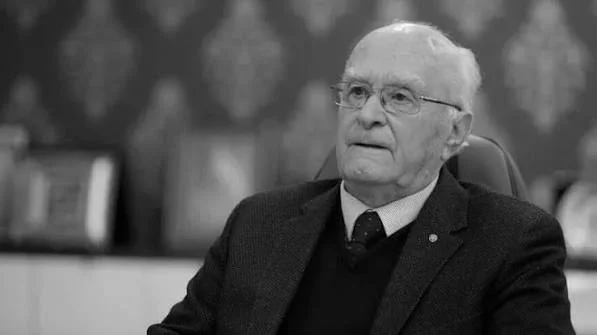
Raif Dizdarević (1926-2026) Yugoslav Politician
Full name: Raif Dizdarević
Born: 9 December 1926, Fojnica, Kingdom of Serbs, Croats and Slovenes
Died: 2 September 2026 (aged 99), Sarajevo, Bosnia and Herzegovina
Cause of death: Not publicly disclosed
Burial: Gradsko groblje Lav, Sarajevo, Federation of Bosnia and Herzegovina, Bosnia and Herzegovina
Occupation: Politician, diplomat, memoirist
Years active: 1945–1991
Known for: President of the Presidency of Yugoslavia (1988–1989)
Political party: League of Communists of Yugoslavia (1945–1991)
Relations: Zija Dizdarević (brother), Srđan Dizdarević (nephew)
Who Was Raif Dizdarević?
Raif Dizdarević (9 December 1926 – 2 September 2026) was a Yugoslav and Bosnian politician who served as Yugoslavia's first Bosnian Muslim president of the Presidency from 1988 to 1989. He was a Yugoslav Partisan during World War II, a career diplomat, and one of the last surviving figures from the highest echelons of the Socialist Federal Republic of Yugoslavia.
Dizdarević's life spanned nearly a century of Balkan history. He was born in Fojnica in 1926, joined the Partisan resistance at 17, and rose through the ranks of the Communist Party to become President of the Presidency of SR Bosnia and Herzegovina, Yugoslavia's Minister of Foreign Affairs, and finally head of state of the entire Yugoslav federation. He was in office during some of the most difficult years in Yugoslavia's history, when inflation soared, foreign debt mounted, and the country edged closer to the wars that would tear it apart.
He passed away in Sarajevo on 2 September 2026, at the age of 99. His death was reported by Klix.ba, Sarajevo Times, and other regional outlets. He was buried at Gradsko groblje Lav in Sarajevo, the city where he had spent his final years and where he had written his memoirs.
Raif Dizdarević Cause of Death
Raif Dizdarević died in Sarajevo, Bosnia and Herzegovina, on 2 September 2026, at the age of 99. A specific cause of death was not publicly disclosed by his family. He passed away peacefully at the age of 99, just over three months short of his 100th birthday.
His death was reported by Klix.ba, Sarajevo Times, and other regional news outlets, and it prompted an outpouring of remembrance across the former Yugoslavia. He was remembered as one of the last surviving figures from the era of Josip Broz Tito, and as a man who had tried to hold the Yugoslav federation together even as it was falling apart.
He was buried at Gradsko groblje Lav in Sarajevo, the city where he had spent his final years. His funeral was attended by family members, friends, and former colleagues who had worked with him during his long career in politics and diplomacy. His son Predrag lives in the United States, while his daughter Jasminka lives in Belgrade, Serbia.
Early Life
Raif Dizdarević was born on 9 December 1926 in Fojnica, in the Kingdom of Serbs, Croats and Slovenes, which is present-day Bosnia and Herzegovina. He was born into a Bosnian Muslim family but stopped practising Islam after entering primary school. He had seven brothers.
During royal Yugoslavia, some of his brothers were arrested due to their membership in the Communist Party, Socialist Youth, and the Progressive Syndicate Movement. All seven brothers joined the Yugoslav Partisans during World War II in Yugoslavia, and Raif joined at 17 years old. Three of his brothers, Nusret, Zija and Hasan, were killed during the war. Zija Dizdarević, who was also a notable Yugoslav writer, was among those who lost their lives in the conflict.
Political Career
After the war, as a member of the Communist Party, Dizdarević was elevated into higher-ranking political functions. From 1945, he was a member of the State Security Administration. As a diplomat, he served in embassies in Bulgaria from 1951 to 1954, the Soviet Union from 1956 to 1959, and Czechoslovakia from 1963 to 1967.
Dizdarević was an assistant Federal Secretary of Foreign Affairs, with Miloš Minić being the minister. From April 1978 until April 1982, he was the President of the Presidency of SR Bosnia and Herzegovina, after which he served as President of the Federal Assembly of Yugoslavia. From 15 May 1984 until 30 December 1987, he was Yugoslavia's Minister of Foreign Affairs.
On 15 May 1988, Dizdarević became President of the Presidency of Yugoslavia, following the resignation of Hamdija Pozderac. He was the first Bosnian Muslim to hold the position. During his time as head of state, Yugoslavia had a foreign debt of over US$21 billion and an annual inflation rate of 217 percent. In March 1989, Dizdarević had to cancel a foreign trip to Brazil, Uruguay and Senegal amid unrest in the Albanian-majority province of Kosovo. He served as President of the Presidency until 15 May 1989, when he was succeeded by Janez Drnovšek.
Writing Career
Dizdarević tried to keep the Yugoslav federation together, but he lost his political influence with the start of the Yugoslav Wars. In his later years, he lived in Sarajevo and devoted himself to writing. He published his memoirs under the title From the death of Tito to the death of Yugoslavia (Bosnian: Od smrti Tita do smrti Jugoslavije), and a book of memories on events and personalities called Times to be remembered (Bosnian: Vrijeme koje se pamti).
These books are considered valuable historical documents, offering a first-hand perspective on the inner workings of Yugoslav politics during the country's final decades. Dizdarević wrote with candour and insight, shedding light on the personalities and events that shaped the fate of his country.
Personal Life and Death
Raif Dizdarević's son Predrag lives in the United States, while his daughter Jasminka lives in Belgrade, Serbia. His nephew was the journalist, diplomat, and activist Srđan Dizdarević, who died in 2016. His brother Zija Dizdarević was a writer who was killed during World War II.
Dizdarević died in Sarajevo on 2 September 2026, at the age of 99. He was buried at Gradsko groblje Lav in Sarajevo, Federation of Bosnia and Herzegovina, Bosnia and Herzegovina. His death marked the end of an era in Yugoslav and Bosnian history, and he was mourned by people across the former Yugoslavia who remembered him as a man of principle and a dedicated public servant.
Career Highlights
Raif Dizdarević's career spanned more than four decades of public service in Yugoslavia. Here are some of the most significant milestones from his life and work.
| Year | Milestone | Details |
|---|---|---|
| 1926 | Born in Fojnica | Born on 9 December into a Bosnian Muslim family. |
| 1943 | Joined Yugoslav Partisans | Joined the resistance at the age of 17 during World War II. |
| 1945 | Joined State Security Administration | Began his career in public service after the war. |
| 1951–1954 | Diplomat in Bulgaria | Served at the Yugoslav embassy in Bulgaria. |
| 1956–1959 | Diplomat in the Soviet Union | Served at the Yugoslav embassy in the USSR. |
| 1963–1967 | Diplomat in Czechoslovakia | Served at the Yugoslav embassy in Czechoslovakia. |
| 1978–1982 | President of SR Bosnia and Herzegovina | Served as President of the Presidency of SR Bosnia and Herzegovina. |
| 1984–1987 | Minister of Foreign Affairs | Served as Yugoslavia's foreign minister. |
| 1988–1989 | President of the Presidency of Yugoslavia | Became Yugoslavia's first Bosnian Muslim head of state. |
| 2000s | Published memoirs | Wrote "From the death of Tito to the death of Yugoslavia" and "Times to be remembered". |
| 2026 | Died at 99 | Passed away in Sarajevo on 2 September. |
Tributes and Legacy
Following the announcement of Raif Dizdarević's death, tributes poured in from across the former Yugoslavia. He was remembered as one of the last surviving figures from the Tito era, and as a man who had dedicated his life to public service during some of the most turbulent years in Balkan history.
Report.az described him as a "former Yugoslav leader" who had died in Sarajevo at the age of 99. Sarajevo Times called him a "prominent BiH and Yugoslav politician and diplomat." Regional outlets across Bosnia, Serbia, and Croatia published obituaries celebrating his long career and his contributions to Yugoslav diplomacy.
Dizdarević's legacy is complex. He was a loyal communist who served the Yugoslav state for decades, but he was also a man who tried to keep the federation together when others were pulling it apart. His memoirs remain important historical documents, and his life story offers a window into a vanished world. He will be remembered as one of the most consequential Bosnian politicians of the 20th century.
Conclusion: Remembering Raif Dizdarević
Raif Dizdarević was a man who lived through almost the entire history of Yugoslavia. He was born in a kingdom, fought in a war of liberation, served in a socialist federation, and died in an independent Bosnia and Herzegovina. His life was a mirror of the 20th century in the Balkans.
His death on 2 September 2026, at the age of 99, marked the end of a remarkable journey. He passed away in Sarajevo, the city he had called home in his final years, and was buried at Gradsko groblje Lav. He is survived by his son Predrag, his daughter Jasminka, and a legacy that will be studied by historians for generations to come.
As the former Yugoslavia mourns his passing, it also celebrates a life well-lived. Raif Dizdarević will be deeply missed, but his memoirs, his diplomacy, and his efforts to hold his country together will be remembered long after his death.
Frequently Asked Questions: Raif Dizdarević
Who was Raif Dizdarević?
Raif Dizdarević (9 December 1926 – 2 September 2026) was a Yugoslav and Bosnian politician who served as Yugoslavia's first Bosnian Muslim president of the Presidency from 1988 to 1989. He participated in the armed resistance as a Yugoslav Partisan during World War II. He also served as President of the Presidency of SR Bosnia and Herzegovina and as Minister of Foreign Affairs.
How did Raif Dizdarević die?
Raif Dizdarević died in Sarajevo, Bosnia and Herzegovina, on 2 September 2026, at the age of 99. His death was reported by Klix.ba, Sarajevo Times, and other regional outlets. He passed away peacefully after a long life that spanned nearly a century of Yugoslav and Bosnian history.
What was Raif Dizdarević's cause of death?
Raif Dizdarević died in Sarajevo on 2 September 2026, at the age of 99. A specific cause of death was not publicly disclosed by his family. He passed away peacefully at the age of 99 after a long and distinguished career in politics and diplomacy.
Where was Raif Dizdarević buried?
Raif Dizdarević was buried at Gradsko groblje Lav in Sarajevo, Federation of Bosnia and Herzegovina, Bosnia and Herzegovina. He died in Sarajevo on 2 September 2026 and was laid to rest in the city where he had spent his final years.
What was Raif Dizdarević famous for?
Raif Dizdarević was famous for being Yugoslavia's first Bosnian Muslim president of the Presidency, serving from 1988 to 1989. He also served as President of the Presidency of SR Bosnia and Herzegovina from 1978 to 1982 and as Yugoslavia's Minister of Foreign Affairs from 1984 to 1987. He was a Yugoslav Partisan during World War II and later published notable memoirs.
Where was Raif Dizdarević born?
Raif Dizdarević was born on 9 December 1926 in Fojnica, in the Kingdom of Serbs, Croats and Slovenes, which is present-day Bosnia and Herzegovina. He was born into a Bosnian Muslim family but stopped practising Islam after entering primary school. He had seven brothers.
Was Raif Dizdarević a Yugoslav Partisan?
Yes, Raif Dizdarević participated in the armed resistance as a Yugoslav Partisan during World War II. He joined at the age of 17. All seven of his brothers joined the Yugoslav Partisans during the war, and three of them, Nusret, Zija and Hasan, were killed during the conflict.
What diplomatic posts did Raif Dizdarević hold?
As a diplomat, Raif Dizdarević served in Yugoslav embassies in Bulgaria from 1951 to 1954, the Soviet Union from 1956 to 1959, and Czechoslovakia from 1963 to 1967. He later served as an assistant Federal Secretary of Foreign Affairs, with Miloš Minić being the minister.
When was Raif Dizdarević President of SR Bosnia and Herzegovina?
Raif Dizdarević served as President of the Presidency of SR Bosnia and Herzegovina from April 1978 until April 1982. After that, he served as President of the Federal Assembly of Yugoslavia before becoming Minister of Foreign Affairs in 1984.
When was Raif Dizdarević Minister of Foreign Affairs?
Raif Dizdarević served as Yugoslavia's Minister of Foreign Affairs from 15 May 1984 until 30 December 1987. He worked under Prime Ministers Milka Planinc and Branko Mikulić during a period of significant economic and political challenges for Yugoslavia.
When was Raif Dizdarević President of the Presidency of Yugoslavia?
Raif Dizdarević became President of the Presidency of Yugoslavia on 15 May 1988, following the resignation of Hamdija Pozderac. He served until 15 May 1989. During his time as head of state, Yugoslavia had a foreign debt of over US$21 billion and an annual inflation rate of 217 percent.
What challenges did Raif Dizdarević face as President?
During Raif Dizdarević's time as head of state, Yugoslavia faced severe economic difficulties, with a foreign debt of over US$21 billion and an annual inflation rate of 217 percent. In March 1989, he had to cancel a foreign trip to Brazil, Uruguay and Senegal amid unrest in the Albanian-majority province of Kosovo.
What books did Raif Dizdarević write?
Raif Dizdarević published two notable memoirs. The first was "From the death of Tito to the death of Yugoslavia" (Bosnian: Od smrti Tita do smrti Jugoslavije). The second was a book of memories on events and personalities called "Times to be remembered" (Bosnian: Vrijeme koje se pamti).
Who were Raif Dizdarević's family members?
Raif Dizdarević was the brother of Zija Dizdarević, a notable Yugoslav writer who was killed during World War II. His nephew was Srđan Dizdarević, a journalist, diplomat, and activist who died in 2016. His son Predrag lives in the United States, while his daughter Jasminka lives in Belgrade, Serbia.
How old was Raif Dizdarević when he died?
Raif Dizdarević was 99 years old when he died on 2 September 2026. He was born on 9 December 1926 in Fojnica. He was just over three months short of his 100th birthday at the time of his death.
What was Raif Dizdarević's political affiliation?
Raif Dizdarević was a member of the League of Communists of Yugoslavia from 1945 until 1991. He was also a member of the League of Communists of Bosnia and Herzegovina. After the dissolution of Yugoslavia, he largely retired from active political life and focused on writing his memoirs.
Contents
- Who Was Raif Dizdarević
- Cause of Death
- Early Life
- Political Career
- Writing Career
- Personal Life and Death
- Career Highlights
- Tributes and Legacy
- Conclusion
- FAQs (16+ Questions)
Data Update
Based on Klix.ba, Sarajevo Times, Report.az, Wikipedia, and other public sources. Information about his death may change as more details become available.