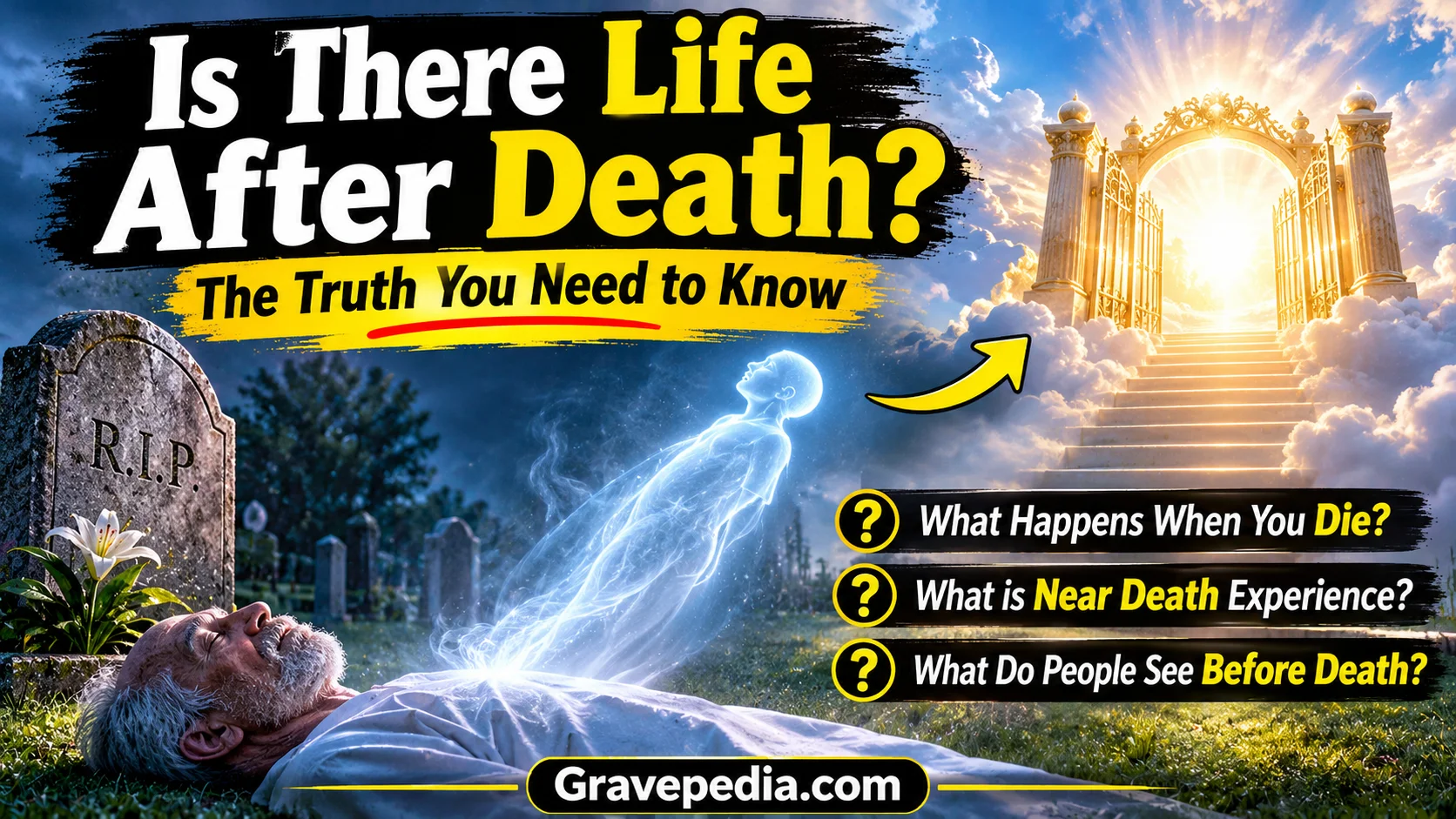
Is There Life After Death? What Happens When We Die?
The question is there life after death has occupied human thought for thousands of years. It sits at the intersection of science, medicine, religion, and personal belief. This guide examines what is actually known — from the biological process of dying to near-death experiences, end-of-life visions, and what different religions teach — without endorsing any single answer. The goal is to present what is documented, what is reported, and what remains genuinely unknown.
Is There Life After Death?
There is no scientific consensus that life continues after death. From a biological standpoint, death is the irreversible cessation of all vital functions. Consciousness, as far as medical science can measure, ends when the brain stops functioning. No peer-reviewed study has demonstrated that awareness persists after brain death.
At the same time, people across cultures and throughout history have reported experiences that seem to challenge this boundary — near-death experiences, end-of-life visions, and a strong sense of connection with those who have died. These reports are real in the sense that people genuinely experience them. Whether they point to an afterlife is a separate question, and one that science has not answered.
The honest position is this: what happens after death is not fully known. Science can describe the dying process in detail. It cannot say what, if anything, comes after. That remains a matter of belief, philosophy, and personal experience.
What Does Life After Death Mean?
Life after death refers to the idea that some part of a person — consciousness, soul, spirit, or identity — continues to exist after the physical body dies. The form this continuation takes varies widely across belief systems: an afterlife in heaven or hell, reincarnation into a new body, merging with a universal consciousness, or existing in some other state.
For many people, the concept provides comfort. For others, it is a philosophical question rather than a literal belief. Either way, the idea of life after death has shaped art, ethics, and culture for millennia.
Why Do People Believe in Life After Death?
People believe in life after death for many reasons. Religious upbringing and scripture play a major role for many. Others are influenced by personal experiences — a near-death experience, a vivid dream, or a sense of a loved one's presence after they have died.
Fear of death is another factor. Belief in an afterlife can reduce anxiety about mortality. So can the desire to see loved ones again. And for some, the idea that consciousness continues feels intuitively true, even without evidence.
None of these reasons prove or disprove an afterlife. They simply explain why the belief is so widespread and persistent.
Is There Scientific Proof of Life After Death?
No. There is currently no scientific proof of life after death. Science has not been able to detect consciousness or awareness persisting after brain death. Studies of near-death experiences have documented what people report, but they have not demonstrated that those experiences occur outside the brain.
This does not mean science has proven there is no afterlife. It means the question is outside the scope of what current scientific methods can test. Science deals with measurable phenomena. If an afterlife exists in a form that cannot be measured, science would not be able to detect it.
What Do Different Religions and Cultures Believe About the Afterlife?
Most major world religions teach some form of life after death, but the details vary significantly. Christianity and Islam describe an afterlife in heaven or hell, judged by how one lived. Hinduism and Buddhism teach rebirth and reincarnation, with the cycle continuing until liberation is achieved. Judaism focuses more on this life and leaves the afterlife largely unspecified. Indigenous and traditional belief systems around the world often describe ancestral spirits, lands of the dead, or cyclical return.
These beliefs are not evidence of an afterlife. They are frameworks through which billions of people have understood death, and they continue to shape how people grieve and find meaning.
What Happens When You Die?
Medically, dying is a process rather than a single moment. The heart stops, breathing stops, and brain activity ceases. Cells begin to die at different rates. What follows is a predictable sequence of physical changes.
What Happens to the Body Immediately After Death?
Immediately after death, the body begins to change. The skin pales as blood stops circulating (pallor mortis). The body starts to cool toward the surrounding temperature (algor mortis). Blood settles in the lowest parts of the body, causing a purplish discoloration (livor mortis). Within a few hours, the muscles stiffen (rigor mortis). These changes are well-documented and are used in forensic science to estimate time of death.
What Happens to the Brain When a Person Dies?
When the heart stops, the brain loses its supply of oxygen and glucose. Brain cells begin to die within minutes. There may be a brief period of abnormal electrical activity as the brain responds to oxygen loss, but this does not indicate consciousness. Once brain cells die, they do not regenerate. This is why brain death is considered irreversible.
Does Consciousness Continue After Death?
From a medical and scientific standpoint, consciousness does not continue after brain death. Consciousness is produced by the brain, and when the brain stops functioning, consciousness ends. Reports of awareness during near-death experiences occur during a period when the brain may still have some activity, not after confirmed brain death.
Whether consciousness could exist in some form independent of the brain is a philosophical and spiritual question, not a scientific one. Science has no evidence for it, but it also cannot rule it out by definition.
What Happens to the Body Hours and Days After Death?
Over hours and days, the body continues to change. Blood pools and settles. Rigor mortis peaks and then fades. Bacteria and enzymes begin to break down tissues, causing discoloration and bloating. Eventually, the soft tissues decompose, leaving the skeleton. The timeline depends on environmental conditions such as temperature, humidity, and whether the body is buried or exposed.
What Is the Difference Between Clinical Death and Brain Death?
Clinical death is the brief period when the heart stops and breathing stops, but the brain may still be alive. CPR and defibrillation can sometimes reverse clinical death. Brain death is the irreversible loss of all brain function, including the brain stem. It is a legal definition of death in many countries and cannot be reversed.
What Is a Near-Death Experience?
A near-death experience (NDE) is a reported experience that occurs during a close brush with death — for example, during cardiac arrest, a severe accident, or surgery. People who have had NDEs often describe them as vivid, real, and transformative.
What Is Considered a Near-Death Experience?
A near-death experience is typically defined as a subjective experience reported by a person who came close to dying or was clinically dead and then revived. The experience may include a sense of leaving the body, moving through a tunnel, seeing a bright light, encountering deceased loved ones, or a life review.
Common Near-Death Experience Symptoms and Reports
Common reports include:
- A sense of peace and calm
- Out-of-body sensations
- Moving through a tunnel or dark space
- Seeing a bright light
- Meeting deceased relatives or spiritual figures
- A life review or panoramic memory
- A reluctance to return to the body
These reports are consistent across cultures, which is one reason they are taken seriously by researchers. But consistency does not prove an afterlife — it may reflect how the dying brain responds to stress and oxygen loss.
Why Do Some People See Bright Lights During Near-Death Experiences?
The bright light reported in many NDEs may be related to brain activity during oxygen deprivation. Studies of dying brains have shown a surge of electrical activity in the moments after the heart stops. This activity could produce visual experiences such as light. It is also possible that the light has psychological or spiritual meaning for the person experiencing it. Both explanations can be true at once.
Why Do People Report Seeing Their Deceased Loved Ones?
Reports of seeing deceased loved ones during NDEs are common. Some researchers suggest these experiences may be the brain's way of comforting itself during extreme stress. Others see them as evidence of an afterlife or a spiritual dimension. There is no scientific consensus, and both interpretations remain open.
Are Near-Death Experiences Real or Scientific Brain Responses?
Both. The experiences are real in the sense that people genuinely have them and are often deeply affected by them. They are also associated with measurable brain activity during oxygen deprivation. Whether they are only brain responses or point to something beyond the brain is a question science has not settled.
What Do People See Before Death?
Some dying people report visions or experiences in the days or hours before death. These are known as end-of-life experiences. They are common and are taken seriously by many palliative care professionals.
Do People See Deceased Loved Ones Before Death?
Yes, many dying people report seeing or sensing deceased loved ones. These experiences are often comforting and are not usually associated with fear or distress. They are reported across cultures and are considered a normal part of the dying process by many hospice workers.
Why Do Some Dying People Report Seeing Visions?
The causes are not fully understood. Possible explanations include changes in brain chemistry, medication effects, oxygen deprivation, and psychological factors. Some researchers also consider spiritual or transcendental explanations. Most clinicians focus on whether the experience is distressing or comforting to the patient.
What Are End-of-Life Experiences?
End-of-life experiences are subjective experiences reported by dying people, such as visions, dreams, or a sense of presence. They are distinct from near-death experiences because they occur during the final phase of life rather than during a reversible crisis.
Are Visions Before Death Common?
Yes, they are common. Studies and clinical reports suggest that a significant proportion of dying people experience some form of vision or dream in their final days or hours. These experiences are often meaningful and comforting.
What Does Science Say About Experiences Near the End of Life?
Science acknowledges that these experiences are real and common. It has not settled on a single explanation. Possible causes include neurological changes, medication, and psychological factors. The experiences are not usually treated as evidence of an afterlife by medical science, but they are respected as meaningful to the dying person and their family.
What Does Science Say About Life After Death?
Science has not found evidence of life after death. It has, however, documented a great deal about the dying process and about experiences reported near death.
Scientific Studies on Near-Death Experiences
Researchers have studied NDEs for decades. Studies have found that NDEs are reported by a minority of people who survive cardiac arrest. The reports are often consistent across cultures and are frequently described as more real than ordinary experience. However, no study has demonstrated that these experiences occur outside the brain.
What Happens to Consciousness When the Brain Stops Functioning?
Consciousness ends when the brain stops functioning. This is the mainstream scientific view. The brain produces consciousness, and when the brain dies, consciousness dies with it. Reports of awareness during cardiac arrest occur during a period when the brain may still have some activity, not after brain death.
Can Science Explain Experiences Reported Near Death?
Science can explain many features of near-death experiences. Oxygen deprivation, brain chemistry changes, medication, and stress can all produce hallucinations, visions, and altered states of consciousness. But science cannot yet explain every detail of every report, and some aspects remain puzzling. The most honest position is that science has partial explanations, not complete ones.
What Scientists Still Do Not Know About Death
Scientists still do not fully understand consciousness, the exact moment of death, or why some people report vivid experiences during cardiac arrest. The hard problem of consciousness — why and how subjective experience arises from physical processes — remains unsolved. These gaps leave room for belief, but they do not constitute evidence for an afterlife.
What Do Different Religions Believe Happens After Death?
Most religions teach some form of life after death. The details vary, but the shared theme is that death is not the end of existence.
Life After Death in Christianity
Christianity teaches belief in resurrection and eternal life. The soul is judged after death and enters heaven, hell, or (in some traditions) purgatory. The exact details vary among denominations, but the core belief is that life continues after death.
Life After Death in Islam
Islam teaches that after death, the soul enters an intermediate state (barzakh) until the Day of Judgment, when it will be judged and sent to paradise or hell. The belief in an afterlife is one of the core articles of faith in Islam.
Rebirth and Reincarnation in Hinduism
Hinduism teaches that the soul (atman) is eternal and is reborn in a new body after death. This cycle of birth, death, and rebirth continues until the soul achieves liberation (moksha) and is freed from the cycle.
Life After Death in Buddhism
Buddhism teaches rebirth and the cycle of samsara. The goal is to achieve enlightenment and escape the cycle of suffering. Some Buddhist traditions also describe intermediate states between death and rebirth.
Heaven, Hell, and the Concept of an Afterlife
Heaven and hell are concepts found in many religions, though their meanings vary. They often represent states of reward or punishment after death. For many believers, these concepts provide moral guidance and comfort. For others, they are symbolic rather than literal.
What Is the Difference Between Near-Death Experiences and Death?
Near-death experiences and death are not the same. A near-death experience is a reported experience during a close brush with death, often when the brain is still active. Death itself is irreversible.
Can Someone Have a Near-Death Experience and Return to Life?
Yes. By definition, a near-death experience involves surviving the event. People who have NDEs are revived, usually through CPR or other medical intervention. The experience occurs during the crisis, not after confirmed death.
Why Near-Death Experiences Are Not the Same as Confirmed Death
A near-death experience happens during a period when the brain may still have some activity. Confirmed death, by contrast, means the brain has irreversibly stopped functioning. NDEs are reported by people who came back. No one has returned from confirmed brain death to report what happened.
How Doctors Determine Whether Someone Has Died
Doctors determine death by confirming the irreversible cessation of circulatory and respiratory functions or the irreversible cessation of all brain function, including the brain stem. Brain death is confirmed through a series of neurological tests.
Common Myths About Life After Death
There are many myths and misconceptions about death and the afterlife. Here are some of the most common.
Does Everyone See a Bright Light Before Death?
No. Not everyone reports seeing a bright light. Near-death experiences vary widely. Some people report a tunnel, some report a light, some report meeting deceased loved ones, and others report no unusual experience at all. The bright light is one common report, not a universal one.
Can People Communicate With the Dead?
There is no scientific evidence that people can communicate with the dead. Some people report experiences that feel like communication, such as dreams or a sense of presence, but these are not evidence of actual contact. Many purported mediums and methods have been tested and have not held up under controlled conditions.
Do Near-Death Experiences Prove an Afterlife?
No. Near-death experiences are real experiences, but they do not prove an afterlife. They occur during a period when the brain may still have activity, and they can be explained in part by brain chemistry and oxygen deprivation. This does not mean the experiences are meaningless — it means they are not scientific proof of an afterlife.
Is There a Scientific Explanation for Every Death-Related Experience?
Not yet. Science has explanations for many features of near-death and end-of-life experiences, but not all. Some aspects remain unexplained. This does not mean the unexplained parts are supernatural — it means science has not yet fully understood them.
Frequently Asked Questions About Life After Death
Is There Life After Death?
There is no scientific evidence of life after death. Consciousness ends when the brain stops functioning. Whether something else continues is a matter of religious, philosophical, or personal belief, not scientific fact.
What Happens When You Die?
Medically, the heart stops, breathing stops, and brain activity ceases. The body then goes through a predictable sequence of changes, including cooling, stiffening, and eventually decomposition. What happens after that is not known.
What Is a Near-Death Experience?
A near-death experience is a reported experience during a close brush with death, such as cardiac arrest. People often describe feelings of peace, out-of-body sensations, a tunnel, a bright light, or encountering deceased loved ones.
What Do People See Before Death?
Some dying people report visions, dreams, or a sense of presence. These are known as end-of-life experiences. They are common and are often comforting, though their exact cause is not fully understood.
Do People See Their Loved Ones Before They Die?
Many dying people report seeing or sensing deceased loved ones in their final days or hours. These experiences are common and are often meaningful and comforting to the dying person.
Does the Brain Remain Active After Death?
The brain may have brief electrical activity after the heart stops, but this is not consciousness. Once brain cells die, brain activity ceases permanently. Brain death is irreversible.
Can a Person Hear After They Die?
There is some evidence that hearing may be the last sense to go in the dying process. However, this occurs before death, not after. After confirmed death, there is no brain activity and therefore no hearing.
Are Near-Death Experiences Scientifically Proven?
Near-death experiences are well-documented as reported experiences, but they have not been proven to be evidence of an afterlife. They are associated with brain activity during oxygen deprivation and can be partially explained by science.
What Happens to Consciousness After Death?
From a scientific standpoint, consciousness ends when the brain stops functioning. Whether consciousness could continue in some form is a philosophical and spiritual question, not a scientific one.
Do All Religions Believe in Life After Death?
No. Most major religions teach some form of life after death, but the details vary significantly. Some traditions focus more on this life and leave the afterlife unspecified or open.
Final Thoughts on Whether There Is Life After Death
The question is there life after death is not one that science has answered. Science can describe the dying process in detail. It can document near-death experiences and end-of-life visions. It cannot say what, if anything, comes after death.
Near-death experiences are real in the sense that people genuinely have them, but they do not prove an afterlife. They occur during a period when the brain may still have activity, and they can be partially explained by brain chemistry. The fact that they are not proof does not make them meaningless — for many people, they are deeply significant.
Different religions and cultures offer different answers, and those answers matter deeply to billions of people. The honest position is that death remains a mystery in its ultimate sense. What we do know is that life is finite, and that how we live it matters. Whether or not something follows, the time we have is worth taking seriously.