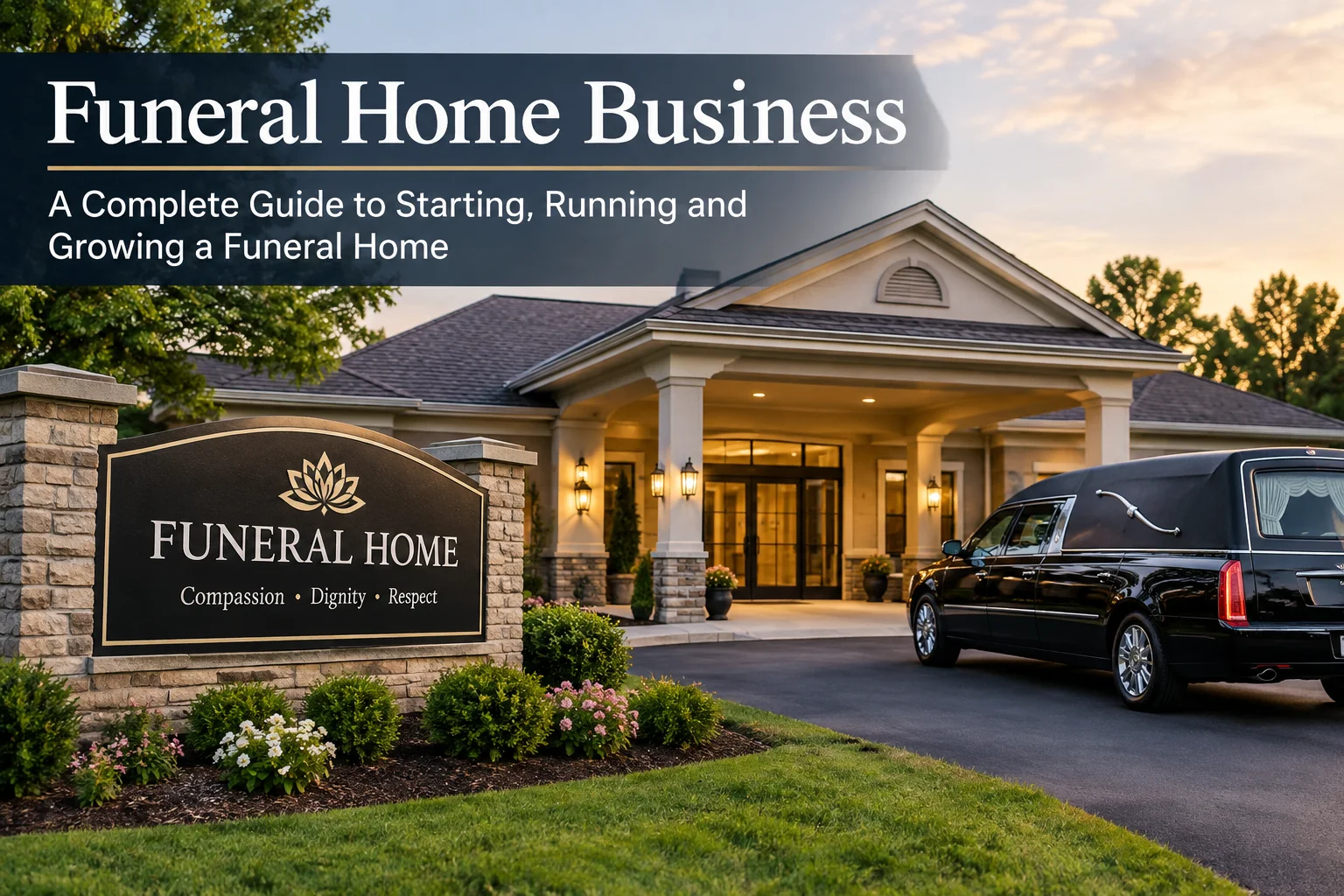
Funeral Home Business: How to Start a Funeral Home
Startup cost: $150,000 - $1,000,000+
Annual revenue: $300,000 - $800,000
Profit margin: 10% - 20%
Time to open: 6 - 18 months
Total U.S. funeral homes: ~19,000
Industry revenue: $20 billion+ annually
Funeral Home Business: A Complete Guide
Opening a funeral home is a serious business decision that combines service to families with sound financial planning. The funeral industry in the United States generates over $20 billion in annual revenue. There are approximately 19,000 funeral homes across the country, and most are small, family-owned businesses. For entrepreneurs who want to serve their community while building a stable business, starting a funeral home can be a rewarding path.
This guide covers everything you need to know about the funeral home business. It walks through startup costs, licensing requirements, how to start a funeral service business, and what it takes to run a funeral home successfully. It also covers funeral home investment and how to calculate the cost to start a funeral home based on your location and services.
Whether you want to open a small funeral home in a rural area or a full-service funeral establishment in a city, the same core steps apply. You need proper licensing, a suitable location, quality equipment, and a clear understanding of your market.
Is the Funeral Home Business Profitable?
Yes, a funeral home business can be profitable. The average funeral home generates $300,000 to $800,000 in annual revenue. Profit margins generally range from 10 to 20 percent depending on location, services offered, and operational efficiency. Funeral homes in high-demand areas with strong pre-need sales and cremation services often see higher margins.
Steady demand drives the profitability of the funeral industry. Death is a certainty, and families need funeral services regardless of economic conditions. This stability makes funeral homes attractive for long-term investors who want a resilient business with predictable cash flow.
Revenue streams for a funeral home include traditional burial packages, cremation services, casket and urn sales, memorial products, transportation, pre-need contracts, and in some cases cemetery plot sales. Diversifying services helps improve margins and reduce risk.
Funeral Home Startup Cost Breakdown
The cost to start a funeral home varies widely based on location, size, and services offered. A small funeral home with basic facilities may cost $150,000 to $350,000. A full-service funeral home with a chapel, multiple visitation rooms, and a preparation room typically costs $500,000 to $1,000,000. Here is a detailed breakdown of funeral home startup costs.
| Expense Category | Estimated Cost | Notes |
|---|---|---|
| Real estate or lease | $100,000 - $500,000 | Purchase or lease of commercial property |
| Building renovation | $50,000 - $200,000 | Preparation room, chapel, office, parking |
| Preparation room equipment | $30,000 - $80,000 | Embalming table, ventilation, instruments |
| Vehicles | $60,000 - $150,000 | Hearse, removal van, family limousine |
| Furniture and fixtures | $20,000 - $60,000 | Chapel seating, caskets display, office |
| Licensing and permits | $5,000 - $20,000 | State licenses, business permits, zoning |
| Insurance | $5,000 - $15,000 | Liability, property, auto, workers comp |
| Initial inventory | $10,000 - $40,000 | Caskets, urns, memorial products |
| Working capital | $30,000 - $100,000 | Payroll, utilities, marketing for 6 months |
| Total startup cost | $310,000 - $1,165,000 | Depends on size and location |
Small funeral homes in rural areas often cost less to open than full-service funeral homes in cities. You can also reduce startup costs by leasing instead of buying property, buying used vehicles, and starting with a limited service menu.
Funeral Home Business Requirements
Opening a funeral home requires meeting several legal and professional requirements. These vary by state, so always check with your state funeral board before proceeding.
Funeral Director License
Most states require a licensed funeral director to own or manage a funeral home. To get this license you typically need an associate's or bachelor's degree in mortuary science, an apprenticeship of one to two years, and a passing score on a state board exam. Some states require a separate embalming license.
Funeral Establishment License
Every funeral home must have a funeral establishment license issued by the state. This license confirms that the facility meets health, safety, and zoning requirements. Inspections are typically required before the license is issued.
Business License and Permits
You need a standard business license, an employer identification number, a sales tax permit, and sometimes a separate permit for the sale of caskets and other goods. Some cities also require a conditional use permit for funeral homes in residential areas.
Facility Requirements
State regulations specify minimum requirements for the preparation room, ventilation, refrigeration, sanitation, and equipment. You need a private area for embalming, a visitation room, a chapel or service area, and adequate parking for families.
Insurance Requirements
Funeral home insurance is required in all states. This includes general liability insurance, professional liability insurance, commercial property insurance, commercial auto insurance for vehicles, and workers compensation insurance for employees. Annual insurance costs range from $5,000 to $15,000 for a small funeral home.
How to Start a Funeral Home
Starting a funeral home takes careful planning. Here is a step by step guide to help you open your funeral home business.
Step 1: Research Your Market
Study the local funeral market. Find out how many funeral homes operate in your area, what services they offer, and what their pricing looks like. Look at demographic data such as the age of the local population, average income, and religious preferences. A location with an aging population and limited competition is ideal.
Step 2: Get Licensed
Complete the education and apprenticeship required to become a licensed funeral director in your state. This can take two to four years. In some states, you can own a funeral home without being a licensed director, but you must hire a licensed director to manage daily operations.
Step 3: Write a Business Plan
Write a detailed business plan that covers your services, pricing, target market, marketing strategy, staffing, and financial projections. This plan is required if you want to get a business loan or attract investors.
Step 4: Secure Financing
Funeral home investment typically comes from personal savings, bank loans, Small Business Administration loans, or private investors. Because funeral homes are considered stable businesses, banks often lend to qualified buyers. Expect to provide a significant down payment and a detailed financial plan.
Step 5: Find a Location
Choose a location that is easy for families to reach. Suburban and small-town locations often work well because of lower real estate costs and less competition. The property must be zoned for a funeral home or you must apply for a conditional use permit.
Step 6: Renovate and Equip the Facility
Renovate the building to meet state requirements. You need a preparation room with proper ventilation and sanitation, a visitation area, a chapel, an office, a casket display room, and adequate parking. Purchase embalming equipment, vehicles, furniture, and initial inventory.
Step 7: Hire Staff
Most funeral homes need licensed funeral directors, embalmers, funeral assistants, and administrative staff. Start with a small team and expand as your business grows. Pay competitive wages to attract qualified professionals.
Step 8: Market Your Business
Build relationships with local hospitals, nursing homes, hospice centers, clergy, and community organizations. Offer pre-need planning services. Create a professional website, list your business in local directories, and provide excellent service so families recommend you to others.
Owning a Funeral Home: What to Expect
Owning a funeral home is a demanding but rewarding profession. You are responsible for serving families during some of the most difficult moments of their lives. The work requires compassion, professionalism, and attention to detail.
Daily operations include meeting with families to plan services, coordinating with cemeteries and crematories, managing staff, ordering supplies, maintaining vehicles and equipment, and handling the financial side of the business. Many funeral home owners work long hours, especially in the first few years.
Owning funeral homes also means managing a substantial investment. The assets include real estate, vehicles, equipment, and inventory. The business itself has value and can be sold or passed on to family members. Many funeral homes stay in the same family for generations.
To succeed in running a funeral home you need a strong reputation for honesty and care. Families choose funeral homes they trust, and word of mouth is the most powerful marketing tool in this industry.
Funeral Home Investment and Financing
Funeral home investment can be structured in several ways. You can start a new funeral home from scratch, buy an existing funeral home, or invest in a franchise or partnership. Each path has different costs and risks.
Starting From Scratch
Building a new funeral home gives you full control over the design, services, and branding. It also requires the highest upfront investment and carries the most risk because you have no existing customer base. Expect to spend $150,000 to $1,000,000 or more depending on the size and location.
Buying an Existing Funeral Home
Buying an existing funeral home is often faster and less risky. You acquire an established business with a customer base, staff, and equipment. The purchase price of a funeral home typically ranges from one to three times its annual revenue. A funeral home earning $500,000 per year might sell for $500,000 to $1,500,000.
Franchise or Partnership
Some funeral home chains offer franchise or partnership opportunities. This route gives you a proven business model, marketing support, and shared resources. In return you pay franchise fees and share profits. Franchise fees typically range from $30,000 to $100,000 plus ongoing royalties.
Factors That Affect Funeral Home Startup Costs
Many factors influence the cost to start a funeral home. Knowing them helps you build an accurate budget.
- Location: Urban real estate costs more than rural property.
- Building condition: Renovation costs increase if major work is needed.
- Services offered: Full service funeral homes cost more to set up than cremation only businesses.
- Vehicles: New hearses and limousines cost more than used ones.
- Staff: Licensed funeral directors and embalmers command higher wages.
- Inventory: A large casket showroom requires more capital than a small display.
- Licensing: Some states charge higher fees for funeral home licenses.
- Marketing: A strong launch campaign increases early costs but builds customer flow.
- Insurance: Premiums vary by state and coverage levels.
- Working capital: You need enough cash to cover six months of operations.
Tips to Reduce Funeral Home Startup Costs
If you want to reduce funeral home business start up costs, here are practical steps you can take.
- Lease instead of buy: Leasing a commercial property requires less upfront capital than buying.
- Buy used vehicles: Used hearses and removal vans cost 30 to 50 percent less than new ones.
- Start small: Begin with basic funeral services and add services as your business grows.
- Buy in bulk: Negotiate discounts with casket and urn suppliers for larger orders.
- Share facilities: In some states you can share a preparation room with another funeral home.
- Focus on cremation: Cremation services require less equipment and space than full burial services.
- Apply for SBA loans: Small Business Administration loans offer lower interest rates for qualified buyers.
- Use digital marketing: Online marketing costs less than traditional advertising and reaches more families.
Common Mistakes When Starting a Funeral Home
Avoid these mistakes to improve your chances of success.
- Underestimating startup costs: Many new owners spend more than they planned on renovation, equipment, and licensing.
- Ignoring local regulations: Each state has its own funeral home rules, and violations can lead to fines or closure.
- Skipping the business plan: A strong plan is required for financing and helps you stay on track.
- Choosing the wrong location: Poor visibility, bad road access, or high competition hurts business.
- Hiring too fast: Overstaffing increases costs before revenue ramps up.
- Neglecting marketing: Even a great funeral home needs promotion to attract families.
- Not investing in pre-need services: Pre-need contracts provide steady income and customer loyalty.
Conclusion: Starting a Funeral Home Business
Opening a funeral home is a long-term commitment that combines community service with solid financial returns. The cost to start a funeral home ranges from $150,000 to over $1,000,000 depending on location, services, and facility size. Most funeral homes earn $300,000 to $800,000 annually with profit margins of 10 to 20 percent.
To succeed you need a funeral director license, a business plan, financing, a suitable location, and a strong marketing strategy. Owning a funeral home is not just a business, it is a responsibility to serve families with dignity and care. If you approach it with preparation and integrity, a funeral home business can provide both financial stability and personal fulfillment for decades.
Frequently Asked Questions: Funeral Home Business
How much does it cost to start a funeral home?
The cost to start a funeral home in the United States ranges from $150,000 to over $1,000,000. A small funeral home with basic facilities may cost $150,000 to $350,000. A full-service funeral home with a chapel, visitation rooms, and a preparation room typically costs $500,000 to $1,000,000. Costs include real estate, building renovation, equipment, vehicles, licensing, and initial operating capital.
What are the requirements for opening a funeral home?
Opening a funeral home requires a state issued funeral director license, a funeral establishment license, compliance with state and local health regulations, proper zoning for the property, a preparation room with required equipment, licensed vehicles for transportation, business insurance, and a business license. Some states also require a separate embalming license.
Is a funeral home business profitable?
Yes, funeral homes can be profitable. The average funeral home generates $300,000 to $800,000 in annual revenue with profit margins of 10 to 20 percent. Profitability depends on location, competition, services offered, and operational efficiency. Pre-need contracts and cremation services provide steady revenue.
What licenses do I need to start a funeral home?
You need a state funeral director license, a funeral establishment license, and often a separate embalming license. Other requirements include a business license, a sales tax permit, an employer identification number, and compliance with OSHA and EPA regulations. Requirements vary by state.
How long does it take to open a funeral home?
Opening a funeral home typically takes 6 to 18 months from the initial planning stage to opening day. This includes obtaining licenses, securing a location, renovating the building, purchasing equipment, and hiring staff. Getting the funeral director license itself can take 2 to 4 years of education and apprenticeship.
Do I need a degree to start a funeral home?
Most states require an associate's or bachelor's degree in mortuary science, plus an apprenticeship of 1 to 2 years, and passing a state board exam to become a licensed funeral director. Some states also require a separate embalming license. Check your state's specific requirements before starting.
How do funeral homes make money?
Funeral homes make money from funeral services, burial packages, cremation services, casket sales, vault sales, urns, memorial products, transportation, pre-need contracts, and cemetery plot sales in some cases. The average funeral home earns $300,000 to $800,000 in annual revenue.
What is a funeral home startup cost breakdown?
A funeral home startup cost breakdown includes real estate or lease ($100,000 to $500,000), building renovation ($50,000 to $200,000), preparation room equipment ($30,000 to $80,000), vehicles ($60,000 to $150,000), furniture and fixtures ($20,000 to $60,000), licensing and permits ($5,000 to $20,000), insurance ($5,000 to $15,000), initial inventory ($10,000 to $40,000), and working capital ($30,000 to $100,000).
Can I run a funeral home from my house?
Most states and local zoning laws do not allow a full funeral home to operate from a residential home. However, some small funeral service businesses, such as direct cremation or memorial planning services, may operate from a home office if local zoning permits. A full funeral home with a preparation room and visitation areas typically requires a commercial property.
What is the average profit margin for a funeral home?
The average profit margin for a funeral home is 10 to 20 percent. Smaller homes tend to have lower margins due to fixed costs, while larger homes with cremation services and pre-need contracts can achieve higher margins. Well run funeral homes in high demand areas can see profit margins above 20 percent.
How many funeral homes are in the United States?
There are approximately 19,000 funeral homes in the United States, according to the National Funeral Directors Association. Most are small, family owned businesses. The funeral industry generates over $20 billion in annual revenue in the United States.
Is the funeral home business growing?
The funeral home business is stable but evolving. While the number of traditional burials has declined slightly, cremation services have grown significantly. The funeral industry adapts by offering cremation packages, memorial services, and online planning tools. The total market remains strong at over $20 billion annually.
What is the best location for a funeral home?
The best location for a funeral home is near a residential area with an aging population, good road access, and low competition. Suburban and small town locations often work well because they have lower real estate costs and less competition than urban areas. Proximity to hospitals, nursing homes, and places of worship also helps.
Do I need insurance to open a funeral home?
Yes, funeral home insurance is required. You need general liability insurance, professional liability insurance, commercial property insurance, commercial auto insurance for vehicles, and workers compensation insurance if you have employees. Insurance costs typically range from $5,000 to $15,000 per year for a small funeral home.