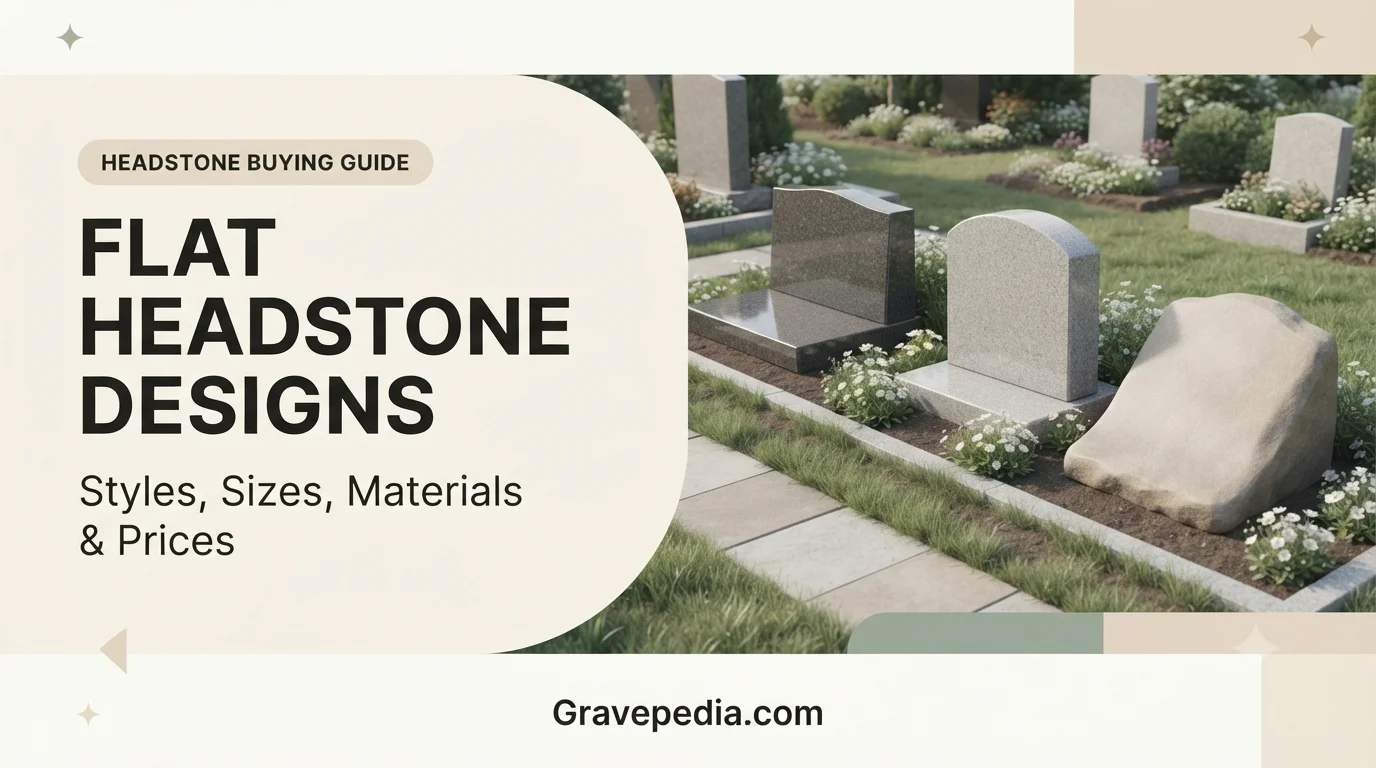
Flat Headstone Designs: Styles, Sizes, Materials and Prices
Flat headstone designs offer a discreet, elegant way to memorialize a loved one. Set level with the ground, flat markers are required in many memorial parks and preferred by families who want a clean, unassuming tribute. This guide covers popular flat headstone designs, single vs double flat headstones, materials and finishes, sizes and cemetery rules, costs and installation, and how to choose the right flat grave marker.
What Is a Flat Headstone?
A flat headstone, also called a flat marker, flush marker, or lawn marker, is a memorial that sits level with the ground. Unlike upright headstones that stand vertically, flat markers are designed to blend into the cemetery landscape, creating a seamless appearance while still providing a permanent tribute.
Flat markers are commonly made from granite, marble, or bronze. Granite markers are carved from solid stone with inscriptions engraved directly onto the surface. Bronze markers are cast in metal and typically mounted on a granite base. The flat design makes cemetery maintenance easier, as there are no stones to trim around and mowers can pass over without obstruction.
Many memorial parks and some traditional cemeteries require flat markers for ease of maintenance and visual uniformity. Other cemeteries allow both flat and upright headstones, giving families a choice.
Popular Flat Headstone Designs
Flat headstone designs range from simple and understated to highly detailed and personalized. The flat surface provides a generous canvas for engraving, allowing for a wide range of design possibilities.
Common flat headstone design styles:
- Traditional Rectangular: A clean rectangular shape with a simple border, providing a clear space for names, dates, and a short inscription. This is the most common and versatile design.
- Religious Designs: Praying hands, crosses, open Bibles, doves, and angels are popular choices that reflect faith and devotion.
- Floral Designs: Roses, lilies, sunflowers, and floral borders add a soft, natural touch to the memorial.
- Landscape and Nature Scenes: Mountains, trees, ocean horizons, and garden scenes can be etched across the marker for a personalized tribute.
- Hobby and Interest Themes: Deer, fishing scenes, musical notes, or other symbols that reflect the person's passions.
- Double-Line Borders: A simple engraved border frames the inscription area and adds a finished, elegant look.
- Laser-Etched Portraits: Realistic portraits etched into granite, often on black granite for maximum contrast and detail.
Single vs. Double Flat Headstones
Flat headstones are available for single burials and for couples or companions. Understanding the differences helps you choose the right option.
| Factor | Single Flat Headstone | Double (Companion) Flat Headstone |
|---|---|---|
| Purpose | Marks one grave | Marks two graves side by side or stacked |
| Typical Size | 24 x 12 to 28 x 16 inches | 36 x 12 to 48 x 18 inches or larger |
| Design Layout | One inscription area | Two inscription areas, often with a shared epitaph or design element between them |
| Cost Range | $300 to $1,500+ | $800 to $2,500+ (roughly 25% to 33% more than single) |
| Common Designs | Religious symbols, flowers, simple borders | Intertwined hearts, wedding rings, shared verses, two portraits |
Flat headstone designs for couples often feature two names with shared dates and a central design element. Popular choices include intertwined wedding rings, a shared heart, or a verse that spans both inscriptions. Some families choose a design that tells the couple's story through landscape scenes or shared hobbies.
Flat Grave Marker Materials and Finishes
The material and finish you choose affect the appearance, durability, and cost of your flat headstone.
Granite: The most popular material for flat markers. Granite is durable, weather-resistant, and available in many colors including gray, black, green, blue, red, and mahogany. Gray granite is typically the least expensive, while black granite costs 10% to 20% more due to limited quarry locations. Granite markers can be polished, honed, or sandblasted.
Marble: A classic material that offers a traditional appearance. Marble is softer than granite and more vulnerable to weathering, so it requires more maintenance. It is often used for VA markers.
Bronze: Bronze flat markers are cast in metal and typically mounted on a granite base. They are valued for their warmth and lasting finish, and they resist weathering well. Bronze markers are often 24 x 12 inches with a 3/4 inch rise.
Finish options:
- Polished: A glossy, reflective surface that shows engraving clearly.
- Honed or Matte: A softer, non-reflective finish that reduces glare.
- Sandblasted: A textured finish often used for lettering and designs.
Flat Headstone Sizes and Cemetery Rules
Flat headstone sizes vary, and cemeteries often have specific rules about maximum dimensions. Standard sizes provide a good starting point, but always confirm with your cemetery before ordering.
| Marker Type | Common Sizes | Notes |
|---|---|---|
| Standard Flat Granite | 24 x 12 x 4 inches | Common size for single graves |
| Larger Single Flat | 28 x 16 x 4 inches | Provides more design space |
| Small Flat Marker | 16 x 8 to 20 x 10 inches | Compact option |
| Double Flat Marker | 36 x 12 to 48 x 18 inches | For two graves; varies by cemetery |
| Bronze Flat Marker | 24 x 12 inches with 3/4 inch rise | Standard VA size; mounted on granite base |
Cemetery rules to check: Many cemeteries restrict flat marker sizes, materials, and placement. Some allow only flat markers in certain sections, while others require them throughout. Municipal cemeteries may have bylaws specifying maximum dimensions, such as 32 x 24 inches for a full plot or 18 x 18 inches for a cremation plot. Always ask for the cemetery's written regulations before ordering.
Flat Headstone Costs and Installation
Flat headstone costs depend on material, size, design complexity, and personalization. The table below shows typical price ranges.
| Marker Type | Typical Price Range | Notes |
|---|---|---|
| Basic Flat Granite Marker | $300 to $800 | Simple design, minimal engraving |
| Single Flat Granite with Design | $1,000 to $1,500 | Praying hands, flowers, borders |
| Double Flat Marker | $800 to $2,500+ | Depends on granite color and engraving |
| Bronze Flat Marker | $1,000 to $3,500 | Includes granite base |
| Installation Fee | $150 to $450 | Separate from marker cost |
Installation considerations: Installation is a separate step from purchasing the marker. Even if you buy from a monument company, the cemetery usually handles installation and may charge a separate fee. Installation costs range from $150 to $450 but can vary based on location, cemetery restrictions, ground conditions, and marker size. Some cemeteries require their own staff or approved contractors to install markers.
How to Choose a Flat Grave Marker
Choosing the right flat grave marker involves balancing design, budget, and cemetery requirements. These steps can help you make a thoughtful decision.
- Check Cemetery Regulations First: Before browsing designs, confirm the allowed sizes, materials, and types of markers. This prevents falling in love with a design that cannot be installed.
- Decide on Single or Companion: If you are memorializing a couple, a double flat marker may be appropriate. For one person, a single marker offers more design flexibility within a smaller space.
- Choose a Material: Granite is the most durable and widely available. Bronze offers a distinct look and lasting finish. Consider the climate and maintenance requirements.
- Select a Design: Think about the person's personality, faith, and interests. A simple border, a religious symbol, or a laser-etched portrait can all be meaningful.
- Plan the Inscription: Include the full name, birth and death dates, and a short epitaph or verse. Keep it concise for readability and cost control.
- Request a Proof: Reputable providers send a digital proof or mockup for approval before production. Review all spelling and dates carefully.
- Confirm Installation Details: Ask who will install the marker, what the fee includes, and whether a foundation is required.
Flat Headstone Designs: What Families Should Know
When choosing a flat headstone, keep these practical points in mind:
- Flat markers sit level with the ground and are required in many memorial parks.
- Granite is the most durable and popular material, with gray being the least expensive.
- Single markers are typically 24 x 12 inches; double markers are larger.
- Cemetery rules on size, material, and placement vary widely.
- Basic flat granite markers start around $300 to $800.
- Installation is usually a separate fee of $150 to $450.
- Always request a proof and approve it before production begins.
Taking the time to understand your options and check cemetery rules helps you choose a flat headstone that honors your loved one and complies with local requirements.
Frequently Asked Questions About Flat Headstone Designs
What is a flat headstone called?
A flat headstone is also called a flat marker, flush marker, lawn marker, or grass marker. It is a memorial set level with the ground, designed for a discreet appearance and easier cemetery maintenance. Flat markers are commonly made from granite, marble, or bronze.
How much does a flat grave marker cost?
Flat grave marker costs vary by material, size, and personalization. Basic flat granite markers can start around $300 to $800. Mid-range single flat markers with engraved designs typically cost $1,000 to $1,500. Double or companion flat markers generally range from $800 to $2,500 or more depending on granite color and engraving detail. Installation fees add $150 to $450.
What is the difference between a flat marker and an upright headstone?
A flat marker sits level with the ground, while an upright headstone stands vertically above the ground. Flat markers are easier for cemetery maintenance and are required in many memorial parks. Upright headstones are more visible from a distance and allow for larger designs and inscriptions. Both can be personalized with names, dates, artwork, and symbols.
Can flat headstones be personalized?
Yes. Flat headstones can be personalized with names, dates, inscriptions, religious symbols, floral designs, laser-etched portraits, and custom artwork. Granite markers allow detailed engraving and etching. Bronze markers offer cast designs and emblems. Personalization options vary by provider and cemetery rules.
Are flat headstones allowed in every cemetery?
No. Cemetery rules vary widely. Many memorial parks and some cemeteries require flat markers only, while others allow both flat and upright headstones. Some cemeteries restrict marker size, material, and placement. Always check with the cemetery before ordering a flat headstone to ensure it meets local regulations.
Final Thoughts
Flat headstone designs offer a dignified, space-efficient way to memorialize a loved one. Whether you choose a simple granite marker with a clean border, a bronze plaque with detailed emblems, or a double marker for a couple, the flat format provides a lasting tribute that blends beautifully into the cemetery landscape. Start by checking cemetery regulations, choose a durable material like granite, and work with a reputable provider who can guide you through design and installation. A well-chosen flat headstone honors your loved one for generations to come.
Contents
- What Is a Flat Headstone?
- Popular Flat Headstone Designs
- Single vs. Double Flat Headstones
- Flat Grave Marker Materials and Finishes
- Flat Headstone Sizes and Cemetery Rules
- Flat Headstone Costs and Installation
- How to Choose a Flat Grave Marker
- What Families Should Know
- FAQs (5 Questions)
- Final Thoughts
Data Update
Based on general flat headstone design information. Actual costs, material availability, and cemetery regulations vary by location and provider. Verify current details with local memorial masons and cemetery authorities before publishing or making arrangements.