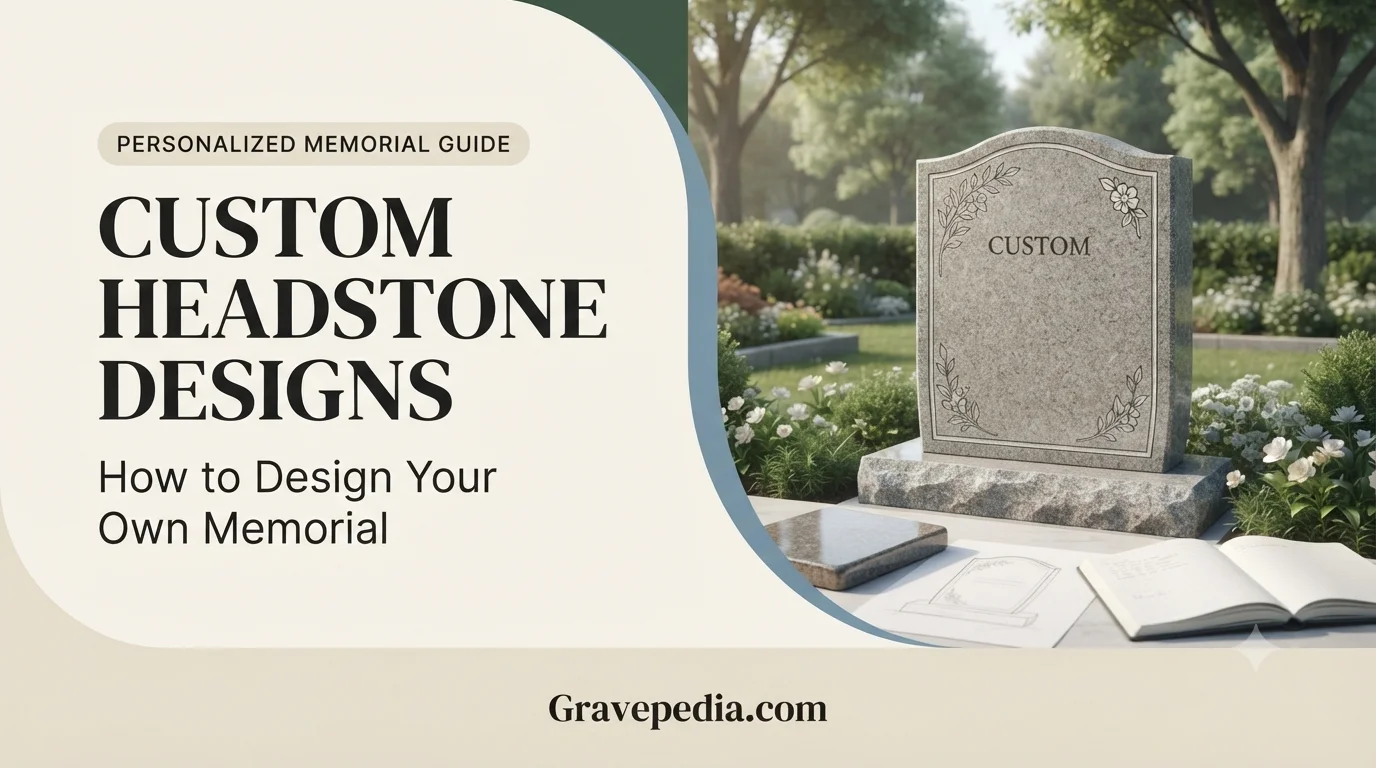
Custom Headstone Designs: How to Design Your Own Memorial
When you design your own headstone, you create a lasting tribute that reflects a loved one's unique life, personality, and values. Modern design tools and custom monument services make it easier than ever to personalize every detail, from the shape and material to the artwork and inscription. This guide explains what a custom headstone is, how to design one, choosing shape and material, adding names and artwork, custom grave marker options, working with a monument designer, and ordering and approving your design.
What Is a Custom Headstone?
A custom headstone is a memorial designed specifically for one person or family, rather than chosen from a standard catalog. It can be customized in nearly every way, including the shape, size, material, color, finish, lettering, artwork, and symbols. A custom headstone can be simple and minimalist, or elaborate and sculptural, depending on the family's wishes and budget.
Custom headstone designs allow families to move beyond generic templates and create something that genuinely reflects the person being honored. Whether you want to design your own grave marker with a favorite hobby, a meaningful quote, or a laser-etched portrait, the possibilities are extensive. Modern technology, including online design tools and AI-assisted platforms, has made the process more accessible for families who want to create a personalized memorial.
How to Design Your Own Headstone
Designing your own headstone is a process that can be as involved or as simple as you choose. Whether you are planning ahead for yourself or designing a memorial for a loved one, these steps can guide you.
- Start With the Person: Before thinking about fonts or shapes, reflect on what defined them. What were their passions, values, and personality? What would they want people to remember?
- Choose One or Two Strong Elements: Rather than trying to include everything, select one or two meaningful elements that capture their essence. This often creates a more powerful and timeless design.
- Check Cemetery Regulations: Before designing, confirm allowed sizes, materials, and shapes with the cemetery. This prevents designing something that cannot be installed.
- Select a Shape and Material: Decide on the type of headstone (flat, upright, companion) and the material (granite, marble, bronze). Each choice affects cost and appearance.
- Plan the Layout: Arrange the name, dates, inscription, and artwork. The name should be the most prominent element, followed by dates and then the inscription.
- Use Design Tools or Work With a Designer: Many providers offer online design tools, and some offer 3D configurators. AI-powered platforms can also help you visualize your design.
- Review and Approve Proofs: Before production, review a proof of your design. Make sure spelling, dates, and artwork are correct.
- Order and Arrange Installation: Once approved, the headstone is produced and installed, often with a foundation poured by the cemetery or an approved installer.
Choosing the Shape, Material and Finish
The shape, material, and finish you choose affect both the appearance and the cost of your custom headstone. Understanding the options helps you make informed decisions.
Common shapes for custom headstones:
- Upright Tablet: The traditional vertical headstone, available in rectangular, round-top, or custom shapes.
- Flat Marker: Set flush with the ground, economical and widely accepted by cemeteries.
- Companion Headstone: Designed for two people, often spouses, with space for both names and dates.
- Custom Shapes: Heart-shaped, book-shaped, obelisk, or natural boulder designs.
Material options:
- Granite: The most durable and popular choice, accounting for roughly 90% of headstones sold. Available in many colors, with gray being the least expensive and black granite costing 10% to 20% more.
- Marble: A classic look, but softer and more vulnerable to weathering. Costs 25% to 40% more than granite.
- Bronze: Usually attached to granite bases, bronze markers offer durability and a distinct appearance. Plaques run $2,000 to $5,000 for single markers.
Finish options:
- Polished: A glossy, reflective surface that shows lettering clearly.
- Honed or Matte: A softer, non-reflective finish that reduces glare and creates an understated look.
- Rock Pitch or Natural Edge: A rough, unpolished edge that contrasts with polished faces, often used on boulder-style memorials.
Adding Names, Dates, Artwork and Inscriptions
The names, dates, artwork, and inscriptions are what make a custom headstone truly personal. This is where you can tell the story of a life.
Names and dates:
- Use the person's full legal name, or a nickname if that is how they were known.
- Include birth and death dates. You can add significant life milestones if space allows.
- Use fonts at least 1 inch tall for names so they are legible from a few feet away.
Inscriptions and epitaphs:
- Keep it short. Shorter inscriptions age better and cost less per character.
- Choose a quote, poem, or phrase that captures something meaningful about the person.
- Consider including a favorite saying or a sentiment that brings comfort to visitors.
Artwork and symbols:
- Laser-etched portraits: A realistic image of the person etched into granite, which can remain for centuries.
- Hobby and career icons: Musical notes, paintbrushes, gardening tools, or symbols of their profession.
- Religious symbols: Crosses, Stars of David, lotus flowers, or Celtic knots.
- Natural motifs: Flowers, trees, landscapes, or birds.
- Personal touches: A signature, a favorite quote, or a meaningful symbol.
Custom Grave Marker Design Options
Custom grave markers come in many forms, each with its own advantages. The table below summarizes common options.
| Marker Type | Typical Cost Range | Notes |
|---|---|---|
| Flat Granite Marker | $400 to $1,500 | Most economical, widely accepted |
| Upright Single Monument | $1,500 to $4,000 | Traditional, visible from a distance |
| Custom Upright Monument | $4,000 to $6,000+ | Detailed artwork, custom shapes |
| Companion Marker (Flat) | $800 to $2,000 | For two people, side-by-side |
| Companion Monument (Upright) | $3,500 to $8,000 | Space for two names and extensive text |
| Bronze Marker on Granite | $2,000 to $5,000 | Durable, distinctive appearance |
Design your own bronze grave marker: Bronze markers can be customized with names, dates, inscriptions, and symbols. They are usually attached to a granite base and offer a durable, low-maintenance memorial.
Design your grave marker black granite engraved memorial headstone: Black granite is a popular choice for laser etching because of its dark background and polished finish, which provides excellent contrast for detailed artwork and portraits.
Working With a Monument Designer
Working with a monument designer can make the process easier and ensure your design meets all requirements. A designer can help you navigate the many options and avoid common pitfalls.
What a monument designer can do for you:
- Show Samples: Let you see and touch different granite colors and finishes in person.
- Provide Scale Drawings or 3D Renderings: Help you visualize the final design before production.
- Advise on Layout: Ensure the name, dates, and artwork are arranged for readability and visual balance.
- Check Cemetery Regulations: Verify that your design complies with local rules on size, material, and installation.
- Liaise With the Cemetery: Handle permits and coordinate installation.
- Coordinate With a Stonemason: Ensure the design can be produced and installed correctly.
Questions to ask a monument designer:
- Can I see samples of the granite colors and finishes?
- Can you provide a 3D rendering of the design?
- What are the cemetery's regulations for this design?
- What is the total cost, including installation and foundation?
- How long will production and installation take?
Ordering and Approving a Custom Design
Once you have finalized your design, the next step is ordering and approving it for production. This process ensures the final headstone matches your wishes.
- Review the Proof: The designer or provider will send you a proof or scale drawing of the final design. Check spelling, dates, artwork, and layout carefully.
- Make Any Corrections: If anything needs to be changed, request corrections before approving the design.
- Approve the Final Design: Once you are satisfied, approve the design in writing. This is the design that will be produced.
- Arrange Payment: Many providers require payment in advance or at the time the proof is approved. Payment plans and financing may be available.
- Production: The headstone is cut, engraved, and finished by the stonemason.
- Installation: The headstone is delivered and installed, often with a concrete foundation. The cemetery may charge a separate installation or foundation fee.
- Final Inspection: After installation, inspect the headstone to ensure it matches the approved design and is set properly.
Payment options: Some providers offer internal financing with monthly payments, or third-party financing through services like Affirm or Klarna. Always check the total cost, interest, and fees before agreeing to a payment plan.
Custom Headstone Designs: What Families Should Know
When designing a custom headstone, keep these practical points in mind:
- Start with the person, not the design. What defined them?
- Choose one or two strong personal elements rather than trying to include everything.
- Check cemetery regulations before finalizing your design.
- Granite is the most durable and cost-effective material for most families.
- Simple designs often age better than highly detailed or trendy ones.
- Work with a reputable monument designer who can provide samples and renderings.
- Review and approve the final proof carefully before production.
- Ask about payment plans if you need to spread the cost.
Taking the time to design a thoughtful custom headstone creates a lasting tribute that will honor your loved one for generations.
Frequently Asked Questions About Custom Headstone Designs
Can you design your own headstone?
Yes. You can design your own headstone by choosing the shape, material, finish, inscription, artwork, and symbols. Many memorial providers offer online design tools and 3D configurators that let you visualize your design before ordering. You can also work with a monument designer who can guide you through the process and ensure the design meets cemetery regulations.
How does custom headstone design work?
Custom headstone design starts with choosing a shape and material, then adding names, dates, artwork, and inscriptions. You can use online design tools, work with a monument designer, or use AI-powered design platforms. After finalizing the design, it is sent to a stonemason for production. The process includes reviewing proofs, approving the final design, and arranging installation.
Can you customize a grave marker online?
Yes. Many memorial providers offer online design tools that allow you to select templates, edit text, upload images, and preview your design. Some platforms offer 3D configurators with instant price estimates. AI-powered tools like MemorialAI allow you to describe your vision and generate realistic visual representations of the tombstone. You can then download the design or share it with a stonemason.
How much does a custom headstone cost?
Custom headstone costs vary based on size, material, and complexity. Single upright monuments typically range from $1,500 to $4,000, while custom upright monuments with detailed artwork or laser-etched portraits can cost $4,000 to $6,000 or more. Companion monuments range from $3,500 to $8,000. Engraving adds $20 to $25 per character on average, or $500 to $1,500 for a typical inscription.
What information is needed to design a headstone?
To design a headstone, you need the full legal name and dates of birth and death, any inscription or epitaph you want, symbols or artwork that reflect the person's life, and the cemetery's regulations on size, material, and design. You should also have a budget in mind and know the plot location. Working with a monument designer can help ensure all requirements are met.
Final Thoughts
Designing your own headstone is a meaningful way to create a lasting tribute that reflects a loved one's life and personality. Whether you use online design tools, work with a monument designer, or use AI-powered platforms, the process allows you to personalize every detail. Start with the person, choose meaningful elements, check cemetery regulations, and review proofs carefully before ordering. A thoughtfully designed custom headstone becomes a place of comfort and remembrance for generations to come.
Contents
- What Is a Custom Headstone?
- How to Design Your Own Headstone
- Choosing the Shape, Material and Finish
- Adding Names, Dates, Artwork and Inscriptions
- Custom Grave Marker Design Options
- Working With a Monument Designer
- Ordering and Approving a Custom Design
- What Families Should Know
- FAQs (5 Questions)
- Final Thoughts
Data Update
Based on general custom headstone design information. Actual costs, material availability, and cemetery regulations vary by location and provider. Verify current details with local memorial masons and cemetery authorities before publishing or making arrangements.