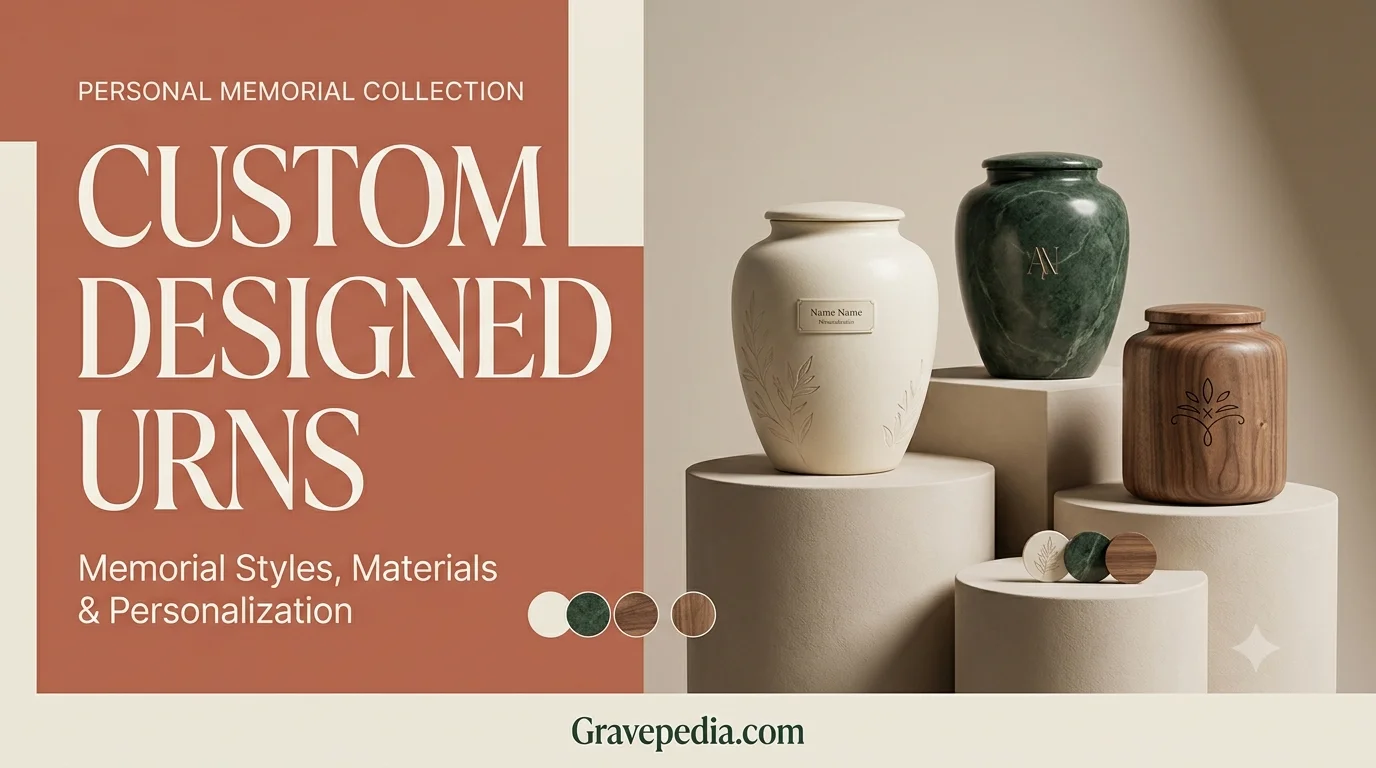
Custom Designed Urns: Memorial Styles, Materials and Personalization
Custom designed urns offer a personal and enduring way to memorialize a loved one. From engraved names and dates to fully bespoke 3D-printed shapes that reflect a hobby or passion, the options for personalization are nearly limitless. This guide covers what custom designed urns are, types of cremation urns, materials, shapes and finishes, personalized urns with names and artwork, memorial urns for different preferences, custom urn prices and ordering, and how to care for and display a memorial urn.
What Are Custom Designed Urns?
A custom designed urn is a cremation urn that has been personalized or created specifically for an individual, rather than selected from standard stock designs. Customization can range from simple engraving of a name and dates to fully bespoke designs that reflect a person's personality, hobbies, or life story.
The demand for personalized memorials has grown significantly. Families increasingly want an urn that genuinely represents the person it holds, whether that means a traditional urn with a meaningful inscription or a completely unique shape that echoes a favorite pastime. Modern technology, including 3D printing and laser engraving, has made fully custom urns more accessible than ever before.
Custom designed urns serve two purposes. They provide a dignified container for cremated remains, and they act as a lasting tribute that can be displayed at home, placed in a columbarium, or buried according to the family's wishes. The design should reflect the person's life and bring comfort to those who remember them.
Types of Cremation Urns
Cremation urns come in several types, each suited to different needs and preferences. Understanding the options helps families choose the right one.
Full-size urns: Designed to hold the complete cremated remains of an adult. Full-size urns typically have a capacity of around 200 cubic inches, which corresponds to the ashes of an adult who weighed approximately 200 pounds. They come in a wide range of shapes, including vase-shaped, box, cylinder, and custom forms.
Keepsake urns: Smaller urns designed to hold a portion of the ashes, allowing several family members to each keep a share. Keepsake urns may hold as little as 0.05 liters or up to 50 cubic inches, depending on the design. They are often shared among siblings or loved ones.
Companion urns: Designed to hold the ashes of two people together, often spouses or partners. Companion urns are larger than single urns and may have two separate compartments or a shared interior space.
Scattering urns: Designed for temporary use during a scattering ceremony. They are often made from biodegradable materials such as paper, sand, or salt, and are meant to break down naturally over time.
Specialty urns: Include urns designed for specific purposes, such as urns that double as lamps, urns for pets, and urns that incorporate a photo frame or display compartment.
Materials, Shapes and Finishes
The material of an urn affects its appearance, durability, and suitability for different display locations. The table below summarizes common materials.
| Material | Characteristics | Best For |
|---|---|---|
| Metal (Brass, Bronze, Stainless Steel) | Durable, corrosion-resistant, polished or antiqued finishes | Indoor and outdoor display, lasting memorials |
| Stone (Marble, Granite, Cultured Granite) | Solid, timeless, natural, each piece unique | Indoor display, niches, traditional memorials |
| Wood (Cherry, Oak, Walnut, Cedar) | Warm, natural, elegant, softer feel | Indoor display, homes with a natural aesthetic |
| Glass | Elegant, hand-blown options, light-reflecting | Indoor display, decorative settings |
| Ceramic and Porcelain | Artistic, hand-painted, detailed motifs | Indoor display, artistic tributes |
| Resin and Composite | Versatile, affordable, can mimic other materials | Budget-conscious families, creative designs |
| Eco-friendly (Biodegradable) | Made from paper, sand, salt, or natural fibers | Scattering, green burial, environmentally conscious families |
Metal urns: Metal urns are among the most durable and widely chosen. Brass urns are popular for their warm golden appearance, while cast bronze urns offer exceptional longevity. Stainless steel urns are highly resistant to corrosion and are suitable for both indoor and outdoor display. Pewter urns offer a soft, understated finish. Die-cast zinc urns with bronze faces provide a more affordable alternative to solid bronze.
Stone urns: Marble and granite urns offer a timeless, substantial appearance. Natural stone urns are unique, with each piece having its own veining and character. Cultured granite is a popular material for laser-engraved photo urns because it provides a solid black surface that reveals crisp white engraving. Stone urns are suitable for indoor display and for niche placement in columbariums.
Wood urns: Wood urns bring warmth and natural beauty to a memorial space. They are available in a range of finishes and wood species, including cherry, oak, walnut, and cedar. Some wooden urns feature inlaid stone or wood accents. Wood urns are generally best kept indoors in a dry, temperature-stable environment.
Shapes and finishes: Urns come in a wide range of shapes, from traditional vase and cylinder forms to boxes, chests, spheres, hearts, and custom sculptural designs. Finishes include polished (glossy and reflective), brushed or satin (soft, non-reflective), antiqued (aged appearance), and powder-coated (durable colored finish).
Personalized Urns With Names and Artwork
Personalization is what makes a custom urn truly meaningful. Names, dates, artwork, and photographs can all be incorporated into the design.
Engraving: Most urns can be engraved with the person's full name, birth and death dates, and a short inscription, poem, or Bible verse. Engraving is typically done on a brass or bronze plaque attached to the urn, or directly onto the surface of stone or metal urns. Font styles range from classic serif to elegant script.
Laser-etched photographs: Laser engraving allows a photograph to be reproduced directly onto the surface of the urn. Black granite and cultured granite are especially well suited for this because the dark background provides excellent contrast for the white engraving. Photo urns in cultured granite are available with the photo, names, and dates included.
Photo compartments: Some urns, particularly wooden urns, include a separate photo slot or compartment that holds a printed photograph. This allows the family to change the photo over time if desired.
Custom 3D-printed urns: For a truly unique tribute, 3D-printed urns can be created in almost any shape. Examples include an urn modeled after a favorite recliner, a panda, or a Jeep Wrangler. The process involves creating a 3D model, getting customer approval, printing the urn (which can take up to 24 hours), and then painting and finishing it with realistic details. Keepsake 3D urns start at around $300, with full-size custom urns starting at higher price points.
Memorial Urns for Different Preferences
Custom urns can be designed to reflect a wide range of personalities, interests, and cultural traditions.
Hobby and interest themes: Urns can be designed around a person's passions, such as fishing, gardening, music, sports, military service, or travel. Themed urns allow the memorial to reflect what brought the person joy in life.
Religious and cultural designs: Urns are available with religious symbols such as crosses, Stars of David, doves, or praying hands. Some designs incorporate cultural motifs that reflect the person's heritage.
Nature and outdoor themes: Landscape scenes, floral designs, and nature-inspired motifs are popular choices. Biodegradable urns made from natural materials offer an environmentally conscious option for scattering or green burial.
Companion and family urns: Companion urns allow couples to be memorialized together. Some designs include two separate compartments, while others have a shared interior space. Companion urns are available in materials including metal, stone, and wood.
Keepsake urns: Smaller keepsake urns allow multiple family members to each hold a portion of the ashes. They are available in many of the same materials and styles as full-size urns, including hearts, acorns, and other symbolic shapes.
Custom Urn Prices and Ordering
Custom urn costs vary widely depending on the material, size, and level of personalization. The table below shows typical price ranges.
| Urn Type | Typical Price Range | Notes |
|---|---|---|
| Standard Engraved Urn (Metal, Wood, or Stone) | $300 to $1,500 | Includes basic engraving; depends on material and size |
| Cast Bronze or Die-Cast Zinc Urn | $895 to $1,535 | Premium metal urns with customizable front plate |
| Laser-Engraved Photo Urn (Cultured Granite) | Mid-range | Includes photo, names, and dates engraving |
| Custom 3D-Printed Keepsake Urn | From $300 | Base model; additional charges for further customization |
| Custom 3D-Printed Full-Size Urn | From $3,312 | Base model with keying and assembly; higher tiers add more customization |
| Biodegradable or Scattering Urn | $100 to $500 | Paper, sand, salt, or natural fiber materials |
Ordering process: For standard personalized urns, the process typically involves selecting the urn, providing the engraving text or photo, and approving a proof before production. For fully custom 3D-printed urns, the process begins with a consultation, followed by 3D modeling, customer approval of the model, printing (which can take up to 24 hours), post-printing quality checks, painting, and final finishing.
Where to order: Custom urns can be ordered through funeral homes, directly from urn retailers, from online marketplaces, or from specialized custom urn designers. When ordering through a funeral home, the FTC Funeral Rule requires that you be given an itemized price list for urns and other merchandise.
Caring for and Displaying a Memorial Urn
Proper care and thoughtful display help preserve the urn and create a meaningful memorial space.
Cleaning by material: Each material requires different care. Metal urns should be dusted with a microfiber cloth and wiped with mild soap if needed, then dried immediately to prevent water spots. Stone urns should be cleaned with a pH-neutral cleaner and a soft cloth, avoiding acidic products like vinegar or lemon. Glass urns should be cleaned gently with a lint-free cloth and mild soapy water, never submerged. Wood urns should be dusted with a dry cloth and kept out of direct sunlight and away from moisture.
Display locations: Common display locations include the bedroom (especially for surviving spouses), a home office, a living room, or a dedicated memorial space. A dedicated memorial area can include framed photographs, candles, fresh or silk flowers, and personal mementos that reflect the person's life. Feng shui guidance suggests placing the urn in rooms with natural light and avoiding bathrooms, kitchens, and spaces near the main entrance.
Safety considerations: Place the urn on a stable surface at chest height or higher if there are young children or pets in the home. A non-slip liner or museum putty can add security. Glass and ceramic urns are breakable, so metal, wood, or stone may be safer choices in households with active children or large pets.
Custom Designed Urns: What Families Should Know
When choosing a custom designed urn, keep these practical points in mind:
- Custom urns can be personalized with engraving, photographs, and fully bespoke shapes.
- Materials include metal, stone, wood, glass, ceramic, resin, and biodegradable options.
- Full-size urns hold around 200 cubic inches; keepsake urns hold a smaller portion.
- Laser-engraved photo urns in black granite or cultured granite offer detailed, lasting images.
- 3D-printed custom urns allow almost any shape to be created.
- Prices range from $300 for keepsake urns to several thousand dollars for fully custom full-size designs.
- Each material requires different cleaning and care to preserve its appearance.
- Display the urn in a place that feels peaceful and meaningful, with safety in mind.
Frequently Asked Questions About Custom Designed Urns
Can cremation urns be customized?
Yes. Cremation urns can be customized in many ways, including shape, size, material, color, finish, engraving, and artwork. Custom options range from engraved names and dates to laser-etched photographs, 3D-printed shapes that reflect a hobby or passion, and fully bespoke designs. Many providers offer personalization services, and some specialize in fully custom 3D-printed urns.
What materials are used to make memorial urns?
Memorial urns are made from a wide range of materials, including metal (brass, bronze, stainless steel, aluminum, pewter), stone (marble, granite, cultured granite), wood (cherry, oak, walnut, cedar), glass, ceramic, porcelain, resin, and eco-friendly materials such as biodegradable paper, sand, and salt. The choice of material affects the urn's appearance, durability, and suitability for indoor or outdoor display.
How do you choose the right urn?
To choose the right urn, consider the intended display location (indoor or outdoor), the material's durability and maintenance needs, the size needed to hold the full amount of ashes, and the design that best reflects the person's personality or interests. Full-size urns typically hold around 200 cubic inches, while keepsake urns hold a smaller portion. Check cemetery or columbarium rules if the urn will be placed in a niche.
Can names and photographs be added to an urn?
Yes. Urns can be engraved with names, dates, poems, Bible verses, and other text. Photographs can be added through laser engraving on black granite or other suitable materials, or by using a photo urn that includes a slot or compartment for a printed photo. Some keepsake urns allow both text and photo engraving on the lid or body.
How much do custom designed urns cost?
Custom urn costs vary widely. Standard personalized urns with engraving typically range from $300 to $1,500 depending on material and size. Cast bronze or die-cast zinc urns range from $895 to $1,535. Custom 3D-printed urns start at around $300 for keepsake sizes and $3,312 for full-size base models, with additional charges for further customization. Laser-engraved photo urns in cultured granite are also available at mid-range prices.
Final Thoughts
Custom designed urns offer a personal and enduring way to honor a loved one. Whether you choose a traditional metal urn with an engraved inscription, a laser-engraved photo urn in black granite, or a fully bespoke 3D-printed design that reflects a lifelong passion, the urn should feel like a genuine tribute. By considering the material, display location, and level of personalization that feels right, you can create a memorial that brings comfort for years to come.
Contents
- What Are Custom Designed Urns?
- Types of Cremation Urns
- Materials, Shapes and Finishes
- Personalized Urns With Names and Artwork
- Memorial Urns for Different Preferences
- Custom Urn Prices and Ordering
- Caring for and Displaying a Memorial Urn
- What Families Should Know
- FAQs (5 Questions)
- Final Thoughts
Data Update
Based on general custom urn information. Actual costs, material availability, and customization options vary by provider and location. Verify current details with local urn providers and memorial professionals before publishing or making arrangements.