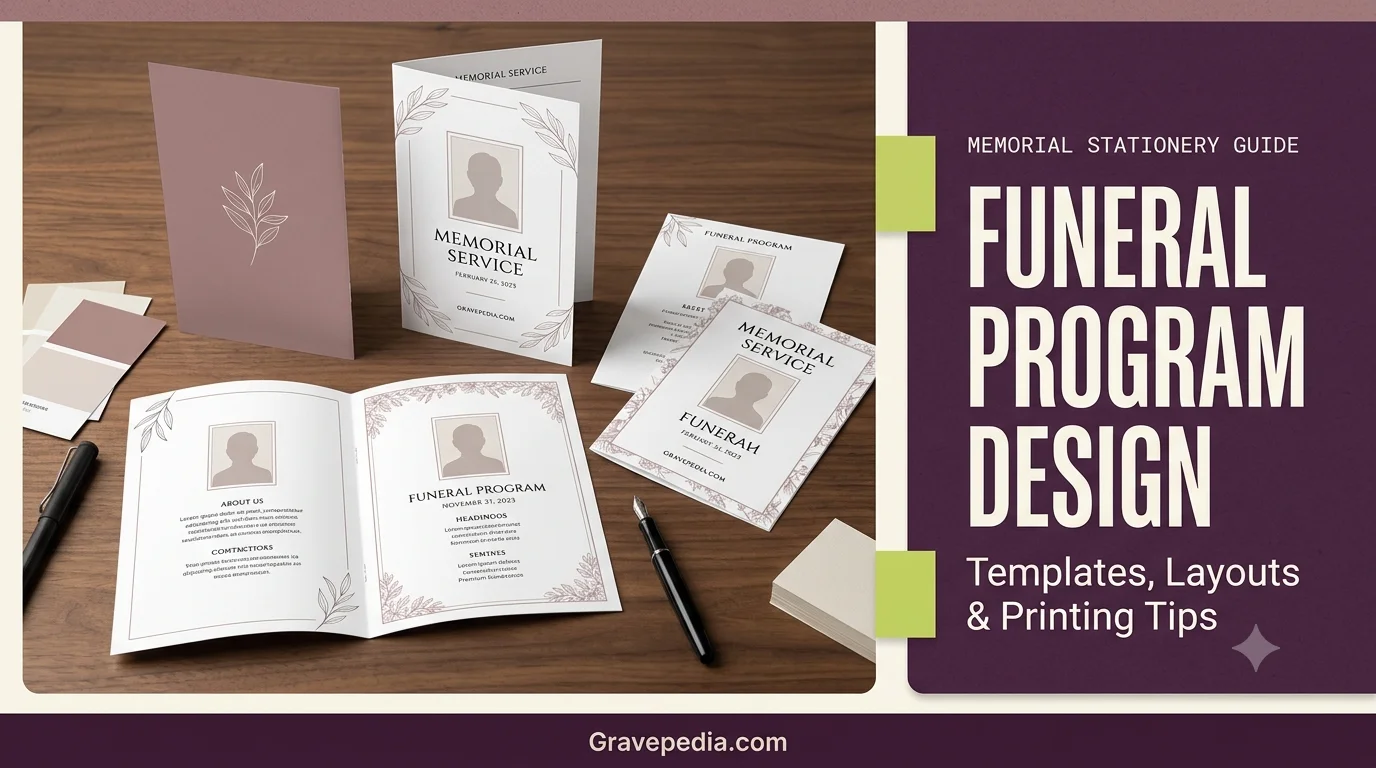
Funeral Program Design: Templates, Layouts and Printing Tips
Funeral program design turns a simple order of service into a meaningful keepsake that family and friends can treasure for years. A well-designed program guides guests through the service, honors the person's life, and reflects their personality through photos, fonts, and colors. This guide covers what a funeral program is, common layouts, what to include, choosing photos and fonts, design templates, printing and paper options, and memorial brochures and obituary programs.
What Is a Funeral Program?
A funeral program is a printed booklet or leaflet distributed to guests at a funeral, memorial service, or celebration of life. It serves two main purposes: it guides attendees through the order of service, and it acts as a keepsake that family and friends can take home as a remembrance of the person who died.
Funeral programs go by several names, including memorial programs, funeral pamphlets, memorial brochures, and order of service booklets. Regardless of the name, the purpose is the same: to honor the person's life and provide a structured, meaningful guide for the ceremony.
A well-designed funeral program typically includes the person's name and dates, a photograph, the order of service, a brief biography or obituary, names of participants, and a closing message. The design should reflect the person's personality and the tone of the service, whether traditional, religious, or a more informal celebration of life.
Common Funeral Program Layouts
The layout you choose determines how much content fits on each page and how the program feels when opened. The most common options are bi-fold, tri-fold, and single-sheet layouts.
| Layout | Description | Best For |
|---|---|---|
| Single Sheet | One page printed on both sides, often folded in half | Short services, limited content, budget-conscious families |
| Bi-Fold | One sheet folded once, creating four panels | Standard funeral programs with order of service and biography |
| Tri-Fold | One sheet folded twice, creating six panels | Longer services with more content, photos, and tributes |
| Multi-Page Booklet | Several sheets folded and stapled or bound | Elaborate services, extensive biographies, many photos |
Single sheet: The simplest option. One page, usually printed on both sides and folded in half. This layout works well when the service is short and the content is limited to the essentials.
Bi-fold: The most common funeral program layout. A single sheet is folded once, creating four panels. The front panel displays the person's name, photo, and dates. The inside panels hold the order of service, biography, and other content. The back panel may include a thank-you message or a poem.
Tri-fold: A single sheet folded twice, creating six panels. This layout provides more space for longer services, more photographs, and additional tributes. It is a good choice when you want to include a fuller biography or several readings.
Multi-page booklet: Several sheets folded and bound together. This is the most elaborate option and is used for services with extensive content, many photos, or a formal, traditional tone.
What to Include in a Funeral Program
The content of a funeral program should guide guests through the service and honor the person's life. The exact elements depend on the type of service and the family's preferences.
Essential elements:
- Cover Page: The person's full name, photograph, birth and death dates, and often a meaningful quote or verse.
- Order of Service: A step-by-step outline of the ceremony, including music, prayers, readings, eulogies, and the committal.
- Biography or Obituary: A brief summary of the person's life, including significant milestones, family, career, and interests.
- Participants: Names of the officiant, pallbearers, readers, musicians, and anyone else taking part in the service.
- Music and Readings: Titles of songs, hymns, poems, or scriptures used in the service.
- Photo: At least one clear photograph of the person, usually on the cover.
Optional elements:
- Favorite Poem or Verse: A meaningful quote, scripture, or poem that reflects the person's faith or personality.
- Personal Message: A short note from the family, often on the back panel.
- Acknowledgments: A thank-you to those who supported the family.
- Reception Details: Information about a reception or gathering after the service.
- Memorial Donations: Instructions for donations to a charity or cause in the person's name.
Choosing Photos, Fonts and Colors
The visual elements of a funeral program set the tone and reflect the person's personality. Photos, fonts, and colors should work together to create a cohesive and respectful design.
Photos:
- Choose a clear, recent photograph for the cover. A portrait where the person's face is clearly visible works best.
- Include additional photos inside the program, such as family pictures, milestones, or favorite places.
- Use high-resolution images to ensure they print clearly.
- Consider the tone of the service when selecting photos. A celebration of life may use more candid, joyful photos, while a traditional funeral may use more formal portraits.
Fonts:
- Choose a readable font for the body text, such as a classic serif or clean sans-serif.
- Use a decorative or script font sparingly, typically for the person's name on the cover.
- Keep font sizes large enough to read comfortably, especially for older guests.
- Limit the design to two or three fonts to maintain a cohesive look.
Colors:
- Choose colors that reflect the person's personality or the tone of the service.
- Soft, muted colors such as cream, light blue, sage green, or lavender create a gentle, peaceful feel.
- Traditional black and white or navy and gold offer a classic, formal appearance.
- Avoid overly bright or busy color schemes that may distract from the content.
Funeral Program Design Templates
Design templates make it easier to create a funeral program without starting from scratch. Templates are available in several formats, from free downloadable designs to paid professional options.
Where to find templates:
- Canva: Offers a wide range of free and paid funeral program templates that can be customized online. Users can change text, colors, and photos without design experience.
- Microsoft Word and Publisher: Include built-in funeral program templates that can be edited and printed at home.
- Adobe Express and Photoshop: Provide more advanced design options for families or designers who want full control.
- Online Printing Services: Many providers offer their own templates and handle both design and printing.
- Funeral Homes: Some funeral homes provide program templates or design services as part of their package.
Using a template effectively: Choose a template that matches the tone of the service and the number of pages you need. Replace the placeholder text with the person's information, add photos, and adjust colors and fonts to reflect their personality. Review the layout carefully for spelling and accuracy before printing.
Printing, Paper and Finishing Options
The printing method, paper choice, and finishing touches affect how the program looks and feels. These choices also affect the cost.
Paper options:
- Standard paper: 80 to 100 lb text weight is common for funeral programs. It is affordable and available in a range of colors.
- Cardstock: Heavier paper that gives the program a more substantial feel. Often used for the cover.
- Textured or linen paper: Adds a subtle texture that gives the program a classic, elegant appearance.
- Recycled paper: An environmentally friendly option for families who prefer sustainable choices.
Finishing options:
- Folding: Bi-fold and tri-fold are the most common. Professional folding ensures clean, even creases.
- Stapling or binding: Multi-page booklets are usually stapled along the spine. Some providers offer saddle stitching or perfect binding.
- Lamination: Adds durability and protects the program from moisture or wear, especially for keepsake covers.
- Foil stamping or embossing: Adds a premium touch, often used for the person's name on the cover.
Printing methods:
- Home printing: Suitable for small runs and simple designs. Requires a quality printer and paper.
- Local print shop: Offers professional quality and can handle larger quantities and special finishes.
- Online printing services: Often the most cost-effective for larger orders and offer a range of templates and finishing options.
Memorial Brochures and Obituary Programs
Some families choose a more elaborate format than a standard funeral program. Memorial brochures and obituary programs offer additional space for photos, stories, and tributes.
Memorial brochures: A memorial brochure is a larger, more detailed booklet that tells the person's life story in greater depth. It may include multiple photographs, a full biography, favorite quotes, letters from family, and a record of significant life events. Brochures are often printed on higher-quality paper and bound more formally than a standard program.
Obituary programs: An obituary program combines the order of service with a printed obituary. The obituary may be the same text published in a newspaper or online, or it may be a longer, more personal version written specifically for the program. Obituary programs are useful when family and friends want a keepsake that includes both the service details and the life story.
When to choose a brochure or obituary program: These formats work well for celebrations of life, memorial services held weeks or months after death, or when the family wants to create a more substantial keepsake. They are also a good choice when many people are expected and the family wants to distribute a meaningful memento.
Funeral Program Design: What Families Should Know
When designing a funeral program, keep these practical points in mind:
- Choose a layout that fits the length of the service and the amount of content you want to include.
- Include the essential elements: name, dates, photo, order of service, biography, and participants.
- Select photos, fonts, and colors that reflect the person's personality and the tone of the service.
- Templates can save time and ensure a professional look.
- Printing costs vary; bulk orders usually reduce the per-unit price.
- Review the final program carefully for spelling and accuracy before printing.
- Consider a memorial brochure or obituary program for a more lasting keepsake.
- Order extra copies to keep for family members who cannot attend.
Frequently Asked Questions About Funeral Program Design
What should be included in a funeral program?
A funeral program typically includes the person's full name, birth and death dates, a photo, the order of service, names of participants, a brief biography or obituary, music and readings, pallbearer names, and a closing message or thank-you. Additional elements may include a favorite poem, scripture verse, or a personal note from the family.
How do you design a funeral program?
Start by choosing a layout such as a bi-fold or tri-fold, then select photos, fonts, and colors that reflect the person's personality. Include the order of service, biography, and other meaningful content. Use a template or design software to arrange the elements. Review the final layout for accuracy, then print on quality paper. Many providers also offer fully designed and printed programs.
What is the difference between a funeral program and an obituary?
An obituary is a public announcement of a person's death, often published in a newspaper or online, that summarizes their life and lists service details. A funeral program is a printed booklet distributed at the service that includes the order of service, photos, and personal tributes. The obituary focuses on public information, while the funeral program serves as a keepsake for attendees.
Can funeral programs be printed at home?
Yes. Funeral programs can be printed at home using a standard printer and quality paper. However, home printing may be limited by printer quality, paper weight capacity, and color accuracy. For larger services or professional results, using a print shop or online printing service is often more practical and cost-effective.
How much does funeral program design and printing cost?
Funeral program costs vary by provider and quantity. Basic printed programs from a professional service typically range from $1.50 to $5 per program. Custom design services may add a flat design fee of $50 to $200 or more. Printing at home can cost less per program, but requires your own printer, ink, and paper. Bulk orders usually reduce the per-unit cost.
Final Thoughts
Funeral program design offers a meaningful way to guide guests through a service and create a lasting keepsake for family and friends. Whether you choose a simple bi-fold layout or a more elaborate memorial brochure, the program should reflect the person's life, personality, and the tone of the service. By choosing a clear layout, including the essential elements, and selecting photos, fonts, and colors with care, you can create a program that honors your loved one and brings comfort to everyone who attends.
Contents
- What Is a Funeral Program?
- Common Funeral Program Layouts
- What to Include in a Funeral Program
- Choosing Photos, Fonts and Colors
- Funeral Program Design Templates
- Printing, Paper and Finishing Options
- Memorial Brochures and Obituary Programs
- What Families Should Know
- FAQs (5 Questions)
- Final Thoughts
Data Update
Based on general funeral program design information. Actual costs, printing options, and template availability vary by provider and location. Verify current details with local printers and service providers before publishing or making arrangements.