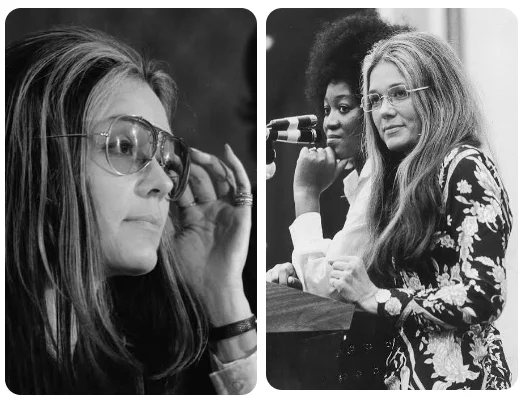
Gloria Steinem (1934-2026) American Journalist
Full name: Gloria Marie Steinem
Born: March 25, 1934, Toledo, Ohio, U.S.
Died: September 2, 2026 (aged 92), New York City, U.S.
Cause of death: Natural causes (not publicly disclosed)
Occupation: Writer and journalist
Years active: 1957–2026
Known for: Leader of second-wave feminism; co-founder of Ms. magazine
Spouse: David Bale (m. 2000; died 2003)
Relatives: Susanne Steinem Patch (sister), Pauline Perlmutter Steinem (grandmother), Christian Bale (stepson)
Education: Smith College (BA)
Who Was Gloria Steinem?
Gloria Marie Steinem (March 25, 1934 – September 2, 2026) was an American journalist and social movement activist who emerged as a nationally recognized leader of second-wave feminism in the United States in the late 1960s and early 1970s. She remained particularly prominent in the 1980s and early 1990s, and her influence on American culture and politics continued for decades.
Steinem was a columnist for New York magazine and co-founder of Ms. magazine, the first national feminist magazine in the United States. Her 1969 article "After Black Power, Women's Liberation" brought her national attention and positioned her as a feminist leader. She went on to co-found the National Women's Political Caucus, the Women's Action Alliance, and the Women's Media Center, and she helped establish Take Our Daughters to Work Day.
She passed away at her home in Manhattan, New York City, on September 2, 2026, at the age of 92. Her death was reported by The New York Times, NBC News, CNN, BBC News, and other major outlets. She was remembered as the "personification of the women's movement" and a "feminist crusader who galvanized the modern women's movement."
Gloria Steinem Cause of Death
Gloria Steinem died at her home in Manhattan, New York City, on September 2, 2026, at the age of 92. A specific cause of death was not publicly disclosed by her family or representatives. She passed away peacefully after living a long and extraordinary life as a journalist, activist, and feminist leader.
Steinem had faced health challenges in the past. She was diagnosed with breast cancer in 1986 and trigeminal neuralgia in 1994. Despite these setbacks, she remained active in feminist and social justice causes well into her later years, continuing to write, speak, and advocate for the issues she cared about. In 2026, she was interviewed as part of a New York Times essay asking about how it felt to reach 80, where she said the worst part of turning 80 was "losing people you love."
Her death prompted an outpouring of tributes from across the political and cultural spectrum. The New York Times noted Steinem as the "personification of the women's movement." The Wall Street Journal called her a longtime symbol of the women's movement and a feminist icon. The BBC said she was the leader of the women's liberation movement in the United States. CNN described her as the "face" of the second-wave feminism movement of the 1960s and 1970s.
Early Life and Education
Gloria Marie Steinem was born on March 25, 1934, in Toledo, Ohio, to Ruth (née Nuneviller) and Leo Steinem. Her mother was Presbyterian, mostly of German descent with some Scottish ancestry. Her father was Jewish, the son of immigrants from Württemberg, Germany, and Radziejów, Poland.
Her paternal grandmother, Pauline Perlmutter Steinem, chaired the educational committee of the National Woman Suffrage Association, was a delegate to the 1908 International Council of Women, and was the first woman to be elected to the Toledo Board of Education. She was also a leader in the movement for vocational education, and at a time when it cost $500 to get a Jew out of Germany, she rescued many members of her family from the Holocaust.
The Steinems lived and traveled in a trailer, from which Leo carried out his trade as a roaming antiques dealer. Before Gloria was born, her mother, Ruth, then age 34, had what Steinem described as a "nervous breakdown" that left her an invalid, trapped in delusional fantasies that sometimes turned violent. Steinem said that Ruth changed "from an energetic, fun-loving, book-loving" woman into "someone who was afraid to be alone, who could not hang on to reality long enough to hold a job, and who could rarely concentrate enough to read a book." Ruth spent long periods in and out of sanatoriums for the mentally ill.
Steinem was ten years old when her parents separated in 1944. Her father went to California to find work, while she and her mother continued to live together in Toledo. Although her parents divorced under the strain of her mother's illness, Steinem did not attribute it to male chauvinism. She said she "understood and never blamed him for the breakup." The impact of these events shaped her personality and her understanding of social injustices. She concluded that her mother's inability to hold a job reflected broader hostility toward working women, and she believed that doctors' apathy toward her mother stemmed from similar anti-woman animus.
Steinem attended Waite High School in Toledo and Western High School in Washington, D.C., graduating from the latter in 1952 while living with her older sister Susanne Steinem Patch. She then studied government at Smith College, where she received her A.B. magna cum laude and graduated Phi Beta Kappa in 1956.
In 1957, Steinem had an abortion. She was referred for the procedure by Dr. John Sharpe, a British physician. Years later, Steinem dedicated her memoir My Life on the Road (2015) to him. She wrote that he told her: "You must promise me two things. First, you will not tell anyone my name. Second, you will do what you want to do with your life."
In the late 1950s, Steinem spent two years in India as a Chester Bowles Asian Fellow. She was influenced by Mahatma Gandhi and later modeled her campaign work after Gandhi's independence movement. After returning to the United States, she served as director of the Independent Research Service, an organization funded by foundations that were in turn funded in secret by the CIA. She worked to send non-communist American students to the 1959 World Youth Festival. In 1960, she was hired by Warren Publishing as the first employee of Help! magazine.
Journalism
Esquire magazine features editor Clay Felker gave freelance writer Steinem what she later called her first "serious assignment," regarding contraception. He did not like her first draft and had her rewrite the article. Her resulting 1962 article about the way in which women are forced to choose between a career and marriage preceded Betty Friedan's book The Feminine Mystique by one year.
In 1963, while working on an article for Huntington Hartford's Show magazine, Steinem was employed undercover as a Playboy Bunny at the New York Playboy Club. The resulting article, published in 1963 as "A Bunny's Tale," featured a photo of Steinem in Bunny uniform and detailed how women were treated at those clubs. Steinem maintained that she was proud of the work she did publicizing the exploitative working conditions of the Bunnies and especially the sexual demands made of them, which skirted the edge of the law. For a brief period after the article was published, Steinem was unable to land other assignments. In response to the article, Hugh Hefner, the owner of Playboy, wrote a letter stating he would remove requirements for Bunnies to get gynecological exams and STD testing.
In the interim, Steinem conducted an interview with John Lennon for Cosmopolitan magazine in 1964. In 1965, she wrote for NBC-TV's weekly satirical revue, That Was the Week That Was (TW3), contributing a regular segment entitled "Surrealism in Everyday Life." Steinem eventually landed a job at Felker's newly founded New York magazine in 1968.
In 1969, Steinem covered for New York magazine an abortion speak-out that was held in a church basement in Greenwich Village, New York. Steinem had had an abortion in London at the age of 22. She felt what she called a "big click" at the speak-out, and later said she didn't "begin my life as an active feminist" until that day.
In 1972, Steinem co-founded the feminist magazine Ms. alongside founding editors Letty Cottin Pogrebin, Mary Thom, Pat Carbine, Joanne Edgar, Nina Finkelstein, Dorothy Pitman Hughes, and Mary Peacock. It began as a special edition of New York, and Clay Felker funded the first issue. Its 300,000 test copies sold out nationwide in eight days. Within weeks, Ms. had received 26,000 subscription orders and more than 20,000 reader letters.
In 1978, Steinem wrote a semi-satirical essay for Cosmopolitan titled "If Men Could Menstruate" in which she imagined a world where men menstruate instead of women. She concluded in the essay that in such a world, menstruation would become a badge of honor with men comparing their relative sufferings, rather than the source of shame that it had been for women.
Activism
In 1968, Steinem signed the "Writers and Editors War Tax Protest" pledge, vowing to refuse tax payments in protest against the Vietnam War. The following year, her article "After Black Power, Women's Liberation" brought her to national fame as a feminist leader. She campaigned for the Equal Rights Amendment, testifying before the U.S. Senate Judiciary Committee in its favor in 1970. That same year, she published her essay on a utopia of gender equality, "What It Would Be Like If Women Win," in Time magazine.
On July 10, 1971, Steinem was one of more than three hundred women who founded the National Women's Political Caucus (NWPC), also including such notables as Bella Abzug, Betty Friedan, Shirley Chisholm, and Myrlie Evers-Williams. As a co-convener of the Caucus, she delivered the speech "Address to the Women of America," in which she said: "This is no simple reform. It really is a revolution. Sex and race because they are easy and visible differences have been the primary ways of organizing human beings into superior and inferior groups and into the cheap labor on which this system still depends."
Steinem, who grew up reading Wonder Woman comics, was also a key player in the restoration of Wonder Woman's powers and traditional costume, which were restored in issue #204 (January–February 1973). Steinem, offended that the most famous female superhero had been depowered, had placed Wonder Woman (in costume) on the cover of the first issue of Ms. (1972).
In 1984, Steinem was arrested along with a number of members of Congress and civil rights activists for disorderly conduct outside the South African embassy while protesting against the South African apartheid system. At the outset of the Gulf War in 1991, Steinem, along with prominent feminists Robin Morgan and Kate Millett, publicly opposed a U.S. war in the Middle East.
In 1992, Steinem co-founded Choice USA, a non-profit organization that mobilizes and provides ongoing support to a younger generation that lobbies for reproductive choice. The following year, she co-produced and narrated an Emmy Award-winning TV documentary for HBO about child abuse, called "Multiple Personalities: The Search for Deadly Memories."
On June 1, 2013, Steinem was a presenter at the "Chime For Change: The Sound Of Change Live" Concert at Twickenham Stadium in London, England. In 2015, Steinem, alongside two Nobel Peace laureates (Mairead Maguire of Northern Ireland and Leymah Gbowee of Liberia) and other prominent women peace activists, undertook a journey from the capital of North Korea, Pyongyang, to South Korea, crossing the Korean Demilitarized Zone.
Steinem was also the chair of the advisory board of Apne Aap Women Worldwide, an organization fighting sex trafficking and inter-generational prostitution in India, founded by Ruchira Gupta. From 2011 on, Steinem was one of the co-conveners of the Frontline Women's Fund, a project of the Sisterhood Is Global Institute, along with former UN High Commissioner for Human Rights Navi Pillay and Jessica Neuwirth.
Involvement in Political Campaigns
Steinem's involvement in presidential campaigns stretched back to her support of Adlai Stevenson in the 1952 presidential campaign. In 1968, she was chosen to pitch the arguments to George McGovern as to why he should enter the presidential race that year. He agreed, and Steinem "consecutively or simultaneously served as pamphlet writer, advance 'man', fund raiser, lobbyist of delegates, errand runner, and press secretary." McGovern lost the nomination at the 1968 Democratic National Convention.
In the run-up to the 2004 election, Steinem voiced fierce criticism of the George W. Bush administration, asserting that "there has never been an administration that has been more hostile to women's equality, to reproductive freedom as a fundamental human right, and has acted on that hostility." She added: "If he is elected in 2004, abortion will be criminalized in this country."
Steinem was an active participant in the 2008 presidential campaign and praised both Democratic front-runners, Hillary Clinton and Barack Obama. She ultimately endorsed Senator Hillary Clinton, citing her broader experience. She also made headlines for a New York Times op-ed in which she cited gender and not race as "probably the most restricting force in American life."
In 2016, Steinem endorsed Democratic candidate Hillary Clinton in the run-up to the U.S. presidential election. She was an honorary co-chair of and speaker at the Women's March on Washington on January 21, 2017, the day after the inauguration of Donald Trump. During the primary, she faced widespread criticism for comments about young women supporting Bernie Sanders, for which she later apologized.
CIA Ties and Independent Research Service
In 1967, Steinem revealed in an interview with The New York Times that she had worked full time from 1958 until 1962 at the Independent Research Service, which was financed by foundations that were in turn financed by the CIA. As director of the Independent Research Service, Steinem had helped to organize groups of young people to attend World Youth Festivals in Vienna in 1959 and Helsinki in 1962.
In May 1975, Redstockings, a radical feminist group, published a report put together for the Independent Research Service by Steinem and others on the Vienna Youth Festival and its attendees. Redstockings raised the question of whether Steinem had continuing ties with the CIA, which Steinem denied.
Steinem defended her relationship with the CIA, saying: "In my experience the agency was completely different from its image; it was liberal, nonviolent and honorable." Steinem also stated that she considered the CIA to be allies in promoting U.S. government policy against communism during the early Cold War.
Political Positions
Although most frequently considered a liberal feminist, Steinem repeatedly characterized herself as a radical feminist. She repudiated categorization within feminism as "nonconstructive to specific problems," saying: "I've turned up in every category. So it makes it harder for me to take the divisions with great seriousness."
Female Genital Mutilation
In 1979, Steinem wrote the article on female genital mutilation that brought the subject into the United States public's consciousness. Her article, "The International Crime of Female Genital Mutilation," appeared in the March 1979 issue of Ms. It reported on the "75 million women suffering with the results of genital mutilation." Steinem argued that "the real reasons for genital mutilation can only be understood in the context of the patriarchy: men must control women's bodies as the means of production, and thus repress the independent power of women's sexuality."
Pornography
Steinem criticized pornography, which she distinguished from erotica. She wrote that "erotica is as different from pornography as love is from rape, as dignity is from humiliation, as partnership is from slavery, as pleasure is from pain." Her argument hinges on the distinction between reciprocity versus domination.
Same-Sex Marriage
In an essay published in Time on August 31, 1970, "What It Would Be Like If Women Win," Steinem wrote about same-sex marriage in the context of the "Utopian" future she envisioned: "Lesbians or homosexuals will no longer be denied legally binding marriages, complete with mutual-support agreements and inheritance rights."
Transgender Rights
In 1977, Steinem expressed disapproval of some aspects of the heavily publicized sex reassignment surgery of tennis player Renée Richards. On October 2, 2013, Steinem clarified her remarks on transgender people in an op-ed for The Advocate, writing that critics failed to consider that her 1977 essay was "written in the context of global protests against routine surgical assaults, called female genital mutilation by some survivors." Steinem later expressed unequivocal support for transgender people, saying that transgender people "including those who have transitioned, are living out real, authentic lives. Those lives should be celebrated, not questioned."
Personal Life and Death
In the mid-1970s, Steinem began a nine-year relationship with Stanley Pottinger, whom she met after he asked her to consult on discrimination issues for the Civil Rights Division of the U.S. Department of Justice. In the late 1980s and early 1990s, Steinem had a four-year relationship with the publisher Mortimer Zuckerman.
On September 3, 2000, at the age of 66, Steinem married David Bale, entrepreneur and the father of actor Christian Bale. The wedding was performed at the home of her friend Wilma Mankiller, the first female Principal Chief of the Cherokee Nation. Steinem became the stepmother to Bale's four adult children. She had no biological children. Steinem and Bale were married for only three years before he died of brain lymphoma on December 30, 2003, at the age of 62.
Steinem lived on New York's Upper East Side, where she owned the first three floors of her historic brownstone apartment building. On her 87th birthday, Google Arts & Culture launched a virtual tour of her home, where she had lived since 1966.
Steinem was diagnosed with breast cancer in 1986 and trigeminal neuralgia in 1994. Commenting on aging, Steinem said that as she approached 60 she felt as if she had entered a new phase in life free of the "demands of gender" she had faced from adolescence onward. When asked about her desired legacy, she said she hoped her work "might help individual people to become more the unique, valuable, loved and lovable person that they want to be."
In 2026, Steinem was interviewed as part of a New York Times essay asking about how it felt to reach 80. The article was released to coincide with the 80th birthday of sitting United States President Donald Trump. Steinem said the worst part of turning 80 was "losing people you love." When asked if she had advice for Trump specifically, she replied: "Resign."
Steinem died at her home in Manhattan, New York City, on September 2, 2026, at age 92. Her final book, An Unexpected Life, was published by Random House on September 22, 2026, just weeks after her death.
Legacy
Following her death, The New York Times noted Steinem as the "personification of the women's movement" and a "feminist crusader who galvanized the modern women's movement." The Wall Street Journal called Steinem a longtime symbol of the women's movement and a feminist icon. The BBC News said that Steinem was the leader of the women's liberation movement in the United States. CNN said that Steinem was the "face" of the second-wave feminism movement of the 1960s and 1970s.
The Associated Press called Steinem one of the "most visible symbols and potent voices of the U.S. women's movement." The Atlantic said that she "fought for her belief that women could change the world together." NPR said Steinem "devoted her life to fighting for women's rights." Entertainment Weekly, while noting her as a feminist icon, said that she was a "pop culture shaper" and a "pop culture icon."
Former Secretary of State Hillary Clinton said that Steinem "pushed open doors not just for herself, but for literally millions of women behind her." Former First Lady Jill Biden said that Steinem fought for decades to make "freedom real for generations of women and girls."
Awards and Honors
Gloria Steinem received numerous awards and honors throughout her long career. Here are some of the most notable.
- American Civil Liberties Union of Southern California's Bill of Rights Award
- American Humanist Association's 2012 Humanist of the Year
- BBC's 100 Women list of the world's inspiring and influential women (2023)
- Biography magazine's 25 most influential women in America
- DVF Lifetime Leadership Award (2014)
- Emmy Citation for excellence in television writing
- Esquire's 75 greatest women of all time (2010)
- Equality Now's international human rights award (2000)
- FAO CERES Medal
- Glamour magazine's "The 75 Most Important Women of the Past 75 Years" (2014)
- Library Lion award (2015)
- National Women's Hall of Fame inductee (1993)
- Presidential Medal of Freedom (2013)
- Princess of Asturias Award for Communication and Humanities (2021)
- Richard C. Holbrooke Distinguished Achievement Award (2015)
- Ban Ki-moon Award For Women's Empowerment (2017)
- Honorary degree from Yale University (2019)
In Media
Gloria Steinem's life and work have been the subject of numerous books, documentaries, and dramatic portrayals.
- Biographies: The Education of a Woman: The Life of Gloria Steinem (1995) by Carolyn G. Heilbrun; Gloria Steinem: Her Passions, Politics, and Mystique (1997) by Sydney Ladensohn Stern; Who Is Gloria Steinem? (2014) by Sarah Fabiny.
- Documentaries: Gloria: In Her Own Words (2011); MAKERS: Women Who Make America (2013); Dear Ms.: A Revolution in Print (2025).
- Portrayals: Kirstie Alley played Steinem in the 1985 TV film A Bunny's Tale; the play Gloria: A Life opened in 2018; The Glorias (2020) featured four actresses portraying her at different ages, including Julianne Moore; Rose Byrne played her in the FX miniseries Mrs. America (2020).
Works
Gloria Steinem published numerous books and essays throughout her career. Here are some of her most notable works.
- The Thousand Indias (1957)
- The Beach Book (1963)
- Outrageous Acts and Everyday Rebellions (1983)
- Marilyn: Norma Jean (1986)
- Revolution from Within: A Book of Self-Esteem (1992)
- Moving Beyond Words (1993)
- Doing Sixty & Seventy (2006)
- As if Women Matter: The Essential Gloria Steinem Reader (2014)
- My Life on the Road (2015)
- The Truth Will Set You Free, But First It Will Piss You Off! (2015)
- An Unexpected Life (2026)
Tributes and Legacy
Following the announcement of Gloria Steinem's death, tributes poured in from across the world. She was remembered as one of the most influential Americans of the 20th century, a woman who changed the way a nation thought about gender, equality, and power.
Her legacy is immense. She helped found Ms. magazine, the first national feminist magazine in the United States. She co-founded the National Women's Political Caucus, which trained and supported women seeking elected office. She helped establish Take Our Daughters to Work Day, giving millions of young girls a glimpse of their future possibilities. And she spent her entire adult life fighting for the rights of women, both in the United States and around the world.
Steinem's influence extended far beyond politics. She was a writer, a thinker, a speaker, and a symbol. She was a woman who refused to be defined by the expectations of her time and who dedicated her life to ensuring that other women would have the freedom to define themselves.
Conclusion: Remembering Gloria Steinem
Gloria Steinem was one of the most important American figures of the 20th and 21st centuries. From her early days as a journalist in New York to her decades of activism on behalf of women's rights, she dedicated her life to the cause of equality. She was a founder, a writer, a speaker, and a symbol, and her impact on American culture and politics cannot be overstated.
Her death on September 2, 2026, at the age of 92, marked the end of a remarkable journey that began in Toledo, Ohio, and ended in a brownstone on New York's Upper East Side. She passed away peacefully at her home, surrounded by the thoughts and prayers of a nation that had come to know and admire her.
As the world mourns her passing, it also celebrates a life well-lived. Gloria Steinem will be deeply missed, but her words, her ideas, and her example will live on for generations to come. She was, and always will be, the personification of the women's movement.
Frequently Asked Questions: Gloria Steinem
Who was Gloria Steinem?
Gloria Marie Steinem (March 25, 1934 – September 2, 2026) was an American journalist and social movement activist who emerged as a nationally recognized leader of second-wave feminism in the United States in the late 1960s and early 1970s. She was a columnist for New York magazine and co-founder of Ms. magazine. She also co-founded the National Women's Political Caucus, the Women's Action Alliance, and the Women's Media Center.
How did Gloria Steinem die?
Gloria Steinem died at her home in Manhattan, New York City, on September 2, 2026, at the age of 92. Her death was reported by The New York Times, NBC News, CNN, BBC News, and other major outlets. She passed away peacefully after living a long and influential life as a journalist and feminist leader.
What was Gloria Steinem's cause of death?
Gloria Steinem died at her home in Manhattan, New York City, on September 2, 2026, at the age of 92. A specific cause of death was not publicly disclosed. She had been diagnosed with breast cancer in 1986 and trigeminal neuralgia in 1994, but her death was attributed to natural causes related to her advanced age.
What was Gloria Steinem famous for?
Gloria Steinem was famous for being a leader of second-wave feminism in the United States. She co-founded Ms. magazine in 1972, co-founded the National Women's Political Caucus in 1971, and helped establish Take Our Daughters to Work Day in 1992. She also published influential articles like "After Black Power, Women's Liberation" (1969) and "A Bunny's Tale" (1963), and wrote several best-selling books.
Where was Gloria Steinem born?
Gloria Marie Steinem was born on March 25, 1934, in Toledo, Ohio. Her mother, Ruth (née Nuneviller), was Presbyterian, mostly of German descent with some Scottish ancestry. Her father, Leo Steinem, was Jewish, the son of immigrants from Württemberg, Germany, and Radziejów, Poland.
Where did Gloria Steinem go to college?
Gloria Steinem studied government at Smith College, where she received her A.B. magna cum laude and graduated Phi Beta Kappa in 1956. She attended Waite High School in Toledo and Western High School in Washington, D.C., graduating from the latter in 1952.
What was Gloria Steinem's connection to the CIA?
In 1967, Gloria Steinem revealed in an interview with The New York Times that she had worked full time from 1958 until 1962 at the Independent Research Service, an organization financed by foundations that were in turn financed by the CIA. As director, she helped organize groups of young people to attend World Youth Festivals in Vienna in 1959 and Helsinki in 1962. She defended her relationship with the CIA, saying she considered the agency to be allies in promoting U.S. government policy against communism during the early Cold War.
Was Gloria Steinem a Playboy Bunny?
Yes, in 1963, while working on an article for Huntington Hartford's Show magazine, Gloria Steinem was employed undercover as a Playboy Bunny at the New York Playboy Club. The resulting article, published in 1963 as "A Bunny's Tale," featured a photo of Steinem in Bunny uniform and detailed how women were treated at those clubs. She maintained that she was proud of the work she did publicizing the exploitative working conditions of the Bunnies.
What books did Gloria Steinem write?
Gloria Steinem wrote several books, including The Thousand Indias (1957), The Beach Book (1963), Outrageous Acts and Everyday Rebellions (1983), Marilyn: Norma Jean (1986), Revolution from Within: A Book of Self-Esteem (1992), Moving Beyond Words (1993), Doing Sixty & Seventy (2006), My Life on the Road (2015), The Truth Will Set You Free, But First It Will Piss You Off! (2015), and her final book, An Unexpected Life, published in September 2026.
What was Gloria Steinem's most famous quote?
Gloria Steinem was known for many memorable quotes. One of her most famous is: "A woman needs a man like a fish needs a bicycle." Although she helped popularize it, the phrase was actually coined by Irina Dunn. Another famous quote often attributed to her is: "If men could get pregnant, abortion would be a sacrament." Steinem attributed that one to "an old Irish woman taxi driver in Boston."
Was Gloria Steinem married?
Gloria Steinem married David Bale, entrepreneur and father of actor Christian Bale, on September 3, 2000, at the age of 66. The wedding was performed at the home of her friend Wilma Mankiller, the first female Principal Chief of the Cherokee Nation. Steinem became the stepmother to Bale's four adult children. They were married for only three years before David Bale died of brain lymphoma on December 30, 2003.
Did Gloria Steinem have children?
Gloria Steinem did not have any biological children. However, through her marriage to David Bale, she became the stepmother to his four adult children, including actor Christian Bale. She was known to have a close relationship with her stepchildren.
What was Gloria Steinem's connection to Christian Bale?
Christian Bale is the son of David Bale, whom Gloria Steinem married in 2000. Through her marriage to David Bale, Steinem became Christian Bale's stepmother. The marriage lasted until David Bale's death from brain lymphoma in 2003.
What magazines did Gloria Steinem work for?
Gloria Steinem was a columnist for New York magazine and co-founder of Ms. magazine, which she launched in 1972 alongside founding editors Letty Cottin Pogrebin, Mary Thom, Pat Carbine, Joanne Edgar, Nina Finkelstein, Dorothy Pitman Hughes, and Mary Peacock. She also wrote for Esquire, Show, Cosmopolitan, and other publications. She remained on the masthead of Ms. as one of six founding editors and served on its advisory board.
What was Gloria Steinem's role in the 2016 election?
Gloria Steinem endorsed Democratic candidate Hillary Clinton in the 2016 U.S. presidential election. She was an honorary co-chair of and speaker at the Women's March on Washington on January 21, 2017, the day after the inauguration of Donald Trump. During the primary, she faced widespread criticism for comments about young women supporting Bernie Sanders, for which she later apologized.
What is Gloria Steinem's net worth?
There is no reliable, publicly verified estimate of Gloria Steinem's net worth. She earned income from her journalism, books, speaking engagements, and her work with Ms. magazine and other organizations. She lived on New York's Upper East Side in a historic brownstone apartment building where she owned the first three floors. No official financial details have been made public.
What were Gloria Steinem's famous last words?
Following Gloria Steinem's death on September 2, 2026, searches for her "famous last words" spiked. However, no public record of her final words has been released by her family or representatives. She died peacefully at her home in Manhattan, New York City, at the age of 92. Her final book, An Unexpected Life, was published on September 22, 2026, just weeks after her death.
Was Gloria Steinem a Zionist?
Gloria Steinem's relationship with Zionism and Israel has been a subject of discussion. She was born to a Jewish father and had a strong connection to her Jewish heritage. Her paternal grandmother, Pauline Perlmutter Steinem, was a leader in the movement for vocational education and rescued many family members from the Holocaust. Steinem was a prominent American Jewish feminist, though her specific views on Zionism evolved over the decades.
What was Gloria Steinem's connection to Betty Friedan?
Gloria Steinem and Betty Friedan were both leading figures in the second-wave feminist movement in the United States. Steinem's 1962 article about the way in which women are forced to choose between a career and marriage preceded Friedan's book The Feminine Mystique by one year. Both were founding members of the National Women's Political Caucus in 1971. Their relationship was complex, as they sometimes disagreed on tactics and priorities within the movement.
When was Gloria Steinem born and when did she die?
Gloria Steinem was born on March 25, 1934, in Toledo, Ohio. She died on September 2, 2026, at her home in Manhattan, New York City, at the age of 92. Her life spanned nearly a century of American history, and she remained active in feminist and social justice causes until her final years.
What was the last interview Gloria Steinem gave?
In 2026, Gloria Steinem was interviewed as part of a New York Times essay asking about how it felt to reach 80. The article was released to coincide with the 80th birthday of sitting United States President Donald Trump. When asked if she had advice for Trump specifically, she replied: "Resign." This was one of her last major public interviews before her death on September 2, 2026.
Who was Blair Chotzinoff and what was his connection to Gloria Steinem?
Blair Chotzinoff was a television producer and a close companion of Gloria Steinem in her later years. Following Steinem's death in September 2026, searches for Blair Chotzinoff and "Gloria Steinem and Blair" spiked significantly as people sought information about her personal life and relationships. Steinem kept much of her personal life private, but Chotzinoff was known to be an important part of her life in her final years.
Contents
- Who Was Gloria Steinem
- Cause of Death
- Early Life and Education
- Journalism
- Activism
- Involvement in Political Campaigns
- CIA Ties and Independent Research Service
- Political Positions
- Personal Life and Death
- Legacy
- Awards and Honors
- In Media
- Works
- Tributes and Legacy
- Conclusion
- FAQs (20+ Questions)
Data Update
Based on The New York Times, NBC News, CNN, BBC News, NPR, Associated Press, and Wikipedia. Information about her death may change as more details become available.