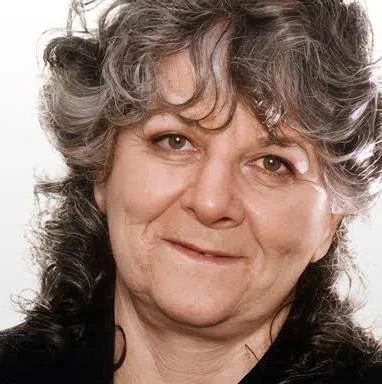
Ada Yonath (1939-2026) Israeli Crystallographer
Full name: Ada Esther Yonath
Born: June 22, 1939, Jerusalem, Mandatory Palestine
Died: August 31, 2026 (aged 87)
Cause of death: Not publicly disclosed
Citizenship: Israeli
Occupation: Crystallographer, biochemist
Years active: 1968–2026
Known for: Pioneering work on the structure of ribosomes
Spouse: Moshe Yonath (divorced)
Children: 1 daughter (Hagit Yonath)
Education: Hebrew University of Jerusalem (BSc, MSc), Weizmann Institute of Science (PhD)
Nobel Prize: Chemistry (2009)
Who Was Ada Yonath?
Ada Yonath was an Israeli crystallographer and Nobel laureate in chemistry, best known for her pioneering work on the structure of ribosomes. She was the director of the Helen and Milton A. Kimmelman Center for Biomolecular Structure and Assembly of the Weizmann Institute of Science. She was one of the most influential scientists of her generation and a trailblazer for women in science.
Yonath was born in Jerusalem and grew up in a family that valued education despite modest means. She studied chemistry at the Hebrew University of Jerusalem and earned her PhD from the Weizmann Institute of Science. Over a career that spanned more than five decades, she pioneered ribosomal crystallography and introduced cryo bio-crystallography, a technique that became routine in structural biology.
She died on August 31, 2026, at the age of 87. Her death was reported by The New York Times, The Jerusalem Post, Ynet, and other major outlets. She was remembered as a scientist whose work had "immediate and practical consequences" for medicine and the fight against infectious disease.
Ada Yonath Cause of Death
Ada Yonath died on August 31, 2026, at the age of 87. A specific cause of death was not publicly disclosed by her family. She passed away peacefully after a long and distinguished career in science that spanned more than five decades and earned her the highest honors in her field.
Her death was reported by major outlets around the world, including The New York Times, The Jerusalem Post, Ynet, and The Hindu. The news prompted an outpouring of tributes from scientists, political leaders, and admirers of her work.
Israeli President Isaac Herzog noted Yonath as "one of the leading researchers in the history of Israeli science." The New York Times noted that Yonath's mapping of the ribosome led to new designs for antibiotics and that her work was "boundary pushing" with "immediate and practical consequences" for medicine and in the "fight against infectious disease."
Early Life
Ada Esther Lifshitz was born in the Geula quarter of Jerusalem on June 22, 1939. Her parents, Hillel and Esther Lifshitz, were Zionist Jews who had immigrated to the British Mandate of Palestine (now Israel) from Zduńska Wola, Poland, in 1933, before the establishment of Israel. Her father was a rabbi and came from a rabbinical family.
Her parents settled in Jerusalem and ran a grocery store, but they found it difficult to make ends meet while also sharing a small apartment space to live in. Despite the family's poverty, her parents sent her to school in the upscale Beit HaKerem neighborhood to assure her a good education.
When her father died at the age of 42, the family moved to Tel Aviv. Yonath assisted her mother in bringing in income by babysitting and tutoring children after her father's death. These early experiences of hardship and responsibility shaped her character and her determination to succeed.
Education
Yonath was accepted to Tichon Hadash high school. Since her mother could not pay the tuition, she traded her time teaching math lessons to students, which helped pay for her schooling. It was an early example of her resourcefulness and her commitment to her own education.
At a young age, she said she was inspired by the scientist Marie Curie. However, she stressed that Curie, whom she as a child was fascinated by after reading her biography, was not her "role model." She admired Curie's achievements but charted her own unique path in science.
Yonath returned to Jerusalem for college, graduating from the Hebrew University of Jerusalem with a bachelor's degree in chemistry in 1962 and a master's degree in biochemistry in 1964. In 1968, she obtained her PhD from the Weizmann Institute of Science for X-ray crystallographic studies on the structure of collagen, with Wolfie Traub as her PhD advisor.
Scientific Career
Ada Yonath accepted postdoctoral positions at Carnegie Mellon University in 1969 and MIT in 1970. While a postdoctoral researcher at MIT, she spent some time in the laboratory of subsequent 1976 chemistry Nobel Prize winner William N. Lipscomb Jr. of Harvard University, where she was inspired to pursue very large structures.
In 1970, she established what was for nearly a decade the only protein crystallography laboratory in Israel. From 1979 to 1984, she was a group leader with Heinz-Günter Wittmann at the Max Planck Institute for Molecular Genetics in Berlin. She was a visiting professor at the University of Chicago in 1977 and 1978. She headed a Max-Planck Institute Research Unit at DESY in Hamburg, Germany, from 1986 to 2004, in parallel to her research activities at the Weizmann Institute.
Ribosomal Crystallography
Yonath focused on the mechanisms underlying protein biosynthesis through ribosomal crystallography, a research line she pioneered over 20 years ago despite considerable skepticism from the international scientific community. Ribosomes translate RNA into protein, and because they have slightly different structures in microbes compared to eukaryotes such as human cells, they are often a target for antibiotics.
In 1993, she visualized the path taken by the nascent proteins, namely the ribosomal tunnel, and revealed the dynamic elements enabling its involvement in elongation arrest, gating, intra-cellular regulation, and nascent chain trafficking into their folding space.
In 2000 and 2001, she determined the complete high-resolution structures of both ribosomal subunits and discovered within the otherwise asymmetric ribosome the universal symmetrical region that provides the framework and navigates the process of polypeptide polymerization. Consequently, she showed that the ribosome is a ribozyme that places its substrates in stereochemistry suitable for peptide bond formation and for substrate-mediated catalysis.
Additionally, Yonath elucidated the modes of action of over twenty different antibiotics targeting the ribosome, illuminated mechanisms of drug resistance and synergism, deciphered the structural basis for antibiotic selectivity, and showed how it plays a key role in clinical usefulness and therapeutic effectiveness, thus paving the way for structure-based drug design.
For enabling ribosomal crystallography, Yonath introduced a novel technique, cryo bio-crystallography, which became routine in structural biology and allowed intricate projects otherwise considered formidable.
Nobel Prize in Chemistry (2009)
In 2009, Yonath received the Nobel Prize in Chemistry along with Venkatraman Ramakrishnan and Thomas A. Steitz for her studies on the structure and function of the ribosome, becoming the first Israeli woman to win the Nobel Prize out of ten Israeli Nobel laureates. She also became the first woman from the Middle East to win a Nobel Prize in the sciences and the first woman in 45 years to win the Nobel Prize for Chemistry.
At the Weizmann Institute, Yonath was the director of the Martin S. and Helen Kimmel Professorial Chair.
Awards and Recognition
Ada Yonath received numerous awards and honors throughout her career, recognizing her groundbreaking contributions to science.
- 2002 – Israel Prize
- 2005 – Louisa Gross Horwitz Prize
- 2006 – Wolf Prize in Chemistry (with George Feher)
- 2006 – The EMET Prize for Art, Science and Culture in Life Sciences
- 2007 – Paul Ehrlich and Ludwig Darmstaedter Prize (with Harry Noller)
- 2008 – Albert Einstein World Award of Science
- 2008 – L'Oréal-UNESCO Award for Women in Science
- 2009 – Nobel Prize in Chemistry (with Thomas Steitz and Venkatraman Ramakrishnan)
- 2010 – Wilhelm Exner Medal
- 2011 – Marie Curie Medal awarded by the Polish Chemical Society
- 2013 – Member of the German Academy of Sciences Leopoldina
- 2015 – Honorary Doctorates from the University of Southern California, De La Salle University, Joseph Fourier University, Medical University of Lodz, and University of Warwick
- 2018 – Presea "Asamblea Nacional de la República del Ecuador, Dra. Matilde Hidalgo de Procel"
- 2018 – Honorary Doctorate from Carnegie Mellon University
- 2020 – Elected a Foreign Member of the Royal Society
- 2023 – Honorary Doctorate from the Jagiellonian University
- 2024 – Honorary Doctorate from the Technion
Yonath was also a member of the United States National Academy of Sciences, the American Academy of Arts and Sciences, the Israel Academy of Sciences and Humanities, the European Academy of Sciences and Art, and the European Molecular Biology Organization. On October 18, 2014, she was named an ordinary member of the Pontifical Academy of Sciences by Pope Francis.
Personal Life and Death
Ada Yonath was married to Moshe Yonath. Their marriage ended in divorce. They had one daughter, Hagit Yonath, a doctor at Sheba Medical Center, and a granddaughter named Noa. Yonath was the cousin of anti-occupation activist Ruchama Marton, as their mothers were sisters.
Yonath died on August 31, 2026, at the age of 87. Her death marked the end of a remarkable life and career that had transformed the field of structural biology and inspired generations of scientists around the world.
Legacy
As the first woman since 1964 to win the Nobel Prize in Chemistry, and the first since Dorothy Crowfoot Hodgkin 45 years previously, Ada Yonath broke barriers for women in science. She was also the fourth of eight women ever to win the Nobel Prize in Chemistry. Although Yonath once remarked, "I am a scientist, not male or female. A scientist," her 2009 award was noted as a highlight for female scientists. The Australian noted that Yonath's Nobel win was "crushing the lab's glass ceiling."
Regarded as an influential Israeli scientist, Yonath helped establish the first protein crystallography laboratory in Israel. In 2018, while interviewing Yonath, UNESCO noted that her scientific research has also been "key to understanding how antibiotics work."
Following her death, The New York Times noted that Yonath's mapping of the ribosome led to new designs for antibiotics. Her work was noted as "boundary pushing" with "immediate and practical consequences" for medicine and in the "fight against infectious disease." President Isaac Herzog noted Yonath as "one of the leading researchers in the history of Israeli science." The Hindu also noted Yonath's academic impact, especially in India through her engagements in academic institutions in the country.
Frequently Asked Questions: Ada Yonath
Who was Ada Yonath?
Ada Esther Yonath (June 22, 1939 – August 31, 2026) was an Israeli crystallographer and Nobel laureate in chemistry, best known for her pioneering work on the structure of ribosomes. She was the director of the Helen and Milton A. Kimmelman Center for Biomolecular Structure and Assembly of the Weizmann Institute of Science. In 2009, she became the first Israeli woman to win the Nobel Prize.
How did Ada Yonath die?
Ada Yonath died on August 31, 2026, at the age of 87. Her death was reported by The New York Times, The Jerusalem Post, Ynet, and other major outlets. A specific cause of death was not publicly disclosed by her family.
What was Ada Yonath's cause of death?
Ada Yonath died on August 31, 2026, at the age of 87. A specific cause of death was not publicly disclosed. She passed away peacefully after a long and distinguished career in science that spanned more than five decades and earned her the Nobel Prize in Chemistry.
What was Ada Yonath famous for?
Ada Yonath was famous for her pioneering work on the structure of ribosomes, for which she received the Nobel Prize in Chemistry in 2009 along with Venkatraman Ramakrishnan and Thomas A. Steitz. She was the first Israeli woman to win the Nobel Prize and the first woman in 45 years to win the Nobel Prize in Chemistry.
Where was Ada Yonath born?
Ada Esther Lifshitz was born in the Geula quarter of Jerusalem on June 22, 1939. Her parents, Hillel and Esther Lifshitz, were Zionist Jews who had immigrated to the British Mandate of Palestine from Zduńska Wola, Poland, in 1933. Her father was a rabbi from a rabbinical family.
What was Ada Yonath's education?
Ada Yonath graduated from the Hebrew University of Jerusalem with a bachelor's degree in chemistry in 1962 and a master's degree in biochemistry in 1964. In 1968, she obtained her PhD from the Weizmann Institute of Science for X-ray crystallographic studies on the structure of collagen, with Wolfie Traub as her PhD advisor.
When did Ada Yonath win the Nobel Prize?
Ada Yonath received the Nobel Prize in Chemistry in 2009 along with Venkatraman Ramakrishnan and Thomas A. Steitz for her studies on the structure and function of the ribosome. She became the first Israeli woman to win the Nobel Prize and the first woman from the Middle East to win a Nobel Prize in the sciences.
What was Ada Yonath's scientific contribution?
Ada Yonath pioneered ribosomal crystallography and introduced cryo bio-crystallography, a technique that became routine in structural biology. In 2000 and 2001, she determined the complete high-resolution structures of both ribosomal subunits and discovered the universal symmetrical region within the ribosome. She also elucidated the modes of action of over twenty different antibiotics targeting the ribosome.
What awards did Ada Yonath receive?
Ada Yonath received numerous awards, including the Israel Prize (2002), the Louisa Gross Horwitz Prize (2005), the Wolf Prize in Chemistry (2006), the L'Oréal-UNESCO Award for Women in Science (2008), the Albert Einstein World Award of Science (2008), and the Nobel Prize in Chemistry (2009). She also received honorary doctorates from many universities around the world.
Was Ada Yonath married and did she have children?
Ada Yonath was married to Moshe Yonath, though their marriage ended in divorce. They had one daughter, Hagit Yonath, who became a doctor at Sheba Medical Center. Yonath also had a granddaughter named Noa. She was the cousin of anti-occupation activist Ruchama Marton.
What was Ada Yonath's connection to the Weizmann Institute?
Ada Yonath was the director of the Helen and Milton A. Kimmelman Center for Biomolecular Structure and Assembly of the Weizmann Institute of Science. She also directed the Martin S. and Helen Kimmel Professorial Chair at the institute. She obtained her PhD from the Weizmann Institute in 1968 and spent much of her career there.
What did Ada Yonath say about being a female scientist?
Ada Yonath once remarked, "I am a scientist, not male or female. A scientist." Despite this, her 2009 Nobel Prize was celebrated as a landmark achievement for female scientists. The Australian noted that Yonath's Nobel win was "crushing the lab's glass ceiling."
How old was Ada Yonath when she died?
Ada Yonath was 87 years old when she died on August 31, 2026. She was born on June 22, 1939, in Jerusalem. She had celebrated her 87th birthday just over two months before her death.
What organizations was Ada Yonath a member of?
Ada Yonath was a member of several prestigious scientific organizations, including the United States National Academy of Sciences, the American Academy of Arts and Sciences, the Israel Academy of Sciences and Humanities, the European Academy of Sciences and Art, and the European Molecular Biology Organization. In 2020, she was elected a Foreign Member of the Royal Society.
What was Ada Yonath's legacy?
Ada Yonath's legacy is one of scientific excellence and perseverance. She pioneered ribosomal crystallography despite considerable skepticism from the international scientific community and went on to win the Nobel Prize in Chemistry. Her work led to new designs for antibiotics and helped advance the fight against infectious disease. She was regarded as one of the most influential Israeli scientists in history.
What did world leaders say about Ada Yonath's death?
Following her death, Israeli President Isaac Herzog noted Yonath as "one of the leading researchers in the history of Israeli science." The New York Times noted that her mapping of the ribosome led to new designs for antibiotics and had "immediate and practical consequences" for medicine. The Hindu also noted her academic impact, especially in India through her engagements in academic institutions in the country.
Contents
- Who Was Ada Yonath
- Cause of Death
- Early Life
- Education
- Scientific Career
- Awards and Recognition
- Personal Life and Death
- Legacy
- FAQs (16+ Questions)
Data Update
Based on The New York Times, The Jerusalem Post, Ynet, The Hindu, Nature, and Wikipedia. Information about her death may change as more details become available.