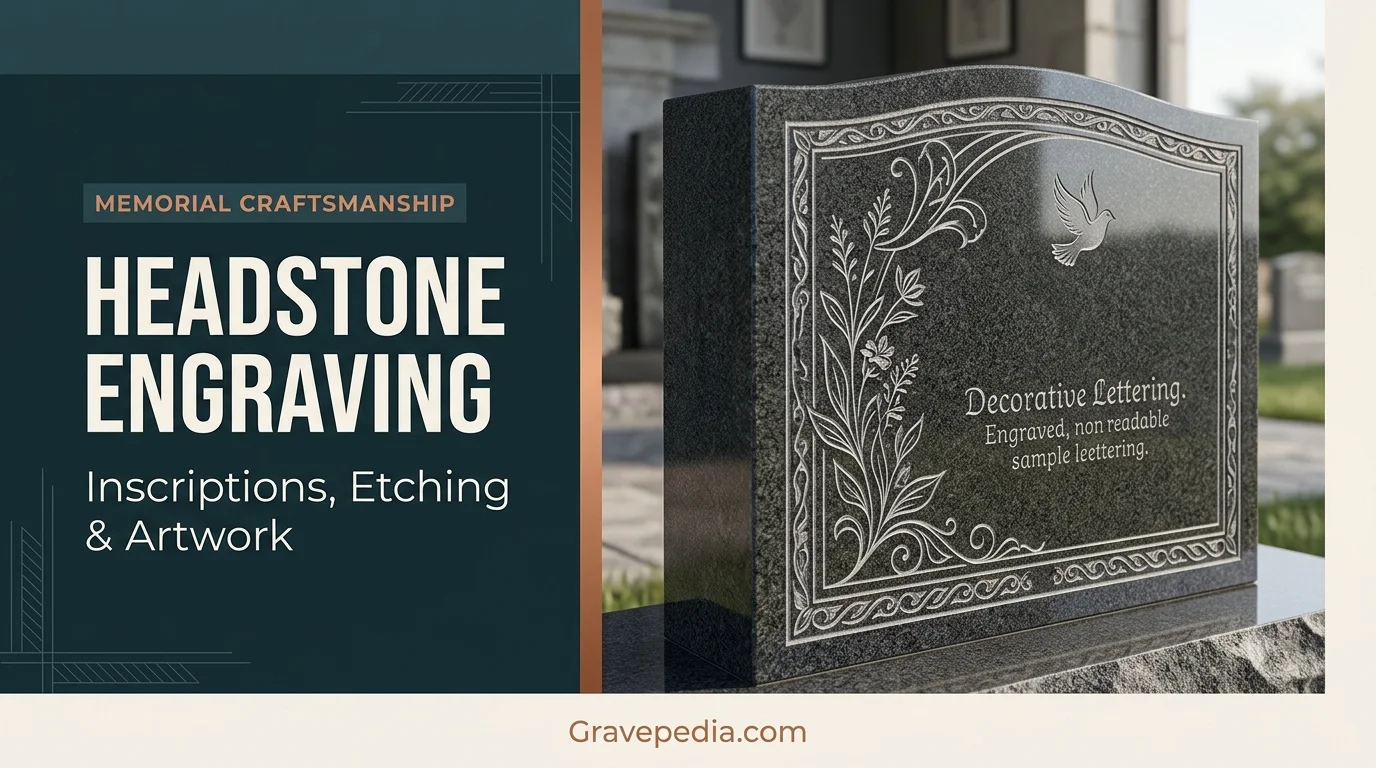
Headstone Engraving Designs: Inscriptions, Etching and Artwork
Headstone engraving designs transform a simple stone into a lasting tribute that tells the story of a life. From bold sandblasted lettering to delicate laser-etched portraits, the engraving method and design choices determine how the memorial looks and how well it endures. This guide covers what headstone engraving is, popular designs and inscriptions, laser etching vs traditional engraving, floral and portrait artwork, font and lettering styles, engraving costs and durability, and how to approve a headstone engraving before production.
What Is Headstone Engraving?
Headstone engraving is the process of cutting or marking a design, lettering, or artwork into the surface of a memorial stone. It is what gives a headstone its identity, displaying the person's name, dates, and a message that reflects their life.
Engraving is different from etching, although the terms are often used interchangeably. Engraving, specifically sandblast carving, cuts into the stone to create recessed lettering and designs. The carved areas are often filled with paint for contrast. Etching, whether by laser or by hand, marks the polished surface of the stone without carving deeply into it. Etching produces detailed imagery and portraits, while engraving produces the bold, readable lettering used for names and dates. Many headstones combine both techniques.
The method you choose affects which designs are possible, how detailed they can be, and how well they hold up over time. Sandblasting, laser etching, hand carving, and V-sunk lettering each have their own strengths and limitations.
Popular Engraving Designs and Inscriptions
Headstone engraving designs range from simple lettering to elaborate artwork. The most meaningful designs reflect the person's life, faith, and personality.
Names and dates: Every headstone typically includes the person's full name or nickname, along with birth and death dates. These are usually sandblasted or V-sunk in a readable font.
Epitaphs and inscriptions: A short epitaph or quote adds a personal touch. Popular options include Forever in Our Hearts, A Life Well Lived, Love Never Ends, and Rest in Peace. Shorter inscriptions age better and cost less per character.
Religious symbols: Crosses, Stars of David, praying hands, doves, angels, and rosary beads are common. These provide comfort and reflect the person's faith.
Hobby and interest icons: Musical notes, paintbrushes, golf clubs, fishing rods, or horses reflect a favorite pastime.
Floral designs: Roses, lilies, sunflowers, and floral borders add beauty and symbolism. Roses represent love, lilies symbolize peace and rebirth, and trees can symbolize life and growth.
Military and fraternal emblems: Service flags, military insignia, Masonic emblems, and Eastern Star symbols honor affiliations and service.
Laser-etched portraits: A realistic image of the person etched into granite, often on black granite for maximum contrast and detail.
Laser Etching vs. Traditional Engraving
The engraving method determines which designs are possible and how the final memorial will look and endure.
| Factor | Sandblasting | Laser Etching | Hand Carving |
|---|---|---|---|
| Best For | Bold lettering, simple designs | Photographs, fine detail, portraits | Sculptural depth, floral relief |
| Detail Level | Moderate | Very high | Very high |
| Durability | Very durable, legible for a century or more | Durable, but shallower than sandblasting | Very durable |
| Cost | Lower | Moderate to high | Highest |
| Common Use | Names, dates, epitaphs | Portraits, detailed artwork | Angel figures, 3D designs |
Sandblasting: The most common engraving method for granite headstones. A rubber stencil is applied to the stone, and abrasive material is blasted at high pressure to cut the exposed areas. Sandblasting produces clean, deep lettering and simple designs that remain legible for a century or more. It works on all granite colors.
Laser etching: Uses computer-controlled technology to burn extremely fine details into polished stone. It excels at reproducing photographs, detailed illustrations, and delicate fonts that sandblasting cannot achieve. Laser-etched designs appear as light gray markings on the polished surface. Black granite is often chosen for laser-etched portraits because its dark background provides excellent contrast.
Hand carving and 3D engraving: Hand carving by a master stonecutter produces sculptural depth that no machine can replicate. Floral designs, angel figures, and decorative borders gain texture and dimension. 3D engraving uses CNC machines to cut stone at varying depths, creating designs that appear to emerge from the granite surface.
V-sunk and raised lettering: V-sunk lettering is carved deep into the stone in a V-shaped profile, creating a shadow effect that keeps text readable without added paint. Raised lettering reverses the process, with the background carved away so letters stand above the surface. Raised lettering is striking but more expensive and vulnerable to damage on flat markers.
Floral and Portrait Headstone Artwork
Floral designs and portraits are among the most popular and meaningful forms of headstone artwork.
Floral designs:
- Roses: Represent love, beauty, and remembrance. Can be carved in relief, engraved, or laser-etched.
- Lilies: Symbolize peace, rebirth, and purity.
- Sunflowers: Represent warmth, loyalty, and a love of life.
- Floral Borders: A border of carved flowers frames the inscription area and adds elegance.
- Rose with Verse: A carved rose paired with a short inscription such as Forever in Our Hearts.
Floral designs can be simple engravings or intricate hand-carved reliefs. A darker stone creates striking contrast with painted or gold-leaf lettering, while lighter granite produces a softer, more subtle appearance.
Portrait artwork:
- Laser-Etched Portraits: A realistic image of the person etched into granite using a favorite photograph. Best achieved on black granite for maximum contrast.
- Portrait with Background: A portrait combined with a meaningful scene such as a favorite landscape, a fishing spot, or a garden.
- Multiple Portraits: For companion headstones, two portraits can be arranged side by side with a shared design element.
- Ceramic Photo Plaques: Some families choose a ceramic or porcelain photo plaque mounted on the stone instead of a direct etching.
Choosing Fonts and Lettering Styles
The font and lettering style you choose affect both the appearance and readability of the headstone. The material and color of the stone should influence font selection.
Common font styles:
- Serif Fonts: Classic and formal, with small lines at the ends of letters. Works well for names and dates on most stones.
- Sans-Serif Fonts: Clean and modern, without decorative lines. Readable and contemporary.
- Script Fonts: Elegant and flowing. Best reserved for the primary name line or a short quote, as overly ornate script at small sizes can become illegible.
- Gothic or Old English Fonts: Dramatic and ornate, with a strong historical and religious character. Works best for short text elements rather than full epitaphs.
Matching font to stone:
- Dark granite with skin-traced or laser-etched lettering creates strong contrast that supports even delicate script fonts.
- Lighter granite colors show more clearly with deeply cut V-sunk lettering, which pairs best with bold serif or sans-serif fonts.
- Slate headstones cannot accommodate deep cuts, so thin, elegant fonts with natural flourishes tend to look best.
- Bronze memorials use cast or etched lettering and can reproduce virtually any font style with lasting clarity.
Lettering should be at least 1 inch tall for the name so it is legible from a few feet away. For longevity, simpler fonts often remain readable longer than highly decorative ones.
Engraving Costs and Durability
Engraving costs vary by method, complexity, and whether the work is done at the time of purchase or added later.
| Engraving Type | Typical Cost Range | Notes |
|---|---|---|
| Standard Sandblasted Lettering | Often included in headstone price | Names, dates, short epitaph |
| Additional Inscription on Existing Stone | $150 to $500 | Field engraving at the cemetery |
| Laser-Etched Portrait | Several hundred dollars or more | Depends on size and detail |
| Hand-Carved Floral Relief | Varies widely | Premium option, more labor-intensive |
| Gold or Silver Leaf Lettering | Adds to base cost | Enhances visibility and elegance |
Some providers include unlimited text and one free artwork or picture in the base price, with additional images charged separately. Always ask what is included in the quoted price and what costs extra.
Durability: Sandblasted engraving on granite can remain legible for a century or more. Laser-etched designs are shallower than sandblasted ones, so they may be slightly less visible from a distance on lighter stones, but they are still durable and designed to last for generations. Hand carving and 3D engraving are also highly durable. Proper material selection and finishing help ensure longevity.
How to Approve a Headstone Engraving
Approving the engraving design is a critical step. Once the design is cut into the stone, it cannot easily be changed.
- Request a Proof: Reputable providers send a digital proof or scale drawing of the design before production. Review it carefully.
- Check Spelling and Dates: Verify every name, date, and word. Errors in spelling or dates are the most common mistakes.
- Review the Layout: Make sure the name is the most prominent element, followed by dates and then the inscription. Check spacing and alignment.
- Confirm the Artwork: If the design includes a portrait or symbol, verify that it matches the approved image and is positioned correctly.
- Check Cemetery Rules: Confirm the design complies with any cemetery restrictions on size, symbols, or wording.
- Approve in Writing: Once satisfied, approve the design in writing. This is the version that will be produced.
- Inspect After Installation: After the headstone is installed, inspect it to ensure the engraving matches the approved design.
Headstone Engraving Designs: What Families Should Know
When choosing a headstone engraving, keep these practical points in mind:
- Sandblasting is best for bold lettering; laser etching is best for portraits and fine detail.
- Black granite provides the best contrast for laser-etched portraits.
- Simple, readable fonts often age better than highly decorative ones.
- Floral designs and religious symbols add personal meaning without crowding the stone.
- Standard lettering is often included in the headstone price; additional engravings cost extra.
- Always request a proof and approve it carefully before production begins.
- Check cemetery rules on allowed symbols, inscriptions, and artwork.
Taking the time to choose a thoughtful engraving design creates a lasting tribute that honors your loved one for generations.
Frequently Asked Questions About Headstone Engraving Designs
What can be engraved on a headstone?
Headstones can be engraved with the person's full name or nickname, birth and death dates, a short epitaph or quote, religious symbols, hobby icons, floral designs, military emblems, fraternal organization symbols, and laser-etched portraits. Additional inscriptions such as family names, wedding dates, and personal messages can also be included. Cemetery rules may restrict certain symbols or wording.
What is the difference between engraving and etching?
Engraving, specifically sandblast carving, cuts into the stone to create recessed lettering and designs, often filled with paint for contrast. Etching, whether by laser or hand, marks the polished surface of the stone without carving deeply into it. Etching produces detailed imagery and portraits, while engraving produces the bold, readable lettering used for names and dates. Many headstones combine both techniques.
Can photographs be laser-etched onto a headstone?
Yes. Laser etching is the preferred method for reproducing photographs on headstones. Computer-controlled lasers burn extremely fine details into polished granite or marble, capturing shading, depth, and texture that traditional sandblasting cannot achieve. Black granite is often chosen for laser-etched portraits because its dark background provides excellent contrast for photorealistic imagery.
How much does headstone engraving cost?
Headstone engraving costs vary by method and complexity. Standard sandblasted lettering for names and dates is often included in the headstone price. Additional inscriptions on existing headstones typically cost $150 to $500. Laser-etched portraits and detailed artwork can add several hundred dollars or more. Some providers include unlimited text and one free artwork element in the base price.
How long does headstone engraving last?
Sandblasted engraving on granite can remain legible for a century or more. Laser-etched designs are shallower than sandblasted ones, so they may be slightly less visible from a distance on lighter stones, but they are still durable and designed to last for generations. Proper material selection and finishing help ensure longevity.
Final Thoughts
Headstone engraving designs offer a meaningful way to personalize a memorial and tell the story of a life. Whether you choose bold sandblasted lettering, a delicate laser-etched portrait, or a hand-carved floral relief, the method and design should reflect the person being honored. Granite remains the most durable and versatile material, and black granite is especially well suited for detailed artwork. By checking cemetery rules, choosing readable fonts, and approving a proof before production, you can create an engraving that endures for generations.
Contents
- What Is Headstone Engraving?
- Popular Engraving Designs and Inscriptions
- Laser Etching vs. Traditional Engraving
- Floral and Portrait Headstone Artwork
- Choosing Fonts and Lettering Styles
- Engraving Costs and Durability
- How to Approve a Headstone Engraving
- What Families Should Know
- FAQs (5 Questions)
- Final Thoughts
Data Update
Based on general headstone engraving information. Actual costs, material availability, and cemetery regulations vary by location and provider. Verify current details with local memorial masons and cemetery authorities before publishing or making arrangements.