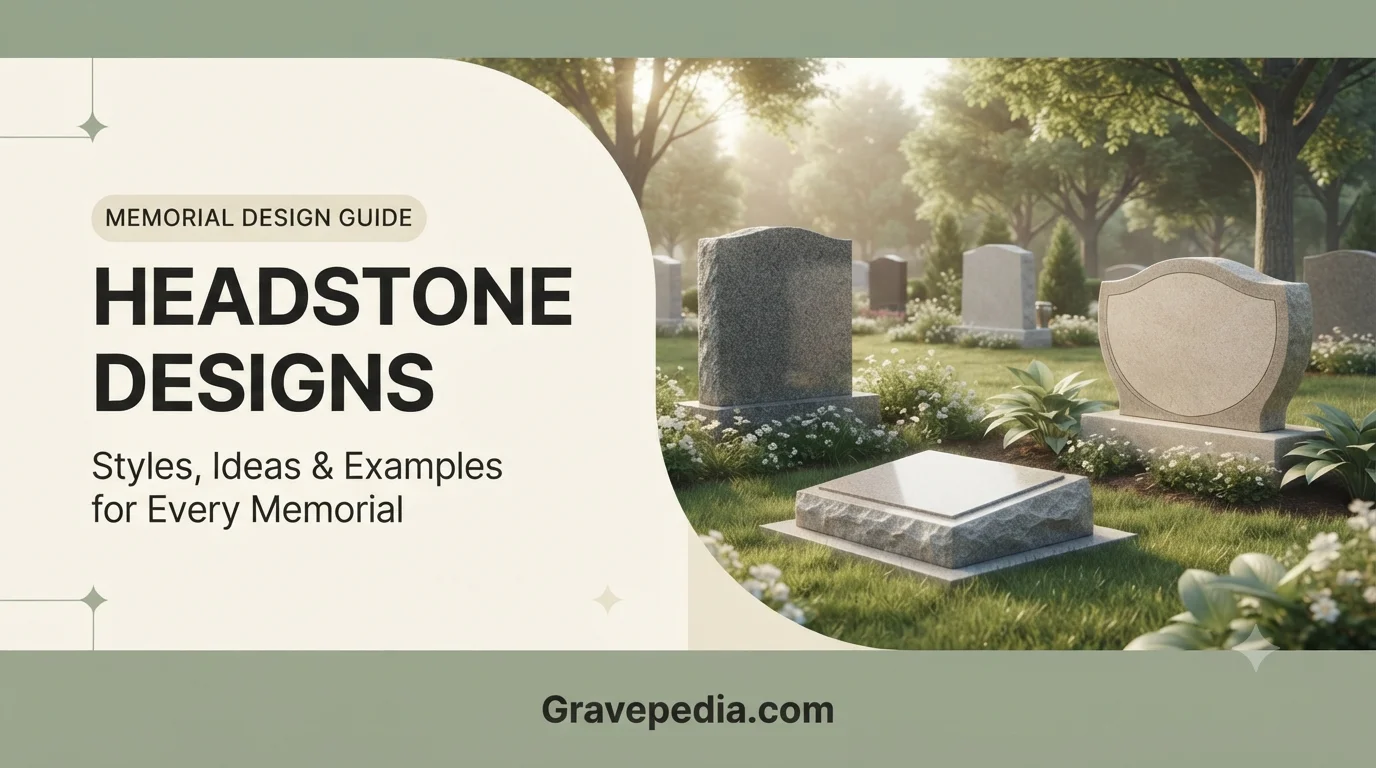
Headstone Designs: Styles, Ideas and Examples for Every Memorial
Headstone designs have evolved far beyond simple rectangular markers. Today, families can choose from traditional stelae, modern organic shapes, minimalist flat markers, and fully custom monuments that reflect a loved one's personality. This guide explores popular headstone designs and styles, traditional vs modern designs, simple and minimalist ideas, unique and personalized designs, choosing a headstone shape and layout, how to choose a design for your loved one, and a gallery of inspiration.
Popular Headstone Designs and Styles
Headstone designs have shifted significantly over the past century. In the 1980s through the early 2000s, classic standing monuments in granite or marble dominated cemeteries. Typical designs featured rectangular shapes, round or swan-neck arches, and simple inscriptions with name, dates, and perhaps a religious symbol.
Today, the focus has shifted to individual remembrance. Families want a memorial that reflects the life, personality, and values of the deceased. Modern headstone designs range from soft organic forms to strict geometric shapes, with material combinations including natural stone, glass, stainless steel, and wood.
Popular headstone styles include:
- Upright Tablets and Stelae: The most traditional and visible type. Can be adapted to the smallest plot or given imposing architectural beauty. Ancient Greek stelae influence many modern designs.
- Slant and Bevel Markers: Angled markers that are easier to read than flat markers and often required in some cemeteries.
- Flat Markers: Set flush with the ground, often required for ease of maintenance. Can include engraved designs and text.
- Kerb Sets with Surrounds: A headstone with a border of stone forming a rectangular edge covering the grave plot. Allows space for decorative stone or planting.
- Companion Headstones: Designed for two people, often spouses, with space for both names and dates.
Traditional vs. Modern Headstone Designs
Traditional and modern headstone designs reflect different attitudes toward memorialization. Understanding the differences helps you choose a style that feels right for your loved one.
| Factor | Traditional Designs | Modern Designs |
|---|---|---|
| Shapes | Rectangular, round-top, swan-neck arches | Organic curves, asymmetric shapes, geometric forms |
| Materials | Granite, marble | Natural stone, glass, stainless steel, wood combinations |
| Symbolism | Religious symbols, angels, crosses, urns | Personal motifs, hobbies, professions, life stories |
| Lettering | Classic Roman lettering, serif fonts | Sans-serif, modern fonts, stainless steel letters |
| Decoration | Carved ornaments, sculptural figures | Laser etching, photo gravures, glass inserts |
| Finish | Polished surfaces | Matte finishes, honed textures, rock pitch natural edges |
Traditional designs often carry deep symbolism. Common motifs include lilies, roses, ivy, and weeping willows associated with love and grief. Natural imagery like rustic details and twig-like lettering conveys a return to nature. Domestic objects such as beds, drapery, and pillows suggest death as a peaceful sleep.
Modern designs tend to favor simplicity. Many families now choose simple forms, subtle colors, and matte surfaces. There is also growing demand for low-maintenance memorials, especially for urn graves. Teilabdeckungen (partial covers) are particularly popular because they significantly ease grave care.
Simple and Minimalist Headstone Ideas
Some of the most memorable memorials are relatively simple, with just one or two personal details that immediately bring the person to mind. Meaningful does not have to mean elaborate.
Minimalist headstone design principles:
- One Strong Personal Element: A single carefully chosen symbol can carry enormous meaning. A subtle fishing motif for someone who spent every weekend fishing, or a particular flower for a keen gardener.
- Be Selective With Words: Rather than summarizing an entire personality, focus on a sentiment that captures something important. Short phrases like "Always Loved" or "Forever Missed" often age better than lengthy inscriptions.
- Give the Design Room to Breathe: Leaving space around important details helps them stand out. Visual hierarchy matters: the name should be most prominent, followed by dates and a short inscription.
- Simple Shapes: A clean rectangular tablet, a simple heart shape, or an unadorned upright stone can be deeply elegant.
- Matte Finishes: Honed and matte finishes reduce glare and create a softer, more understated appearance.
Popular minimalist designs:
- Simple heart memorial with half-length surround
- Unadorned rectangular tablet with classic Roman lettering
- Natural boulder or findling with rusticated surface
- Flat marker with engraved text and a single small symbol
Unique and Personalized Headstone Designs
For families who want something truly distinctive, custom headstone designs offer nearly limitless possibilities. The key is to choose elements because they genuinely meant something to the person, rather than trying to fill every available space.
Unique design ideas:
- Sculptural Forms: Weeping angel statues, cherubs, or custom figures carved from marble or granite. White marble is the traditional choice for angel headstones because it allows for finer details in feathers and hair.
- Unusual Shapes: Heart-shaped headstones, book-shaped monuments, or natural boulders rather than carved shapes.
- Laser-Etched Portraits: A realistic, detailed portrait of your loved one etched into hard stone such as granite. The image can remain for centuries.
- Meaningful Icons: Religious emblems, favorite flowers, musical notes for a music lover, or even a favorite car.
- Landscapes and Scenes: Etchings of a farmhouse, a boat, a forest, or a cherished place.
- Signature or Handwriting: A quote in the person's handwriting, custom engraved.
- Glass Inserts and Steel Letters: Modern touches like glass inlays or stainless steel lettering create a contemporary look.
Combining materials: One striking option is a black granite base with a white marble angel on top. The granite provides a durable surface for lettering that shows up clearly, while the marble adds artistic beauty.
Choosing a Headstone Shape and Layout
The shape and layout of a headstone determine its visual impact and how the inscription and artwork are arranged. Before finalizing any design, check cemetery regulations regarding allowed sizes, shapes, and materials.
Common shapes:
- Rectangular Tablet: Classic and versatile, suitable for almost any design.
- Round-Top or Swan-Neck: Traditional arch shape that softens the top edge.
- Heart-Shaped: A warm and personal shape, often chosen for spouses or parents.
- Book-Shaped: Designed to look like an open book, often with inscriptions on both pages.
- Natural Boulder or Findling: Rough, unworked surface symbolizing character strength or down-to-earth values.
- Asymmetric or Organic: Modern curved forms that break from tradition.
Layout considerations:
- Visual Hierarchy: The name should be the most prominent element, followed by dates and then a short inscription.
- Lettering Size: Use fonts at least 1 inch tall for names so they are legible from a few feet away.
- Spacing: Adequate spacing between letters and images improves readability.
- Finish of Engraved Area: A matte finish on the engraved area reduces glare.
- Test Your Design: Stand 10 feet back. If you cannot read the name and dates clearly, simplify.
How to Choose a Design for Your Loved One
Choosing a headstone design is a deeply personal decision. The goal is to create a memorial that genuinely reflects the unique life it represents.
Start with the person, not the design. Before thinking about fonts, images, or decorative elements, think about the person themselves. What immediately comes to mind? Perhaps their love of gardening, their sense of humor, their devotion to family, or the fact that they rarely went anywhere without their dog.
Make a short list of defining qualities:
- Family and important relationships
- Hobbies or lifelong interests
- Places they loved
- Work they were particularly proud of
- Cultural or spiritual traditions
- Favorite sayings
- Personal qualities people remember
Choose one strong personal element. A common mistake is assuming that greater personalization requires adding more things. Usually, the opposite approach works better. Ask yourself: if you could include only one personal detail beyond the name and dates, what would it be? Your answer is often a good starting point.
Work with a reputable memorial mason. A local expert helps you see and touch granite samples, review scale drawings or 3D renderings, avoid common pitfalls such as text too small or fragile thin areas, and plan for companion or family plots. They can also liaise with cemetery authorities on your behalf.
Consider how the memorial will age. A design that feels appropriate now should ideally remain meaningful decades into the future. Before choosing highly detailed artwork, lengthy text, or unusual design features, consider how easily they can be maintained and how clearly they will communicate over time.
Headstone Design Gallery and Inspiration
When planning a headstone design, seeing examples can help you identify what resonates. Many memorial providers offer online galleries, design tools, and 3D configurators that let you visualize your ideas before production.
Where to find inspiration:
- Memorial Provider Websites: Most monument companies showcase galleries of completed headstones with different styles and materials.
- Online Design Tools: Platforms like Lasting Memori allow families to create, customize, and share design concepts from any device without professional design experience.
- 3D Configurators: Some providers offer 3D configurators with instant price estimates and visual previews sent by email.
- Cemetery Visits: Walking through a cemetery can provide real-world inspiration, showing how different designs look in situ over time.
- Mobile Apps: Headstone Designer apps allow you to select templates, edit text layers, and save projects for later.
Design elements to consider including:
- Religious symbols: crosses, Stars of David, lotus flowers, Celtic knots
- Hobby and career icons: musical notes, paintbrushes, gardening tools, favorite animals
- Cultural emblems: family crests, military insignia, fraternal organization symbols
- Natural motifs: flowers, trees, landscapes, birds
- Personal touches: signatures, favorite quotes, nicknames, familial titles
Headstone Designs: What Families Should Know
When choosing a headstone design, keep these practical points in mind:
- Start with the person, not the design. What defined them?
- Choose one or two strong personal elements rather than trying to include everything
- Check cemetery regulations for allowed sizes, materials, and designs before finalizing
- Granite is the most durable and low-maintenance choice for headstones
- Simple designs often age better than highly detailed or trendy ones
- Work with a reputable memorial mason who can provide samples and 3D renderings
- Take your time. There is no need to rush a headstone decision
Taking the time to design a thoughtful headstone creates a lasting tribute that will honor your loved one for generations.
Frequently Asked Questions About Headstone Designs
What are the most popular headstone designs?
The most popular headstone designs include upright tablets and stelae, slant and bevel markers, flat markers, and kerb sets. Traditional designs often feature rounded or swan-neck tops with religious symbols, while modern designs favor clean lines, organic shapes, and personal motifs. Granite remains the most common material due to its durability and wide range of colors.
What are the different types of headstones?
The main types of headstones are upright headstones (also called tablets or stelae), flat markers, bevel markers, slant markers, kerb sets with surrounds, and companion or double headstones. Upright headstones are the most traditional and visible, while flat markers are often required in some cemeteries for ease of maintenance.
Are modern headstone designs more expensive?
Modern headstone designs can be more expensive if they involve complex shapes, unusual materials, laser etching, or custom artwork. However, many modern designs are actually simpler and more minimalist than traditional ones. The cost depends on the material, size, shape complexity, engraving detail, and whether custom artwork or photo etching is included.
How do I choose a headstone design?
Start by thinking about the person rather than the design. Consider their personality, hobbies, values, and what they loved. Choose one or two meaningful elements rather than trying to include everything. Check cemetery regulations for allowed sizes, materials, and designs. Work with a reputable memorial mason who can show you samples, provide 3D renderings, and ensure the design complies with local rules.
Can I customize a headstone?
Yes. Custom headstones allow you to choose the shape, material, color, finish, inscription, font, and any artwork or symbols. You can include laser-etched portraits, favorite quotes, hobbies, religious symbols, or unique shapes like hearts or books. Many memorial providers offer online design tools or 3D configurators to help you visualize the design before production.
Final Thoughts
Headstone designs offer nearly limitless ways to honor a loved one. Whether you choose a traditional upright tablet, a simple minimalist marker, or a fully custom monument with laser-etched portraits and meaningful symbols, the most important thing is that the design reflects the person it commemorates. Start with the person, choose one or two strong personal elements, check cemetery regulations, and work with a reputable memorial mason. A well-designed headstone becomes a lasting tribute and a place of comfort for generations to come.
Contents
- Popular Headstone Designs and Styles
- Traditional vs. Modern Headstone Designs
- Simple and Minimalist Headstone Ideas
- Unique and Personalized Headstone Designs
- Choosing a Headstone Shape and Layout
- How to Choose a Design for Your Loved One
- Headstone Design Gallery and Inspiration
- What Families Should Know
- FAQs (5 Questions)
- Final Thoughts
Data Update
Based on general headstone design information. Actual costs, material availability, and cemetery regulations vary by location and provider. Verify current details with local memorial masons and cemetery authorities before publishing or making arrangements.