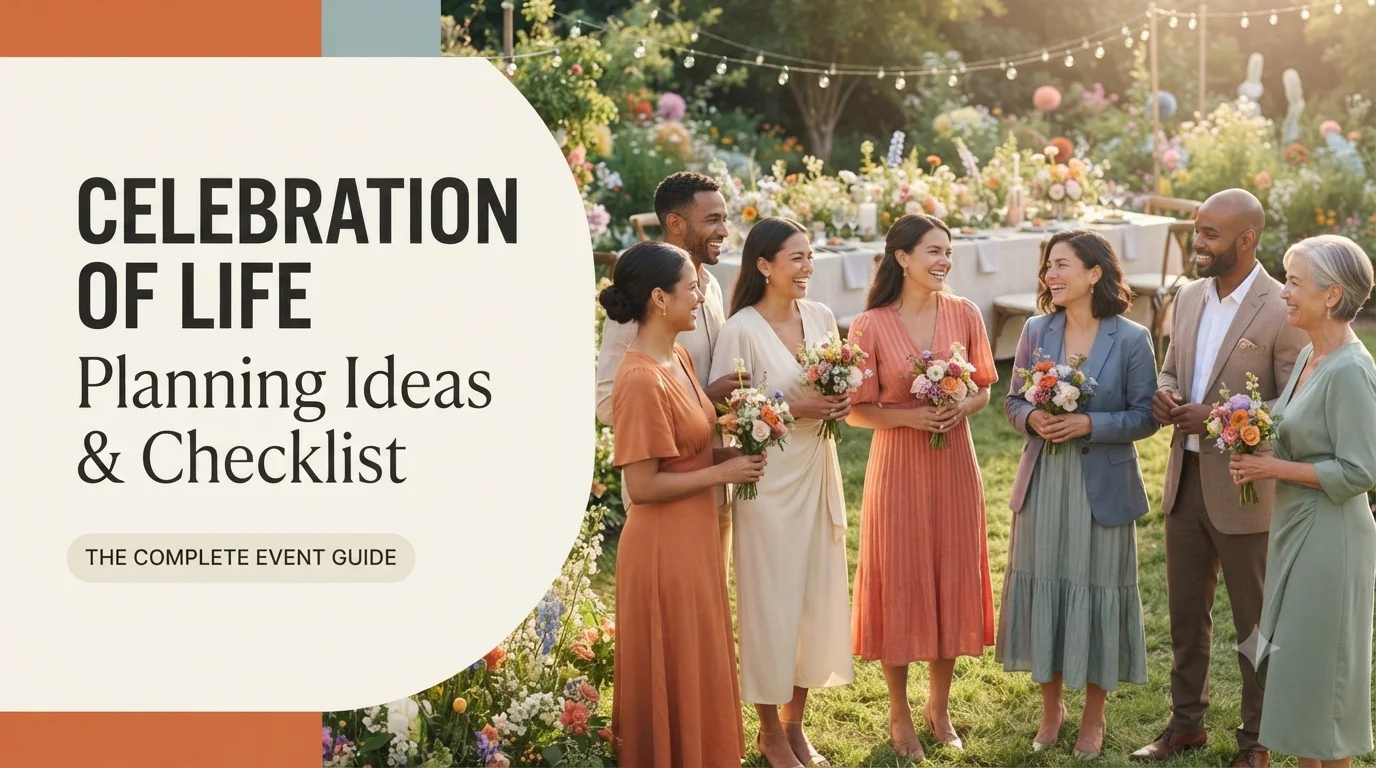
Celebration of Life Planning: Ideas, Checklist and Event Guide
Planning a celebration of life is a meaningful way to honor someone by focusing on the joy they brought to the world rather than the loss itself. Unlike a traditional funeral, a celebration of life is less formal, more personal, and can be held anywhere that held meaning for your loved one. This guide explains what a celebration of life is, how to plan one, choosing a venue and guest list, themes and personal touches, music and activities, budget and checklist, and how it compares with a traditional funeral.
What Is a Celebration of Life?
A celebration of life is a gathering that honors the life and spirit of someone who has died. Where a traditional funeral centers on ceremony and formal ritual, a celebration of life centers on story, often with music, food, and shared memories in place of a structured service. The focus is on the joy and happiness that resulted from the person's life and not on the fact that they are missed.
A celebration of life is as unique as the life of the person it honors. It can be religious or secular, formal or informal, large or small. It may include the cremated remains in an urn, or no physical remains at all. Because the body is not required to be present, a celebration of life can be held weeks or months after a death, giving families time to plan and gather.
Many families choose a celebration of life instead of a traditional funeral, or hold both. A funeral offers structure and tradition, while a celebration of life offers personalization and a more uplifting tone.
How to Plan a Celebration of Life Event
Planning a celebration of life is different from planning a funeral. It is less about following a fixed order of service and more about creating an event that feels authentic to the person. Here is a step-by-step approach.
- Decide the Format: Is it religious or secular, formal or casual, a structured program or an open gathering? This shapes every decision after it.
- Set a Rough Guest Count: Even a wide estimate (30 or 300) narrows your venue options quickly.
- Pick a Date and Time: Weigh out-of-town travel against how soon the family wants to gather. There is no rush, and a later date allows more people to attend.
- Choose a Venue: This is one of the most important decisions. The venue should reflect the person's interests and personality.
- Plan Personal Touches: Photos, music, food, and activities that meant something to your loved one.
- Arrange Food and Drink: From a full catered meal to a potluck or simple appetizers, food helps guests relax and share memories.
- Create a Simple Order of Events: Even informal gatherings benefit from a rough timeline so guests know what to expect.
- Ask for Help: Involve family and friends. Planning a celebration of life is easier when shared.
Choosing a Venue, Date and Guest List
The venue sets the tone for the entire event. Unlike a funeral, a celebration of life can be held almost anywhere. The best venues are those that held meaning for your loved one or reflect their personality.
Venue ideas:
- A Favorite Restaurant or Bar: A relaxed setting that encourages mingling and storytelling.
- A Private Home: Intimate and personal, often the most cost-effective option.
- A Community Center or Banquet Hall: Flexible spaces that can accommodate both a program and a reception.
- An Outdoor Location: A garden, beach, park, or vineyard that held significance.
- A Meaningful Activity Venue: A golf course, bowling alley, museum, or theater if it reflects their passions.
- A House of Worship: Appropriate for religious celebrations, though less formal than a funeral.
Choosing a date: A celebration of life can be held anytime, since the body is not present. Some families hold it within a week or two, while others wait weeks or months to allow out-of-town guests to attend and to give themselves time to plan.
Guest list: The guest list can be private (invited personally) or public (announced through an obituary or social media). Both options are feasible, and the choice depends on the family's preference.
Celebration of Life Themes and Personal Touches
The best celebrations reflect what the person actually loved, not a generic template. A theme gives the event a cohesive feel and helps guests connect with the person's personality.
Theme ideas:
- Favorite Hobby: A golf course for a golfer, a lakeside cookout for a fisherman, or a library theme for a reader.
- Decade Theme: Honor the era they loved most, with music and decor from that time.
- Travel Theme: Maps, globes, and photos from their trips, with food from the countries they visited.
- Music Genre Theme: Build the event around their favorite type of music, with live musicians or a curated playlist.
- Color Theme: Ask guests to wear the person's favorite color.
Personal touches:
- Photo Displays and Slideshows: Gather photos from every stage of life and arrange them on a table or create a digital slideshow.
- Memory Table: Display personal objects like a favorite book, a well-worn fishing rod, or a collection of travel souvenirs.
- Memory Jar: Place jars and slips of paper around the venue and ask guests to write down a favorite memory.
- Dress Code: Match the attire to the event's tone, whether beach casual, semi-formal, or a color tribute.
Music, Photos and Memorial Activities
Music and activities give guests a way to participate actively in the celebration rather than sitting passively. They also create shared moments that people will remember long after the event is over.
Music:
- Build a playlist of the person's favorite songs and play it throughout the event.
- Consider live music from a guitarist, pianist, or small band if budget allows.
- A group singalong of a favorite song can be a touching moment.
Photo and visual tributes:
- Create a tribute video or slideshow with photos from childhood through recent years.
- Keep the slideshow under 10 minutes for the viewing segment, or loop it in the background during the reception.
- A timeline display lets guests walk through the person's life as they arrive.
Activities and rituals:
- Open Mic: Set up a microphone and invite guests to share stories, memories, or jokes.
- Candle Lighting: Each guest lights a candle in honor of the deceased, creating a powerful visual tribute.
- Memory Sharing Circle: Arrange chairs in a circle and pass a small object from person to person, with each guest sharing a memory.
- Balloon or Lantern Release: Check local environmental regulations first, and consider biodegradable options.
- Scavenger Hunt: A celebration adventure that includes stops at the person's favorite places.
Celebration of Life Budget and Checklist
Because there is no required format, families control every cost decision. A simple gathering at home can cost very little, while a catered event at a rented venue typically runs from a few thousand to several thousand dollars.
| Expense | Typical Cost Range | Notes |
|---|---|---|
| Venue Rental | $0 to $3,000+ | Home or park is free; rented venues cost more |
| Food and Drink | $200 to $5,000+ | Potluck is budget-friendly; catering costs more |
| Decorations and Flowers | $50 to $1,000 | Can be minimal or elaborate |
| Printed Programs | $50 to $300 | Keepsake program with order of events |
| Music and Entertainment | $0 to $1,000+ | Playlist is free; live musicians cost more |
| Slideshow and AV | $0 to $500 | DIY slideshow is free; professional AV costs more |
Planning checklist:
- Decide the format (formal or informal, religious or secular)
- Set a rough guest count
- Pick a date and time
- Choose a venue
- Ask 2 to 3 people to speak
- Gather photos and mementos
- Plan the food and drink
- Decide on music
- Prepare a simple order of events
- Send invitations or announcements
- Plan keepsakes and take-home items
Celebration of Life vs. Traditional Funeral
Both a celebration of life and a traditional funeral focus on honoring a loved one and comforting the bereaved, but there is a difference in mood and tone.
| Factor | Celebration of Life | Traditional Funeral |
|---|---|---|
| Tone | Lighthearted, casual, uplifting | Solemn, structured, formal |
| Body Present | Usually not present | Usually present |
| Timing | Can be held anytime, weeks or months later | Typically within days of death |
| Venue | Any meaningful location | Usually funeral home or house of worship |
| Format | Flexible, personalized | Structured, traditional |
| Cost | Varies widely, controllable | Often higher due to required services |
Many families choose to hold both: a traditional funeral for structure and tradition, and a celebration of life later for a more uplifting and personal gathering.
Celebration of Life Planning: What Families Should Know
When planning a celebration of life, keep these practical points in mind:
- A celebration of life can be held anywhere that held meaning for your loved one.
- There is no required format, so you control every cost decision.
- The most meaningful events reflect the person's personality and passions.
- Involve family and friends in planning, speaking, and sharing memories.
- Ask for help when you need it, and take your time.
- Consider keepsakes like seed packets, candles, or bookmarks for guests to take home.
Taking the time to plan thoughtfully helps create a gathering that brings comfort and meaning to everyone who attends.
Frequently Asked Questions About Celebration of Life Planning
How do you plan a celebration of life?
Start by deciding the format, whether formal or informal, religious or secular. Set a rough guest count, pick a date, and choose a venue that reflects the person's interests. Plan personal touches like photo displays, favorite music, and meaningful activities. Arrange food and refreshments, and create a simple order of events so guests know what to expect. Take your time and ask for help from family and friends.
What should you include in a celebration of life?
A celebration of life can include photo displays or slideshows, a memory table with personal objects, favorite music, shared stories and open mic tributes, meaningful readings, food and drink that reflect the person's tastes, and activities like candle lighting or memory jars. The most important elements are those that reflect the person's personality and bring comfort to guests.
How much does a celebration of life cost?
Costs vary widely based on venue and guest count. A simple gathering at home can cost very little, while a catered event at a rented venue typically runs from a few thousand to several thousand dollars. Because there is no required format, families control every cost decision and can scale the event to their budget.
Who usually organizes a celebration of life?
A celebration of life is usually organized by family members, often a spouse, adult child, or sibling, sometimes with help from close friends. Some families hire a celebration of life event planner or work with a funeral director or celebrant to help manage logistics. The person or people closest to the deceased typically lead the planning.
What is the difference between a funeral and a celebration of life?
A funeral is typically more structured and solemn, often held within days of death with the body present. A celebration of life is usually more personal and uplifting, focuses on the person's life rather than the loss, and can be held without the body present, sometimes weeks or months later. Tears and laughter are both welcome at a celebration of life.
Final Thoughts
Planning a celebration of life is a meaningful way to honor someone by focusing on the joy they brought to the world. By choosing a venue that reflects their personality, incorporating personal touches like photos and favorite music, and involving family and friends in sharing memories, you can create a gathering that truly celebrates the life that was lived. Whether the event is large or small, formal or casual, the most important thing is that it feels authentic to your loved one. There is no right or wrong way to plan a celebration of life. Trust what feels meaningful and take your time.
Contents
- What Is a Celebration of Life?
- How to Plan a Celebration of Life Event
- Choosing a Venue, Date and Guest List
- Celebration of Life Themes and Personal Touches
- Music, Photos and Memorial Activities
- Celebration of Life Budget and Checklist
- Celebration of Life vs. Traditional Funeral
- What Families Should Know
- FAQs (5 Questions)
- Final Thoughts
Data Update
Based on general celebration of life planning information. Actual costs, venue availability, and planning timelines vary by location and individual circumstance. Verify current details with local venues and service providers before publishing or making arrangements.