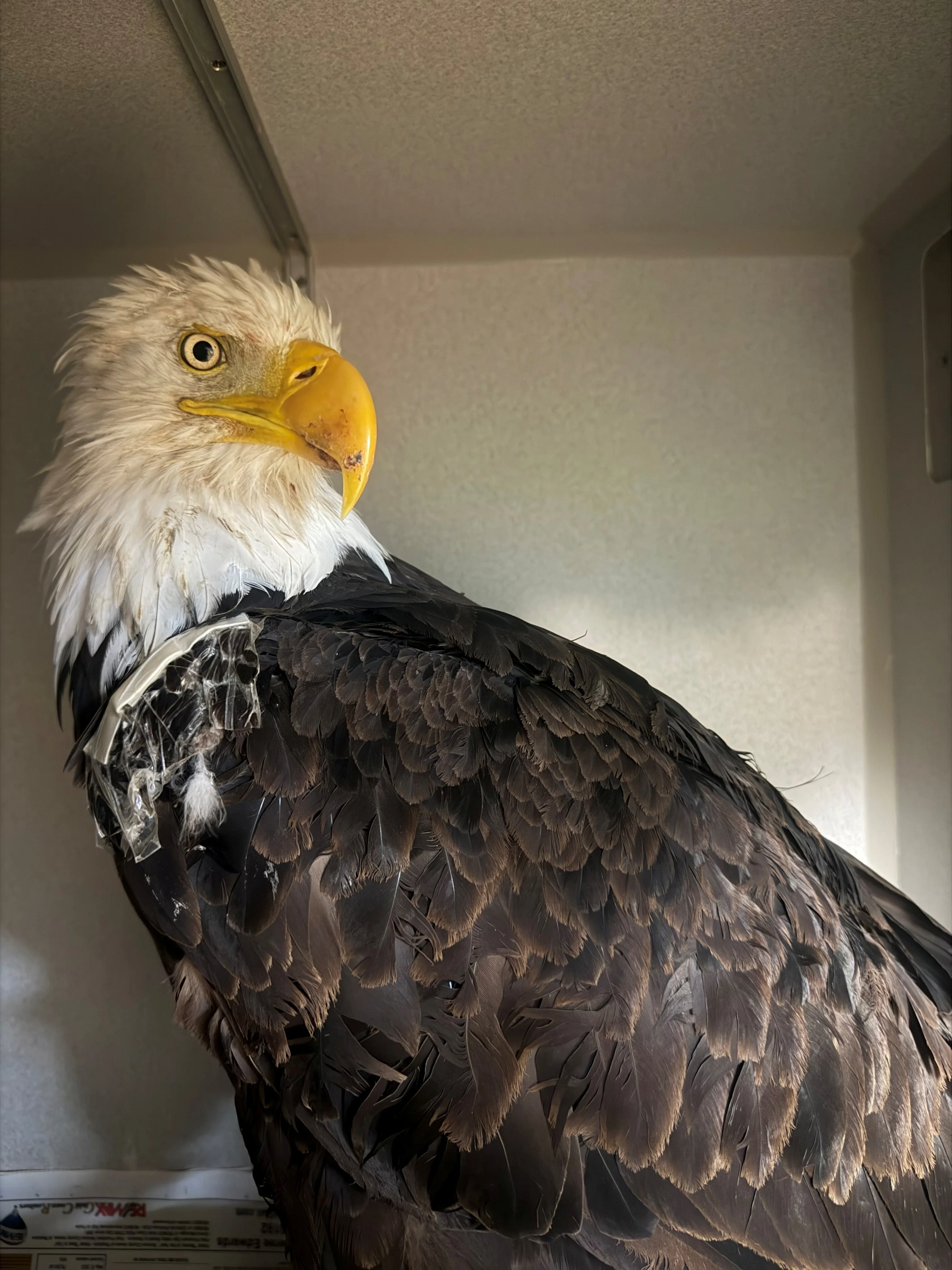
Jackie the Bald Eagle Cause of Death
Name: Jackie
Species: Bald Eagle
Age: Approximately 14 years old
Location: Big Bear Valley, California
Died: August 10, 2026
Cause of death: Highly Pathogenic Avian Influenza (HPAI)
Mate: Shadow
Eaglets: Sandy and Luna (most recent)
Rescued: July 2026
Remains: Cremated by National Eagle Repository
Who Was Jackie the Bald Eagle?
Jackie the bald eagle was one of the most beloved wildlife figures in Southern California. She lived in Big Bear Valley with her mate, Shadow, and became an internet sensation thanks to a nonstop livestream of the aerie overlooking Big Bear Lake that she shared with him. Millions of devoted fans tuned in daily to watch Jackie and Shadow build their nest, lay eggs, and raise their eaglets.
She was estimated to be around 14 years old when she died on August 10, 2026, in the care of the Ojai Raptor Center. Her death marked the loss of one half of the iconic bald eagle pair that had occupied Big Bear Valley for years.
In July 2026, Jackie was found weak and disheveled on the shoreline of Big Bear Lake after being seen in a fight with two subadult eagles. She was taken to Ojai for treatment, where a team of veterinary experts at the Ojai Raptor Center oversaw her care and documented the process as they tried to nurse her back to health.
Jackie the Bald Eagle Cause of Death
Jackie the bald eagle's cause of death was Highly Pathogenic Avian Influenza (HPAI), also known as bird flu. The California Department of Fish and Wildlife announced the results of the necropsy and additional diagnostic testing on October 14, 2026, nearly two months after Jackie died in August.
According to the CDFW, the necropsy determined that HPAI was the "primary underlying cause of her decline." Steve Kubiski, the Director of Disease Investigations with the San Diego Zoo Wildlife Alliance, which performed the necropsy, said: "In an uncommon presentation of the virus, the infection caused a severe ulcer in her stomach that led to persistent internal bleeding, anemia, and the development of bacterial sepsis."
Jackie showed signs of chronic disease involving the ventriculus, the muscular portion of a bird's stomach, commonly called the gizzard. The damaged and ulcerated tissue contributed to ongoing blood loss and her persistent severe anemia. It also allowed bacteria to enter the body, resulting in a serious secondary bacterial infection. Severe inflammation and blood clot formation were also found in the heart and several major blood vessels.
Follow-up testing showed that HPAI virus genetic material was present in several tissues throughout her body, including the ulcerated tissue in the ventriculus. Additional testing showed Jackie was negative for West Nile Virus, and heavy metals — including lead — were within acceptable limits and not associated with the identified disease progression.
Toxicology screening detected brodifacoum, an anticoagulant rodenticide, in her liver, as well as other persistent environmental contaminants. However, the necropsy did not find uncontrolled bleeding typically associated with anticoagulant rodenticide; therefore, brodifacoum was not identified as the primary cause of illness or death.
"Together, the findings showed that Jackie was suffering from multiple severe and interconnected disease processes that had been developing over time and ultimately led to her decline and death," the CDFW release said.
Jackie Eagle Avian Influenza Findings
The Jackie eagle avian influenza findings were released by the California Department of Fish and Wildlife in partnership with the San Diego Zoo Wildlife Alliance and the Ojai Raptor Center. The necropsy was performed by veterinary pathologists at the San Diego Zoo Wildlife Alliance, along with extensive additional laboratory and toxicology testing.
Key findings from the necropsy included:
- HPAI was confirmed as the primary underlying cause of decline — the infection caused a severe ulcer in her stomach that led to persistent internal bleeding, anemia, and bacterial sepsis.
- Chronic disease involving the ventriculus (gizzard) — damaged and ulcerated tissue contributed to ongoing blood loss and severe anemia, and allowed bacteria to enter the body.
- Severe inflammation and blood clot formation — found in the heart and several major blood vessels.
- HPAI virus genetic material — present in several tissues throughout her body, including the ulcerated tissue in the ventriculus.
- Negative for West Nile Virus — heavy metals including lead were within acceptable limits.
- Brodifacoum (rat poison) detected in liver — but not identified as the primary cause of illness or death.
Steve Kubiski, Director of Disease Investigations at the San Diego Zoo Wildlife Alliance, said: "Jackie's necropsy confirmed Highly Pathogenic Avian Influenza (HPAI) as the primary underlying cause of her decline. In an uncommon presentation of the virus, the infection caused a severe ulcer in her stomach that led to persistent internal bleeding, anemia, and the development of bacterial sepsis."
Chris Eksteen, Executive Director of the Ojai Raptor Center, said: "The necropsy results have helped connect many of the findings we were seeing throughout the eagle's hospitalization. We are grateful to the many veterinary specialists, laboratories, wildlife agencies and partner organizations who worked alongside our team to understand her illness and provide her with the best possible care. Caring for her was an extraordinary privilege for our entire team."
Jackie's Illness and Rescue
In July 2026, Jackie was found weak and disheveled on the shoreline of Big Bear Lake. She had been seen in a fight with two subadult eagles. She was taken to Ojai for treatment, where a team of veterinary experts at the Ojai Raptor Center oversaw her care.
Tests revealed she had anemia, so she received a blood transfusion from another eagle. Despite scans and biopsies, experts could not figure out why she was ill. The transfusion briefly provided a glimpse of hope, but Jackie continued to suffer setbacks in her recovery due to the sickness, which remained a mystery until the October 14 announcement by California wildlife officials.
She died on August 10, 2026, in the care of the Ojai Raptor Center.
Jackie's Remains
Jackie's remains were cremated by the U.S. Fish and Wildlife Service's National Eagle Repository to prevent the transmission of HPAI to wildlife or humans, according to Fish and Wildlife.
Some Jackie fans had unsuccessfully fought officials' plans to send Jackie to the repository, which was established in the 1970s to provide members of federally recognized Native American tribes with eagle feathers, parts, and whole bodies for religious use. At the time, fans argued that Jackie deserved special treatment — virtually all recovered carcasses of bald and golden eagles in the country are sent to the facility — and that she should perhaps be preserved through taxidermy.
Fish and Wildlife Service and its National Eagle Repository did not immediately respond to a request for comment.
Shadow and the Eaglets
Jackie's longtime mate, Shadow, remains in Big Bear and appears to be healthy, Fish and Wildlife said. Based on camera data, officials have no evidence to suggest that Shadow or the eaglets were sick.
Days after Jackie's death, Shadow was spotted in the company of a different female. Over the years, Jackie and Shadow parented several clutches of eaglets, most recently Sandy and Luna.
Tributes and Memorials
In the weeks since her death, Jackie has been honored with a massive memorial service in Big Bear, a life-size monument at a park in the San Bernardino Mountains, and an Ontario Tower Buzzers minor league baseball game dedicated to celebrating her life.
California state legislators also passed a resolution in her honor, proclaiming September 4 as California Wildlife Day. On October 3, 2026, a memorial event titled "Wings Over Big Bear" was held at Bear Mountain Resort, where muralist Wes Abarca spray-painted a mural of Jackie.
"Jackie brought us together," fans said as they gathered to say goodbye to the beloved Big Bear bald eagle.
What Is HPAI?
HPAI stands for Highly Pathogenic Avian Influenza, also known as bird flu. It is an infectious disease that primarily affects birds and has been circulating in wild bird populations throughout the United States.
Waterfowl and shorebirds are natural hosts of avian influenza viruses, while eagles and other raptors may be exposed through contact with infected birds or by consuming infected prey. HPAI can cause severe illness and death in birds, and in rare cases, it can infect humans.
Jackie's Legacy
Jackie's legacy is one of connection and conservation. Her story brought unprecedented public attention to bald eagles and the importance of protecting the habitats they depend on. Her life and the public's connection to her highlighted the powerful role that wildlife can play in connecting people to conservation.
"The story of the Big Bear bald eagle reflects the powerful connection people feel to these iconic birds," said CDFW Director Meghan Hertel. "We're grateful to everyone who cared for her and worked to support her well-being. Understanding the results of these tests is an important part of learning from this case and can help inform the care and treatment of other eagles and wildlife in the future."
Jackie will be remembered as a symbol of hope, resilience, and the beauty of the natural world. She was estimated to be around 14 years old when she died.
Rest in peace, Jackie.
Frequently Asked Questions: Jackie the Bald Eagle
Who was Jackie the bald eagle?
Jackie was a bald eagle who lived in Big Bear Valley, California, with her mate Shadow. She became an internet sensation thanks to a 24/7 livestream camera that documented her life and her nest above Big Bear Lake. She was estimated to be around 14 years old when she died on August 10, 2026.
How did Jackie the bald eagle die?
Jackie the bald eagle died from Highly Pathogenic Avian Influenza (HPAI), also known as bird flu, according to necropsy results released by the California Department of Fish and Wildlife on October 14, 2026. She died on August 10, 2026, in the care of the Ojai Raptor Center after being rescued from the Big Bear Lake shoreline in July.
What was Jackie the bald eagle's cause of death?
Jackie the bald eagle's cause of death was Highly Pathogenic Avian Influenza (HPAI), also known as bird flu. The infection caused a severe stomach ulcer that led to persistent internal bleeding, anemia, and bacterial sepsis. She was also suffering from chronic disease involving her gizzard and a secondary bacterial infection.
What did the Jackie eagle avian influenza findings reveal?
The Jackie eagle avian influenza findings revealed that HPAI was the primary underlying cause of her decline. The infection caused a severe ulcer in her stomach that led to persistent internal bleeding, anemia, and bacterial sepsis. HPAI virus genetic material was present in several tissues throughout her body. The necropsy also found chronic disease in her ventriculus (gizzard), heart inflammation, and blood clots.
When did Jackie the bald eagle die?
Jackie the bald eagle died on August 10, 2026, in the care of the Ojai Raptor Center. She was estimated to be around 14 years old.
Where did Jackie the bald eagle live?
Jackie the bald eagle lived in Big Bear Valley, California, with her mate Shadow. Their nest was located above Big Bear Lake and was documented by a 24/7 livestream camera that drew millions of viewers from across the United States.
Who was Jackie's mate?
Jackie's mate was a bald eagle named Shadow. The pair occupied Big Bear Valley for years and parented several clutches of eaglets, most recently Sandy and Luna. After Jackie's death, Shadow remained in Big Bear and was spotted in the company of a different female.
Was rat poison found in Jackie's system?
Yes, toxicology screening detected brodifacoum, an anticoagulant rodenticide (rat poison), in Jackie's liver, as well as other persistent environmental contaminants. However, the necropsy did not find uncontrolled bleeding typically associated with anticoagulant rodenticide, so brodifacoum was not identified as the primary cause of her illness or death.
What happened to Jackie's remains?
Jackie's remains were cremated by the U.S. Fish and Wildlife Service's National Eagle Repository to prevent the transmission of HPAI to wildlife or humans. Some fans had unsuccessfully fought officials' plans to send Jackie to the repository, arguing she deserved special treatment.
What is the National Eagle Repository?
The National Eagle Repository was established in the 1970s to provide members of federally recognized Native American tribes with eagle feathers, parts, and whole bodies for religious use. Virtually all recovered carcasses of bald and golden eagles in the country are sent to the facility.
How was Jackie honored after her death?
Jackie was honored with a massive memorial service in Big Bear, a life-size monument at a park in the San Bernardino Mountains, and an Ontario Tower Buzzers minor league baseball game dedicated to celebrating her life. California state legislators also passed a resolution in her honor, proclaiming September 4 as California Wildlife Day.
What was Jackie's legacy?
Jackie's legacy is one of connection and conservation. Her story brought unprecedented public attention to bald eagles and the importance of protecting the habitats they depend on. Her life and the public's connection to her highlighted the powerful role that wildlife can play in connecting people to conservation. She was estimated to be around 14 years old when she died.
Was Shadow or the eaglets sick?
Based on camera data, the California Department of Fish and Wildlife said they have no evidence to suggest that Shadow or the eaglets were sick. Shadow remains in Big Bear and appears to be healthy.
What is HPAI?
HPAI stands for Highly Pathogenic Avian Influenza, also known as bird flu. It is an infectious disease that primarily affects birds and has been circulating in wild bird populations throughout the United States. Waterfowl and shorebirds are natural hosts of avian influenza viruses, while eagles and other raptors may be exposed through contact with infected birds or by consuming infected prey.
Why did Jackie receive a blood transfusion?
Jackie received a blood transfusion from another eagle after tests revealed she had anemia. The transfusion briefly provided a glimpse of hope, but Jackie continued to suffer setbacks in her recovery due to her illness, which remained a mystery until the necropsy results were announced on October 14, 2026.
Contents
- Who Was Jackie the Bald Eagle
- Cause of Death
- Jackie Eagle Avian Influenza Findings
- Jackie's Illness and Rescue
- Jackie's Remains
- Shadow and the Eaglets
- Tributes and Memorials
- What Is HPAI?
- Jackie's Legacy
- FAQs (15+ Questions)
Data Update
Based on Los Angeles Times, CBS News Los Angeles, California Department of Fish and Wildlife, and other major outlets. Information about her death may change as more details become available.