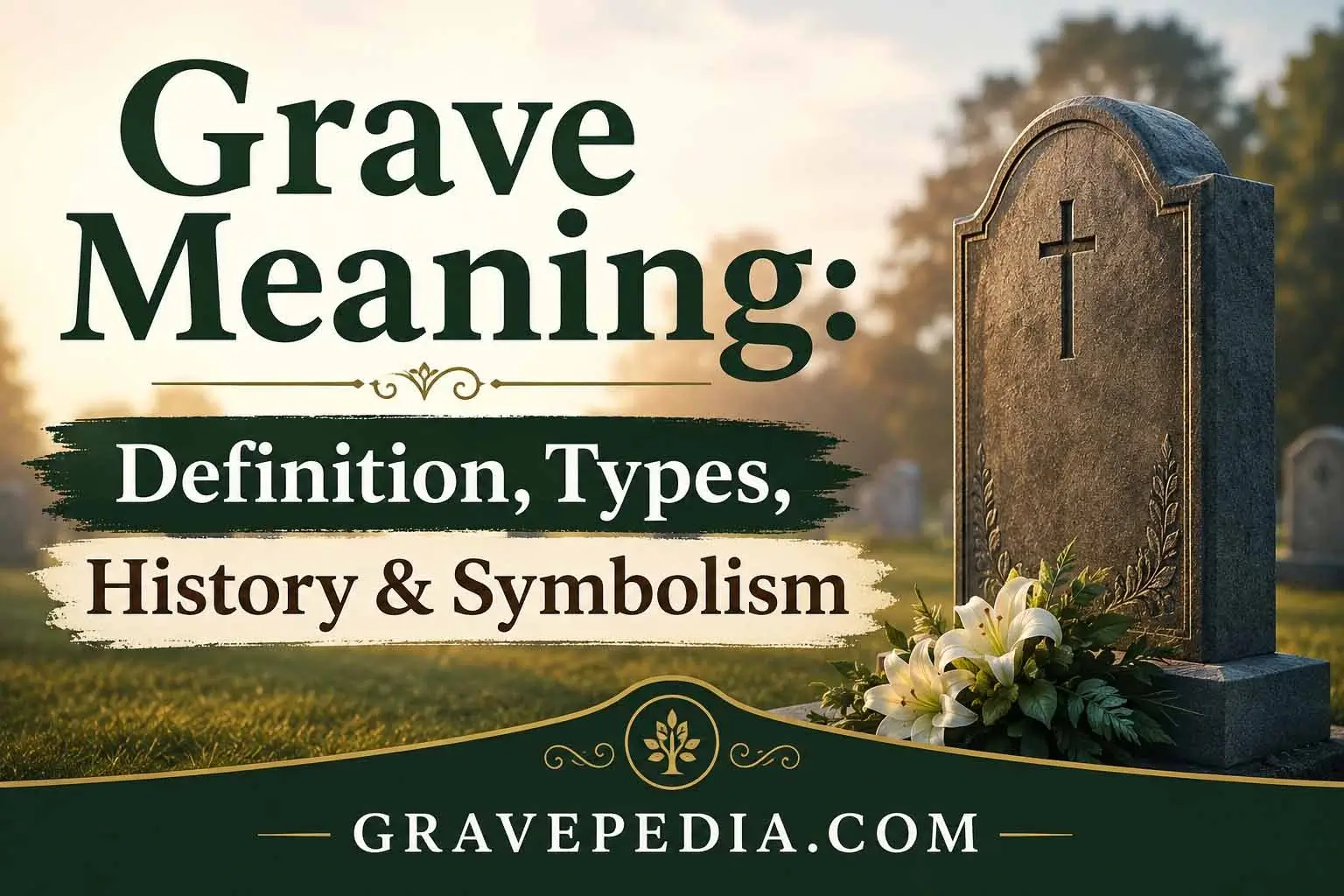
Grave Meaning: Definition, Types, History & Symbolism
A grave is a designated resting place for the deceased, marked by a headstone or memorial.
Grave history spans over 100,000 years across every human civilization.
Grave symbols like crosses, angels, and flowers carry deep spiritual meaning.
Grave types include single, double, family, mausoleum, and cremation graves.
What Is a Grave?
A grave is a designated place where a deceased person is buried after death. It serves both as a physical resting place and a symbolic location for remembrance, mourning, and memorialization. Most graves are located within cemeteries, churchyards, memorial parks, or family burial plots.
Graves typically contain coffins, caskets, or cremated remains. They are most often marked with headstones, gravestones, plaques, or other memorial markers that display the name of the deceased, dates of birth and death, and sometimes personal inscriptions or religious symbols.
The English word "grave" comes from the Old English "græf" meaning "a trench, ditch, or excavation." In many ancient cultures, graves were intentionally aligned east-to-west so the deceased would face the sunrise a symbol of resurrection and new beginnings.
History of Graves & Burial Practices
Burial practices date back over 100,000 years to Neanderthal societies. Ancient Egyptians created elaborate pyramids and royal tombs filled with goods for the afterlife. The ancient Romans built organized burial grounds called necropolises ("cities of the dead") along roadsides. During the medieval period in Europe, most graves were placed within churchyards, with the deceased buried facing east toward Jerusalem.
The modern cemetery movement began in the early 19th century with places like Père Lachaise Cemetery in Paris (1804) and Mount Auburn Cemetery in Boston (1831), shifting burials away from overcrowded churchyards to landscaped, park-like settings.
Ancient Burial Traditions Across Cultures
- Egyptian: Royal pyramids, mummification, and tomb treasures
- Roman: Organized necropolises and catacombs
- Viking: Ship burials with weapons and offerings
- Chinese: Feng shui-based grave placement and ancestral halls
- Indian (Hindu): Cremation followed by ash burial in holy rivers
Different Types of Graves
Single Grave
A standard burial plot designed for one individual. This is the most common type in public cemeteries worldwide.
Double Grave
Two burial spaces side-by-side or stacked vertically (often used for married couples or family members who wish to be buried together).
Family Grave / Family Plot
A larger section of a cemetery owned by one family, allowing multiple generations to be buried in one location. Family graves often feature central monuments listing many names.
Mausoleum Grave (Above-ground burial)
A stone or marble structure that houses coffins or urns above ground. Common in European and Latin American cemeteries where soil conditions make below-ground burial difficult.
Cremation Grave / Urn Burial
A smaller plot specifically designed for the burial of cremated ashes. These can be individual or shared columbarium niches.
Famous Graves You Can Visit
Thousands of people visit these graves each year as a form of historical tourism and tribute:
- Jim Morrison – Père Lachaise Cemetery, Paris, France
- Karl Marx – Highgate Cemetery, London, England
- Oscar Wilde – Père Lachaise Cemetery, Paris
- Elvis Presley – Graceland, Memphis, Tennessee, USA
- Princess Diana – Althorp Estate, Northamptonshire, England (private family grave)
Grave vs Tomb vs Cemetery: What's the Difference?
| Term | Meaning | Example |
|---|---|---|
| Grave | A single burial place for one person or family | A marked plot with a headstone |
| Tomb | An enclosed burial structure, often above ground or rock-cut | Egyptian pyramids, Roman catacombs |
| Cemetery | A large area containing many graves and tombs | Arlington National Cemetery |
Grave Symbols & Their Deep Meanings
Grave markers are covered with symbols that carry specific spiritual or emotional meanings:
- Cross: Christian faith, salvation, and resurrection.
- Angel: Guidance, peace, and the soul being carried to heaven.
- Flowers (Rose/Lily): Love, purity, and briefness of life.
- Dove: The Holy Spirit, peace, and the soul's journey.
- Hourglass: Time running out life is fleeting.
- Broken Column: A life cut short unexpectedly.
- Handshake: Farewell or welcome into the afterlife.
Why Graves Still Matter in Modern Society
Graves preserve individual and family memories across generations. They serve as historical records, helping genealogists trace ancestry. For many people, visiting a grave is a meaningful ritual of mourning and connection. Graves also protect cultural heritage ancient burial sites are among the most valuable archaeological discoveries.
Average Grave & Burial Costs (US & Europe Estimate)
| Expense Type | Average Cost (USD) | Notes |
|---|---|---|
| Cemetery Plot (Single) | $500 – $5,000+ | Varies by city and cemetery type |
| Gravestone / Headstone | $1,000 – $10,000 | Granite or bronze; custom designs cost more |
| Opening & Closing Fee | $800 – $2,500 | Digging the grave and filling after burial |
| Perpetual Care Fee | $500 – $2,000 | One-time fee for long-term maintenance |
| Cremation Burial Plot | $300 – $1,500 | Smaller than traditional plots |
Modern Burial Trends (2025-2030)
Eco-friendly burials (green burials) are growing rapidly. These graves use biodegradable materials, no embalming chemicals, and often plant trees instead of headstones. Digital memorials are also emerging: some modern graves include QR codes engraved on stones that link to online memorial pages with photos, videos, and life stories.
Other trends include conservation cemeteries (natural burial grounds protected as nature preserves) and virtual grave visitation using augmented reality.
Conclusion
A grave represents far more than a hole in the ground. it is a symbol of memory, respect, culture, and continuity. From ancient pyramids to modern QR code headstones, graves continue to evolve while preserving their essential purpose: to honor the dead and comfort the living.
Whether simple or elaborate, every grave tells a story. Gravepedia is dedicated to documenting those stories.
Funeral Planning & Content Specialist
Frequently Asked Questions About Graves
What is the exact meaning of a grave?
A grave is a specific location where a deceased person is buried, often marked by a headstone or monument.
What is the difference between a grave and a cemetery?
A grave is one burial spot. A cemetery is a large property containing many graves.
How deep is a standard grave?
Traditionally, graves are about 6 feet (1.8 meters) deep. Modern graves vary between 4 to 6 feet depending on local regulations.
Can you bury cremated ashes in a grave?
Yes. Cremated remains can be buried in a standard grave, a smaller cremation plot, or placed in a columbarium niche.
How long does a grave last?
In most modern cemeteries, graves are maintained in perpetuity (forever) if perpetual care has been paid. Some older graves may be repurposed after 75-100 years depending on local laws.