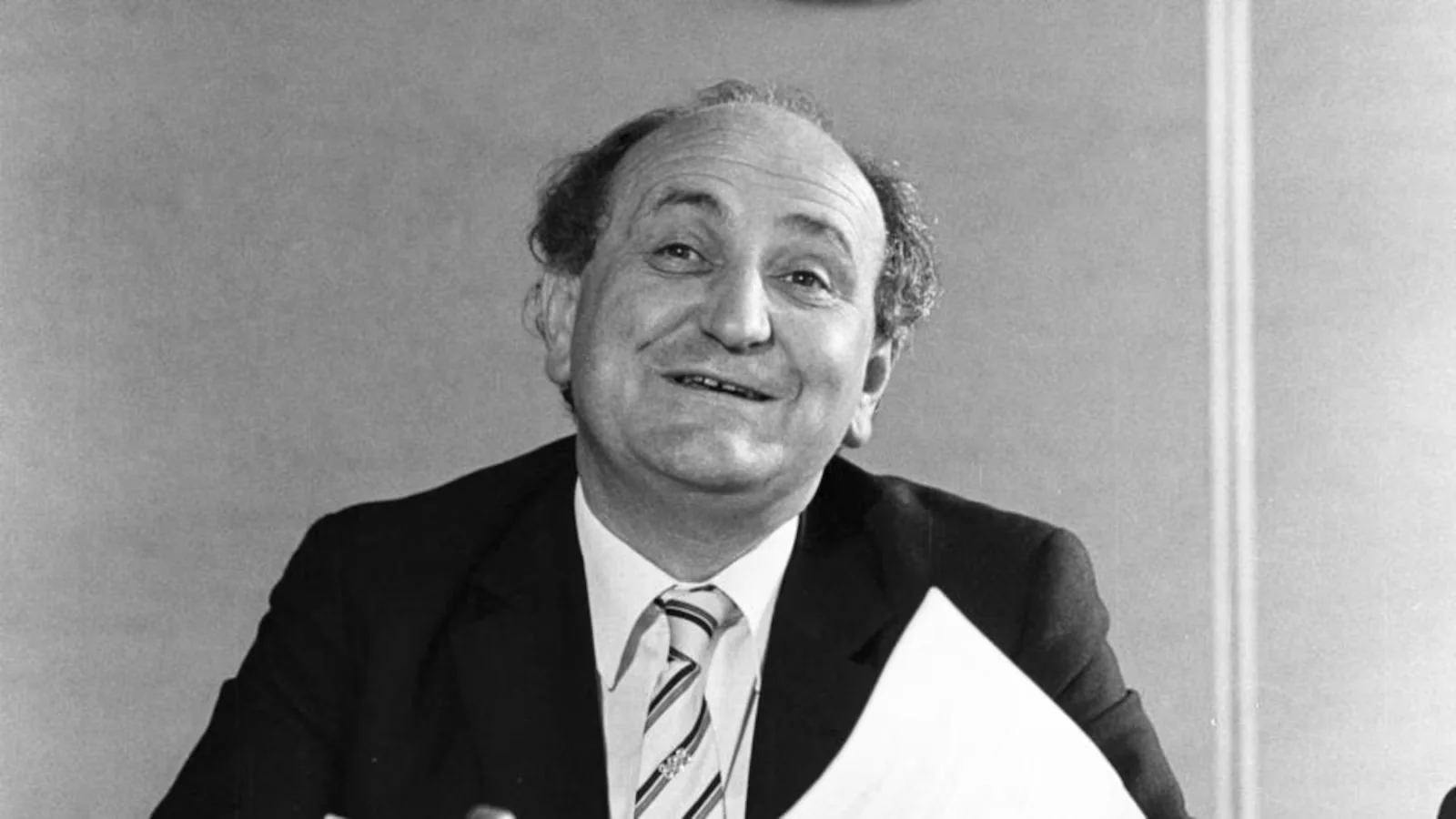
Gerry Collins (1938–2026) Irish Fianna Fáil Politician
Full name: James Gerard Collins
Born: October 16, 1938, Abbeyfeale, County Limerick, Ireland
Passed away: November 1, 2026 (aged 88), Tralee, County Kerry, Ireland
Burial: Reilig Íde Naofa, Abbeyfeale, County Limerick, Ireland
Occupation: Politician, teacher
Political party: Fianna Fáil
Known for: Minister for Foreign Affairs (1982, 1989–1992); Minister for Justice (1977–1981, 1987–1989); MEP for Munster (1994–2004)
Spouse: Hilary Collins
Education: University College Dublin
Gerry Collins: A Titan of Irish Politics
Gerry Collins was a Fianna Fáil politician who spent more than four decades in Irish public life, serving as a TD for Limerick West, a cabinet minister in multiple governments, and an MEP for Munster. He was twice Minister for Foreign Affairs and twice Minister for Justice, and played a quiet but crucial role in facilitating German reunification during Ireland's 1990 EU presidency.
He died on November 1, 2026, at Tralee Hospice in County Kerry, at the age of 88, after a short illness. His family was by his side.
To the people of West Limerick, Collins was "a people's man" — a politician who never lost touch with the community that first elected him in 1967.
Key Facts: James Gerard Collins was born October 16, 1938, in Abbeyfeale, County Limerick. He served as Minister for Foreign Affairs and Minister for Justice, and was an MEP for Munster from 1994 to 2004. He died November 1, 2026, at 88, and is buried at Reilig Íde Naofa in Abbeyfeale.
Gerry Collins Grave: Burial in Abbeyfeale
Gerry Collins is buried at Reilig Íde Naofa in Abbeyfeale, County Limerick, Ireland. The cemetery is in his native village, where he was born in 1938 and where his political journey began.
His Requiem Mass was celebrated at The Church of The Assumption in Abbeyfeale on Thursday, November 5, 2026, followed by burial at Reilig Íde Naofa. Large crowds of mourners paid their respects at his reposal at Harnett's Funeral Home in the days before.
His burial in Abbeyfeale closed a circle that had taken him from a local by-election in 1967 to the European Parliament in Brussels, and back home again.
Grave Details: Reilig Íde Naofa, Abbeyfeale, County Limerick, Ireland. Collins died November 1, 2026, at age 88. Requiem Mass at The Church of The Assumption, Abbeyfeale, followed by burial.
Gerry Collins Cause of Death
Gerry Collins died on November 1, 2026, at Tralee Hospice in County Kerry. He was 88.
His family said he passed away peacefully in the care of the palliative care team at University Hospital Kerry, after a short illness. No specific medical condition was disclosed.
He was surrounded by his family at the time of his death.
Early Life and Education
James Gerard Collins was born on October 16, 1938, in Abbeyfeale, County Limerick. His father, Jimmy Collins, was a onetime adjutant of the West Limerick Brigade of the IRA during the War of Independence and later served as a Fianna Fáil TD for Limerick West from 1948 to 1967.
Gerry attended St. Ita's College in Abbeyfeale and later the Patrician College in Ballyfin, County Laois. He studied at University College Dublin, where he founded the Kevin Barry cumann of Fianna Fáil and became deeply involved in student politics. After graduating, he worked as a vocational school teacher before becoming assistant general secretary of Fianna Fáil in 1965.
Political Career: From By-Election to Cabinet
Collins entered national politics in 1967, when he won the Limerick West by-election following his father's death. He was re-elected at every subsequent general election until his retirement from the Dáil in 1997.
He was appointed Minister for Posts and Telegraphs in 1970, during the reshuffle that followed the Arms Crisis. In that role, he made a controversial decision in 1972 to sack the entire RTÉ Authority after the broadcaster aired an interview with IRA leader Seán Mac Stíofáin.
When Fianna Fáil returned to power in 1977, Collins was appointed Minister for Justice at the age of 38. He served until 1981, and again from 1987 to 1989.
Minister for Foreign Affairs and German Unification
Collins served two terms as Minister for Foreign Affairs — a brief stint in 1982, and a longer period from 1989 to 1992. It was during his second term that he played a role he is perhaps least known for but which had lasting consequences.
After the fall of the Berlin Wall in 1989, French President François Mitterrand and British Prime Minister Margaret Thatcher opposed German reunification. Taoiseach Charles Haughey was initially cool on the idea. Collins, after discussions with German Foreign Minister Hans-Dietrich Genscher, became convinced of the case for a united Germany and persuaded Haughey to drop his opposition.
Ireland's 1990 EU presidency went on to facilitate German unification. The decision earned the gratitude of German Chancellor Helmut Kohl, who ensured Ireland benefited from EU cohesion funds in subsequent years.
European Parliament and Later Career
After being effectively sacked from cabinet when Albert Reynolds became Taoiseach in 1992, Collins turned his attention to Europe. He was elected as an MEP for Munster in 1994 and re-elected in 1999, serving until 2004.
He retired from domestic politics in 1997 and was succeeded in the Dáil by his brother, Michael J. Collins. His nephew, Niall Collins, later became a TD and government minister.
Personal Life
Gerry Collins was married to Hilary Collins. He was predeceased by his parents and several brothers, and survived by his wife, his sister Mary Carroll, and a large extended family.
He was remembered by Taoiseach Micheál Martin as "a politician of great substance and ability, who was in public life for all the right reasons: to serve and improve his country."
Tributes and Legacy
Tributes poured in from across Irish political life. Foreign Affairs Minister Helen McEntee noted his role in the 1990 EU presidency and German reunification, and asked that flags be flown at half-mast at the Department of Foreign Affairs on the day of his funeral.
Limerick Mayor John Moran called him "a towering figure in Irish public life whose commitment to public service, to his native county and to the wider national interest leaves an enduring legacy."
Conclusion: Remembering Gerry Collins
Gerry Collins was a politician of substance and shrewdness, a Fianna Fáil stalwart who served his country through some of its most turbulent decades. From the Arms Crisis to the European Parliament, he remained a figure of consequence.
He died on November 1, 2026, at 88, and is buried at Reilig Íde Naofa in Abbeyfeale — home, at last.
Frequently Asked Questions: Gerry Collins
Where is Gerry Collins buried?
Gerry Collins is buried at Reilig Íde Naofa in Abbeyfeale, County Limerick, Ireland. His Requiem Mass was held at The Church of The Assumption in Abbeyfeale before the burial.
How did Gerry Collins die?
He died on November 1, 2026, at Tralee Hospice in County Kerry, at the age of 88, after a short illness. He was surrounded by his family.
What was Gerry Collins's cause of death?
His family said he passed away peacefully after a short illness. No specific medical condition was publicly disclosed.
Who was Gerry Collins?
James Gerard Collins (1938–2026) was an Irish Fianna Fáil politician. He served as Minister for Foreign Affairs, Minister for Justice, and Minister for Posts and Telegraphs, and was an MEP for Munster from 1994 to 2004.
When was Gerry Collins born?
He was born on October 16, 1938, in Abbeyfeale, County Limerick, Ireland.
What role did Gerry Collins play in German unification?
As Minister for Foreign Affairs during Ireland's 1990 EU presidency, he persuaded Taoiseach Charles Haughey to support German reunification, against the initial opposition of Mitterrand and Thatcher. Ireland's presidency then facilitated the process.
What was Gerry Collins's constituency?
He was a TD for Limerick West from 1967 to 1997, and an MEP for Munster from 1994 to 2004.
Who was Gerry Collins's wife?
He was married to Hilary Collins, who survived him.
When was Gerry Collins's funeral?
His Requiem Mass was celebrated on Thursday, November 5, 2026, at The Church of The Assumption in Abbeyfeale, followed by burial at Reilig Íde Naofa.
Did Gerry Collins have children?
No public record indicates he had children. He is survived by his wife Hilary, his sister Mary Carroll, and extended family.